The difference between articulated boom spider cranes and straight boom spider cranes
Product description
In the field of aerial work platforms, spider lifts, with their unique tracked chassis and independently leveling outriggers, have become a new tool for operating in confined spaces and complex terrains. While articulated boom spider lifts and straight boom spider lifts are the two main categories and belong to the same spider lift family, they differ significantly in structural design, performance, and applicable scenarios.
I. Differences in core structure: The difference between folding arms and telescopic arms
The core competitiveness of the spider truck stems from the design of its outriggers, while the boom structure determines the form of operation, which is the fundamental difference between articulated boom and straight boom models.
Articulated boom spider car: multi-jointed folding zero-mobility arm
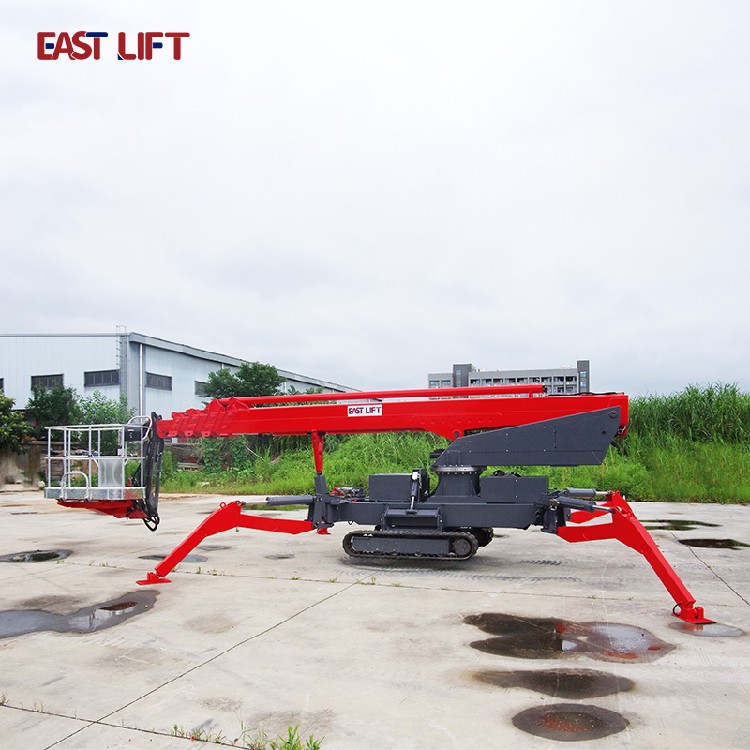
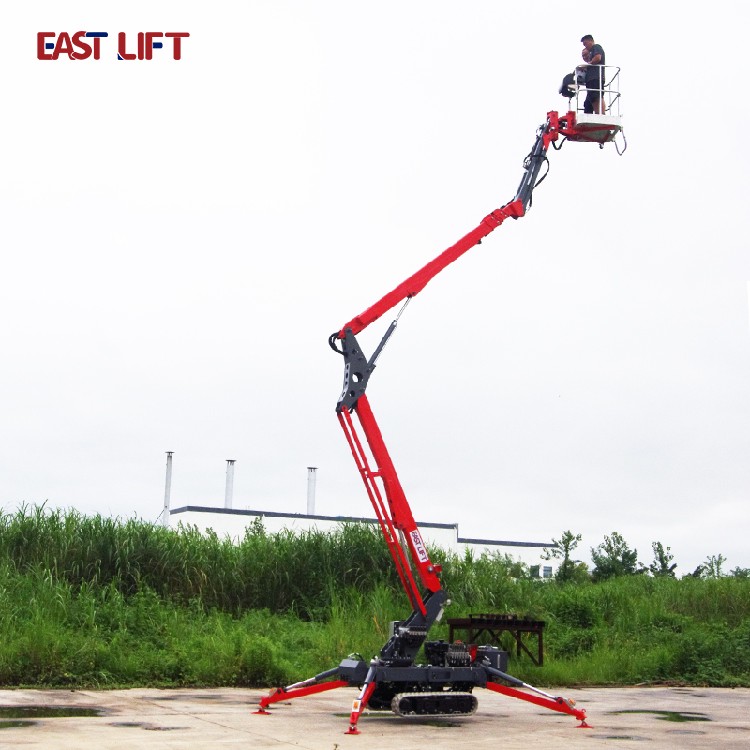
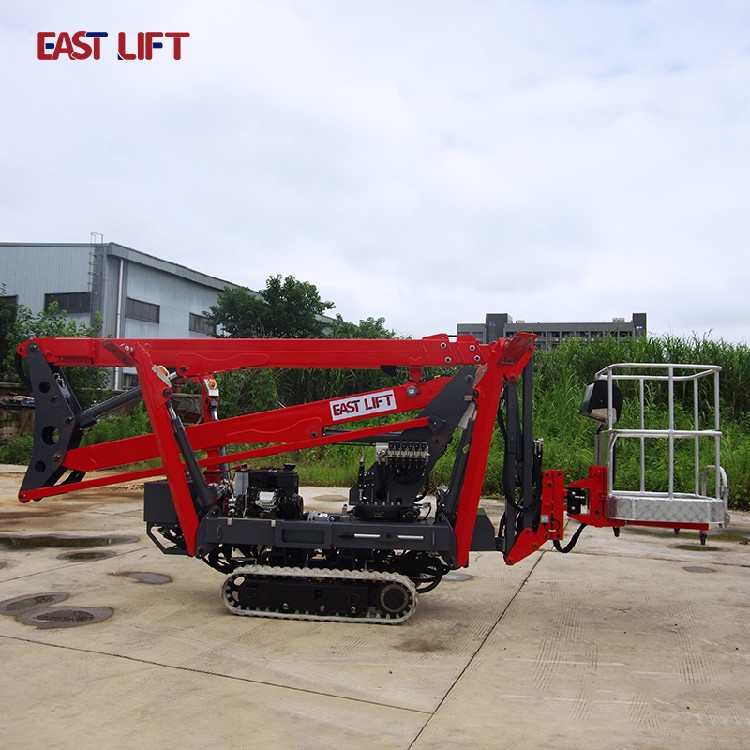
The articulated boom crane uses a multi-section hydraulic cylinder-driven folding boom structure, allowing the boom to bend and fold at multiple angles like a human arm. Its structural features include a boom composed of 2-3 sections that rotate 360° via joints; when folded, the machine is compact, and most models can pass through standard 2-meter-high doorways; combined with a tracked chassis and independently leveling outriggers, it can stably operate on slopes or soft ground, and can also be used for indoor and outdoor operations.
Straight-arm spider vehicle: a single-section telescopic aerial work platform
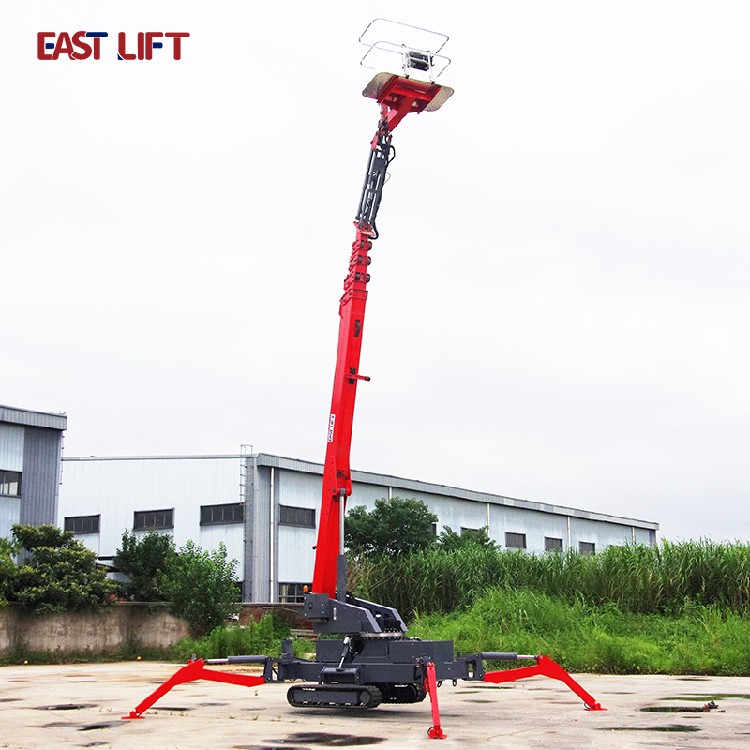
The straight-arm spider crane uses a single-welded U-shaped telescopic boom structure with a straight boom design, achieving longitudinal extension and retraction via hydraulic drive. Its structural features include high boom rigidity, long extension stroke, relatively simple structure, reduced joint wear, and lower maintenance costs. The 360° rotating platform, combined with the long boom's extension and retraction, enables wide-area aerial coverage.
Classified by working height
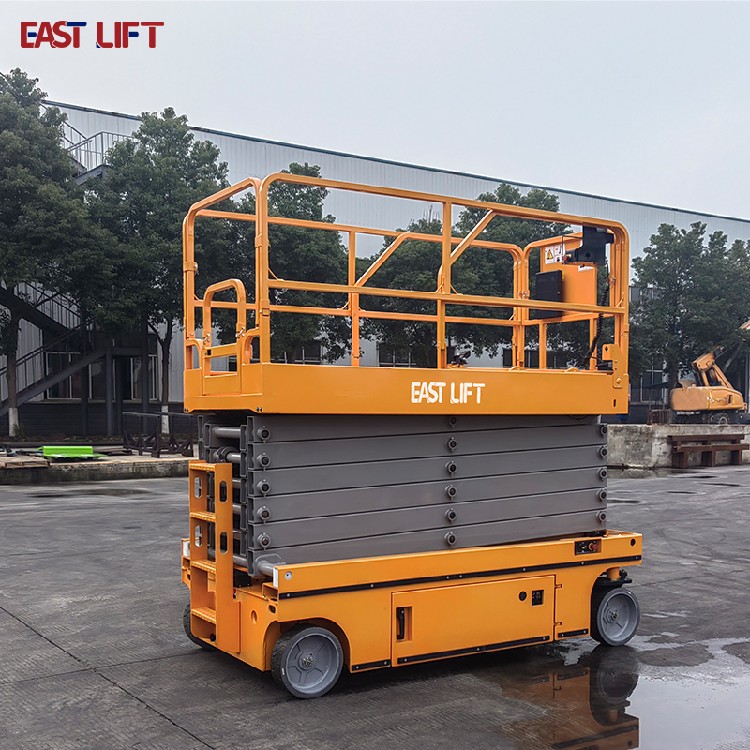
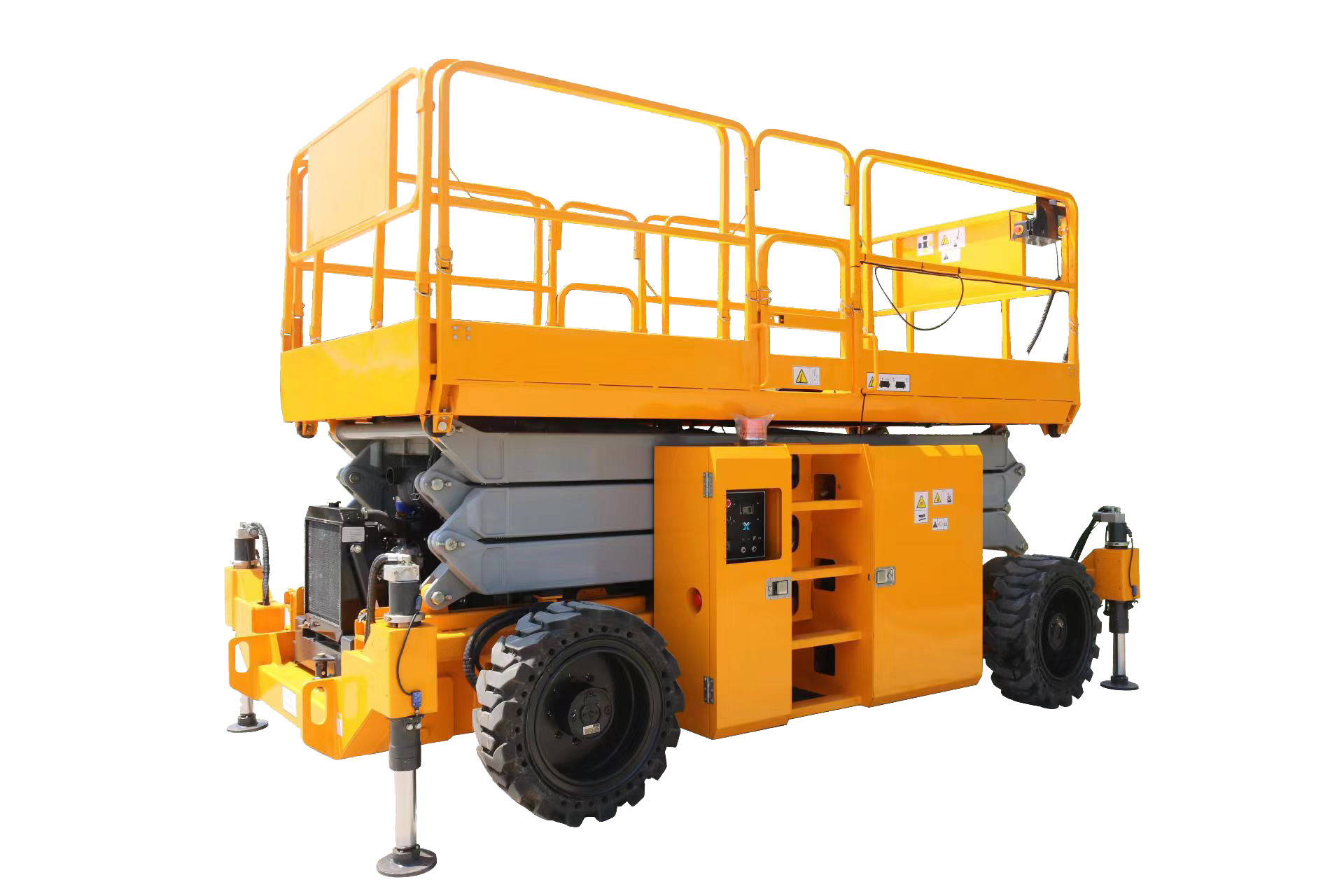
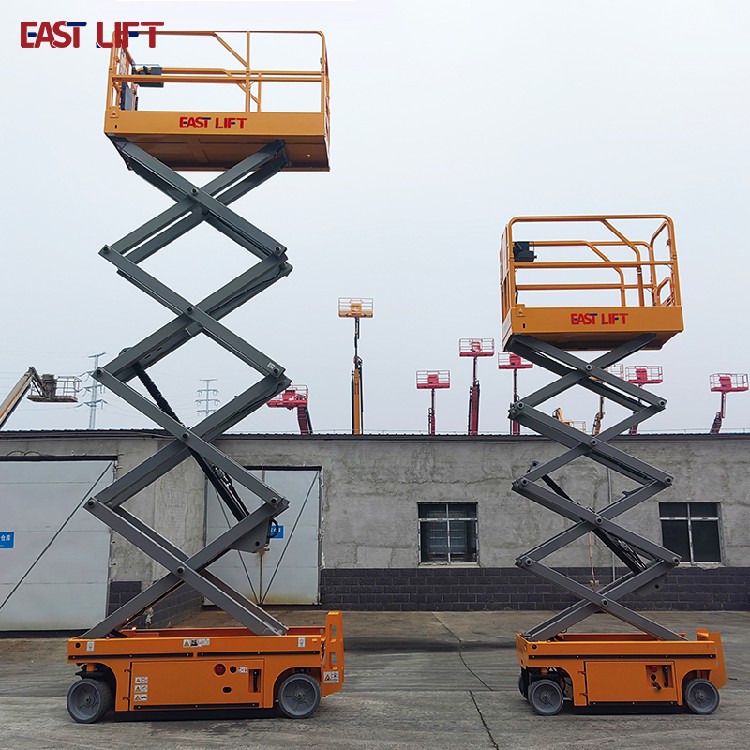
From a height perspective, this classification method focuses on the requirements of working height, enabling quick matching of different high and low-altitude work scenarios, and is an important reference dimension for enterprises when selecting equipment. First, there are low-altitude scissor lift platforms, with a working height typically below 6 meters. They are generally small in size, mostly electric mini models, suitable for delicate indoor work such as the maintenance of small machine room equipment, allowing for flexible movement without taking up much space. Second, there are mid-to-high-altitude scissor lift platforms, with heights generally between 6 and 15 meters. These scissor lifts cater to both indoor and outdoor work needs, and are commonly used for tasks such as ceiling repairs in shopping malls, thus balancing flexibility and working range. Third, there are ultra-high-altitude scissor lift platforms, with heights exceeding 15 meters. These feature a stable chassis and reinforced scissor lift structure, suitable for construction in high-rise buildings, high-altitude lighting installation in large venues, etc. However, these scissor lifts have higher requirements for ground weight capacity and operating wind speed.
Classification by platform structure
The platform structure directly affects the stability and space adaptability of the equipment, resulting in two distinct categories. One is the single-column scissor lift platform, characterized by its streamlined structure, small footprint, and single scissor lift unit supported by a column. It is suitable for operations in narrow aisles and for tasks such as adjusting overhead shelving in small shops. The other is the double-column scissor lift platform, employing a symmetrical layout of two scissor lift units reinforced with double columns. Its stability and load-bearing capacity far exceed those of the single-column scissor lift platform. It is commonly used in large factories for heavy equipment installation and other work scenarios requiring multiple people to collaborate and carry tools.
II. Performance Differences
Performance directly determines the operational boundaries of a spider crane. The differences in core operational capabilities between articulated and telescopic boom models precisely correspond to different mining and industrial needs. In terms of working height, telescopic boom spider cranes exhibit a more significant advantage at heights, with their maximum working height generally exceeding that of articulated boom models. Some large telescopic boom units can even meet the needs of ultra-high-altitude operations, while the height range of articulated boom models is more suited to conventional mid-to-high-altitude work scenarios. Regarding lifting efficiency, telescopic boom spider cranes, due to their single-arm telescopic structure, reduce power loss caused by multi-joint linkages, resulting in significantly faster lifting speeds and effectively shortening preparation and adjustment time. Articulated boom models, with their multi-joint coordinated operation, have relatively slower speeds, making them more suitable for scenarios requiring precise control. In terms of load capacity, telescopic boom spider cranes also have a significant advantage, offering superior capacity for both the number of operators and the weight of tools and equipment carried, making them particularly suitable for high-altitude operations requiring heavy tools. The most telling difference between the two lies in their traversing capabilities. The articulated boom crane, with its multi-jointed folding design, can flexibly navigate around obstacles such as bridge gaps and building pillars, completing complex operations without frequent relocation. The straight boom crane, on the other hand, is limited, primarily due to its linear boom structure, resulting in weaker obstacle-crossing ability; it often requires readjustment when encountering obstacles. Regarding ground adaptability, the articulated boom crane, with its tracked chassis and compact body, exerts less pressure on the ground, allowing for stable operation even on marble or soft surfaces. The straight boom crane, due to its relatively greater weight, requires flooring when operating on soft ground, making it more demanding in terms of ground conditions.
III. Selection of Applicable Scenarios
Due to differences in structure and performance, articulated boom spider cranes and straight boom spider cranes also exhibit significant differences in application scenarios. Matching them to appropriate working conditions can improve work efficiency.
Articulated boom spider car: complex and flexible
With its multi-jointed folding arm and compact body, the articulated boom spider crane has become the preferred choice for narrow and complex environments. Its compact size allows for delicate indoor work such as ceiling installation in shopping malls, cleaning of hotel glass curtain walls, and church renovations; the electric models also meet indoor environmental protection requirements. It can also perform obstacle-crossing operations such as bridge pier inspection, crossing power lines, and tree trimming; and easily handle complex terrain operations such as equipment maintenance on muddy construction sites and the installation of landscaping in scenic areas.
Straight-arm spider car: High-altitude open space
The high-altitude advantage and large load-bearing capacity of the straight-arm spider crane make it stand out in high-altitude operations in open spaces. It is mainly used for operations on the exterior walls of super high-rise buildings, such as glass installation and billboard replacement; operations in large venues, such as the maintenance of stadium roofs and the inspection of high-altitude equipment in airport terminals; and the installation of heavy equipment, such as the inspection and maintenance of wind power equipment and the maintenance of large tower cranes.
Conclusion
Articulated boom cranes, with their core advantages of "flexible folding, obstacle crossing, and compact design," are suitable for complex indoor and outdoor working conditions; while straight boom cranes, with their "high-altitude reach, large load capacity, and high efficiency," dominate in open work areas. In practical selection, it is necessary to comprehensively consider the working height, site conditions, load requirements, and cost budget. Only by choosing the appropriate crane model can safer and more efficient high-altitude operations be achieved.