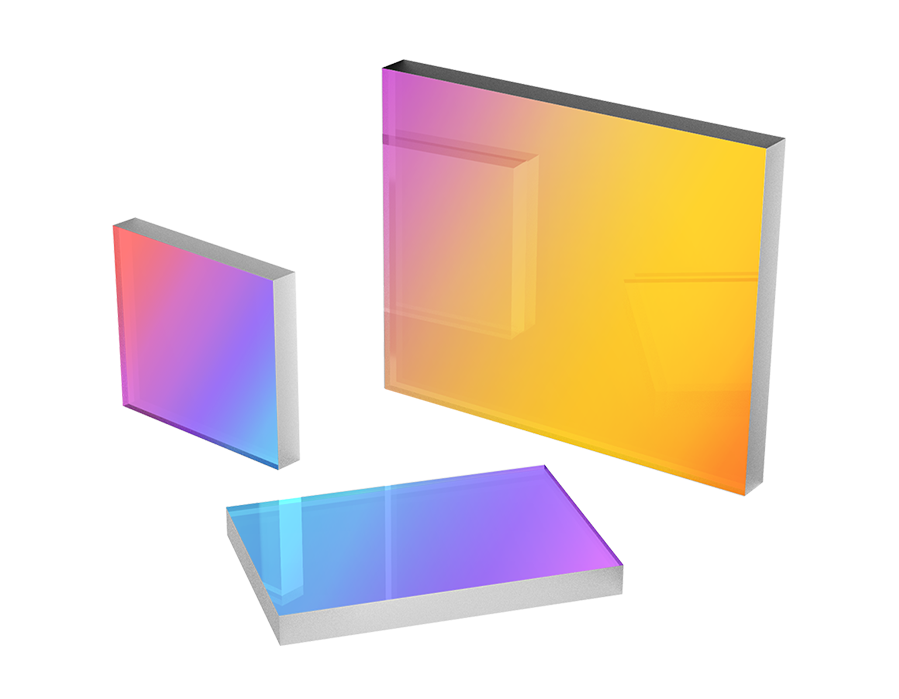
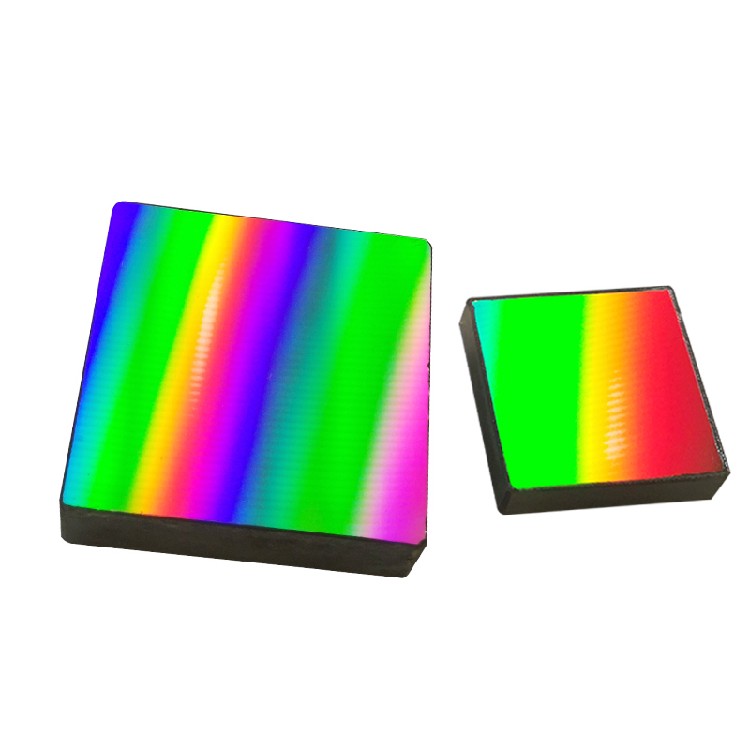
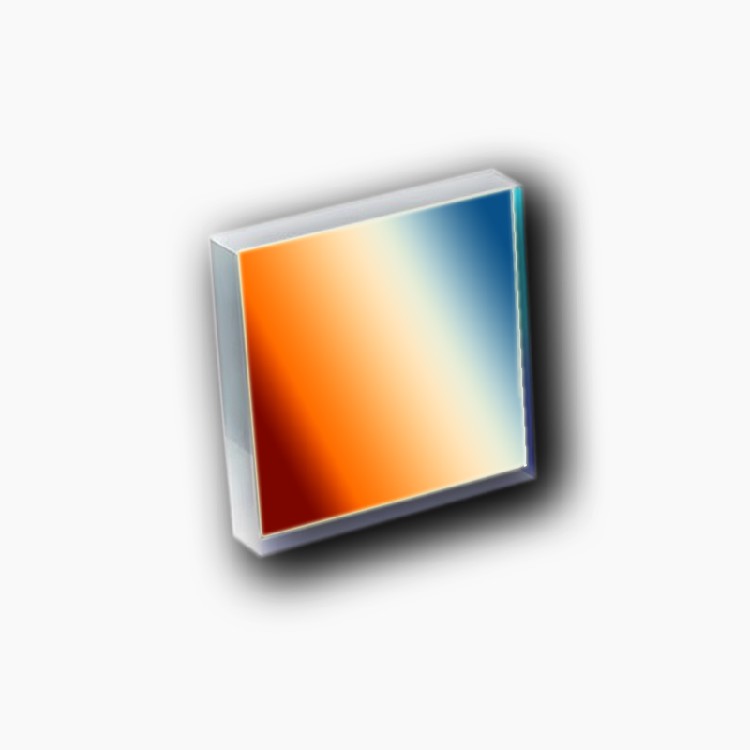
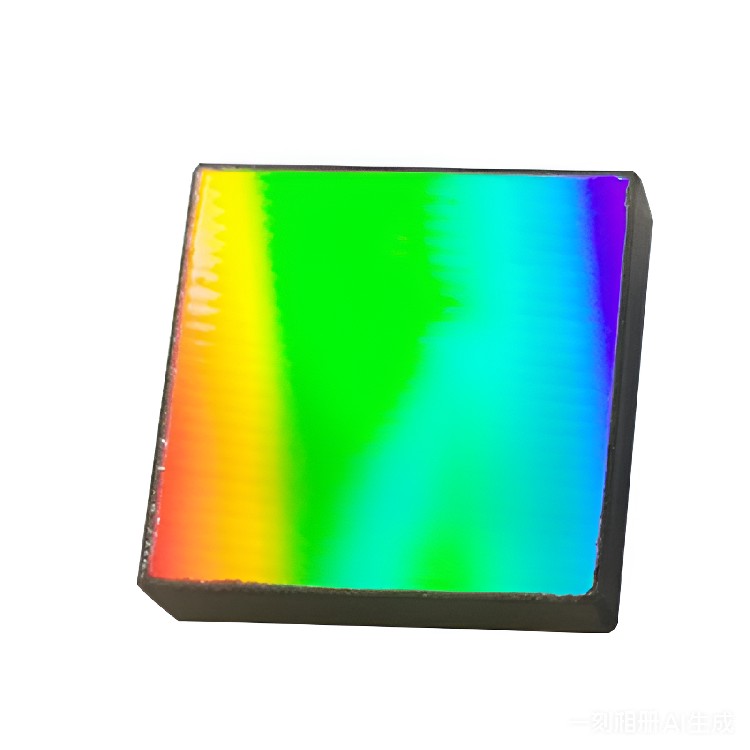
1200Line/mm Ruled Reflective Diffraction Gratings
Product description
Features
High Grating Efficiency of 60% to 80% at the Blaze Wavelength
Low Ghosting, <0.5% of Parent Line
Aluminum Reflective Coating
12.7 mm x 12.7 mm x 6 mm、25 mm x 25 mm x 6 mm、50 mm x 50 mm x 6 mm Various grating sizes are available upon request.
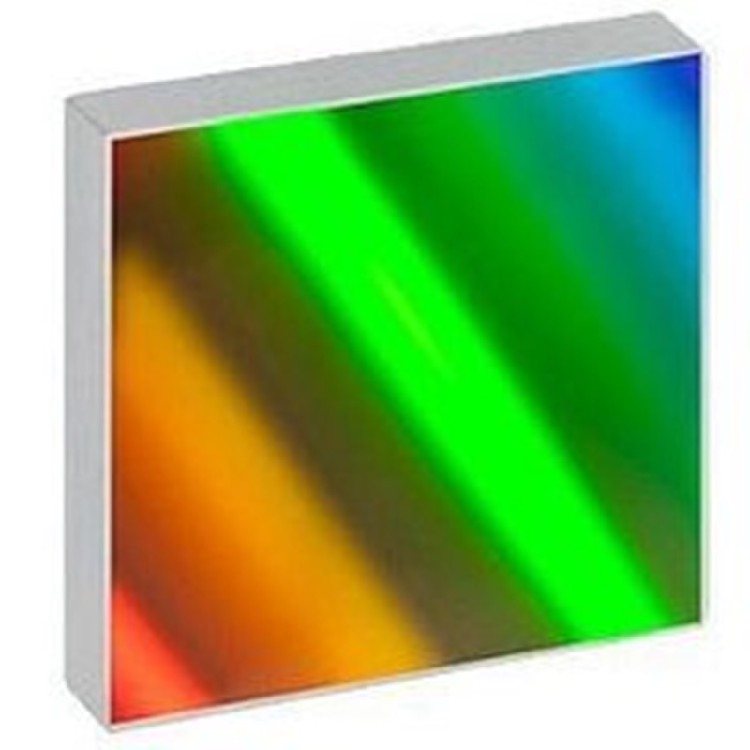
Seray offers ruled diffraction gratings for use in the UV region 、the visible region and the near-IR region. These gratings will have a relatively sharp efficiency peak about their blaze wavelength and are produced from ruled originals. They are offered with different blaze angles to suit a variety of applications in spectroscopy and analysis where high efficiency is of primary concern.
These gratings are bare aluminum and do not contain an overcoat. However, custom MgF2 or gold coatings are available to protect the aluminum surface of the gratings. The gold coating offers high performance in the IR, while the MgF2 coating offers the best protection
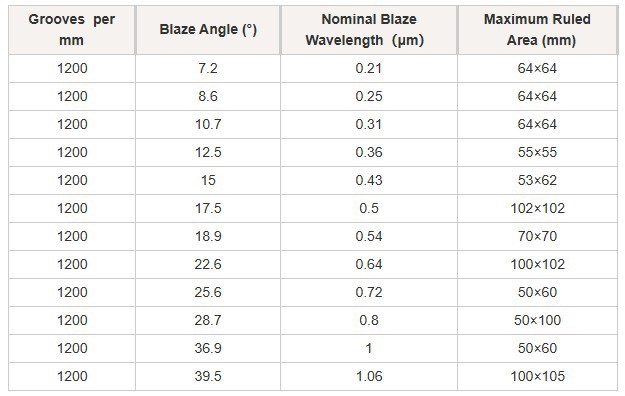
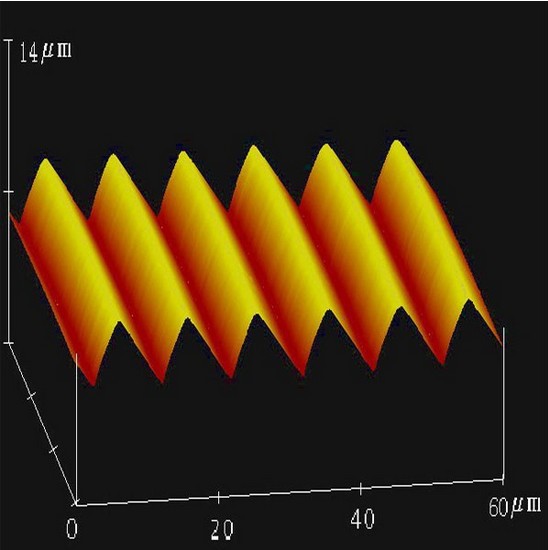
In general, for ruled diffraction gratings the groove spacing determines the diffraction angles, and the groove depth and blaze angle determines how diffracted energy is distributed between diffraction orders.
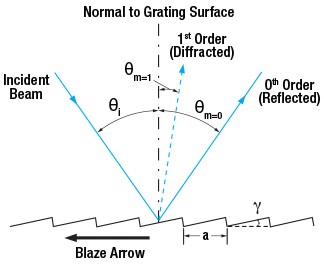
Plane Ruled Diffraction Gratings are most efficient when used near the design wavelength in the Littrow configuration, that is aligned so that the diffraction angle of the dominant diffraction order is coincident with the input beam, effectively behaving as a retroreflector at a specific wavelength. For blazed gratings, maximum efficiency occurs for wavelengths that the Littrow condition at the angle normal to the blazed grating facets. As ruled blaze gratings are asymmetric, correct orientation is indicated with an arrow marking on the size of the substrate. The arrow is on the side of the substrate perpendicular to the ruled grooves, and points toward the steeper edge of the triangular groove profile. Equivalently, the arrow points away from the grating normal toward the facet normal. The arrow should point toward the incident (and diffracted) beam.
Warning
Optical gratings can be easily damaged by moisture, fingerprints, aerosols, or the slightest contact with any abrasive material. Gratings should only be handled when necessary and always held by the sides. Latex gloves or a similar protective covering should be worn to prevent oil from fingers from reaching the grating surface. No attempt should be made to clean a grating other than blowing off dust with clean, dry air or nitrogen. Solvents will likely damage the grating's surface.
Recommended products