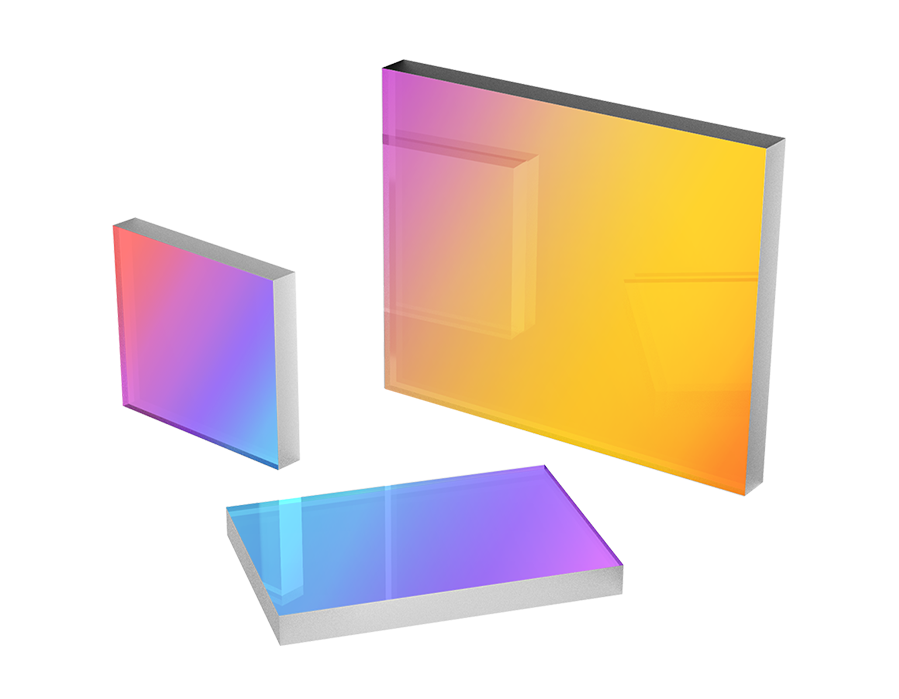
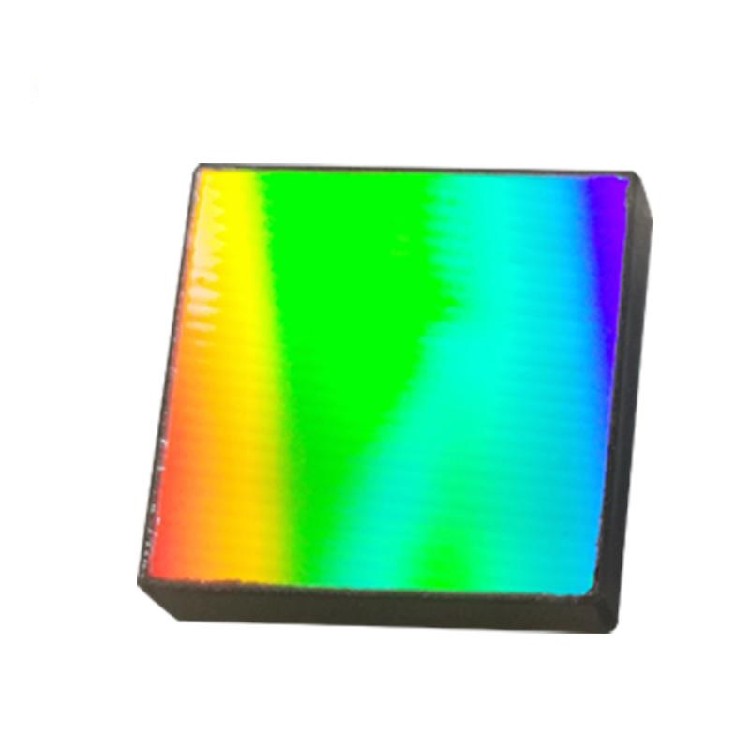
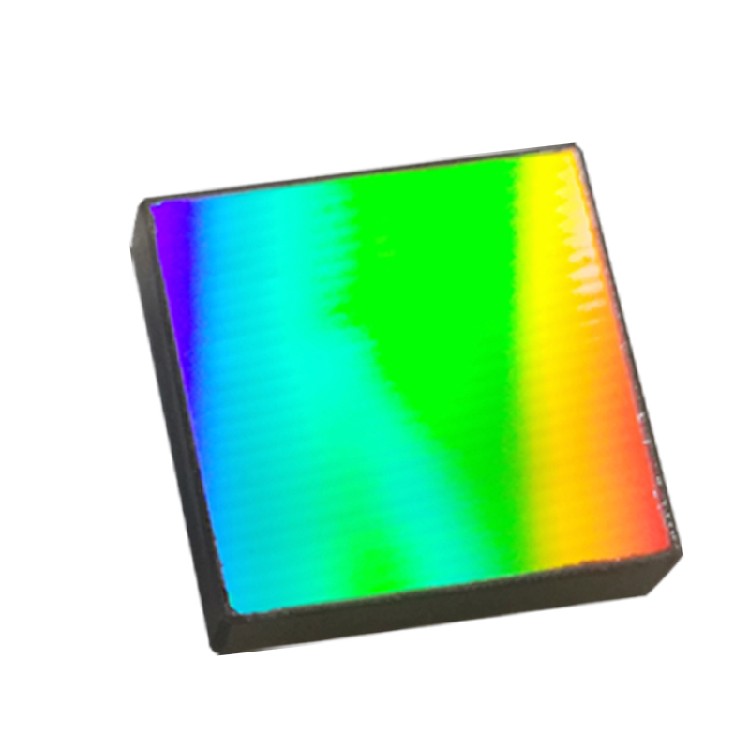
70x70x12mm 1200L/mm Blazed 250nm Plano Ruled Reflective Diffraction Grating
Product description
Reflection Grating
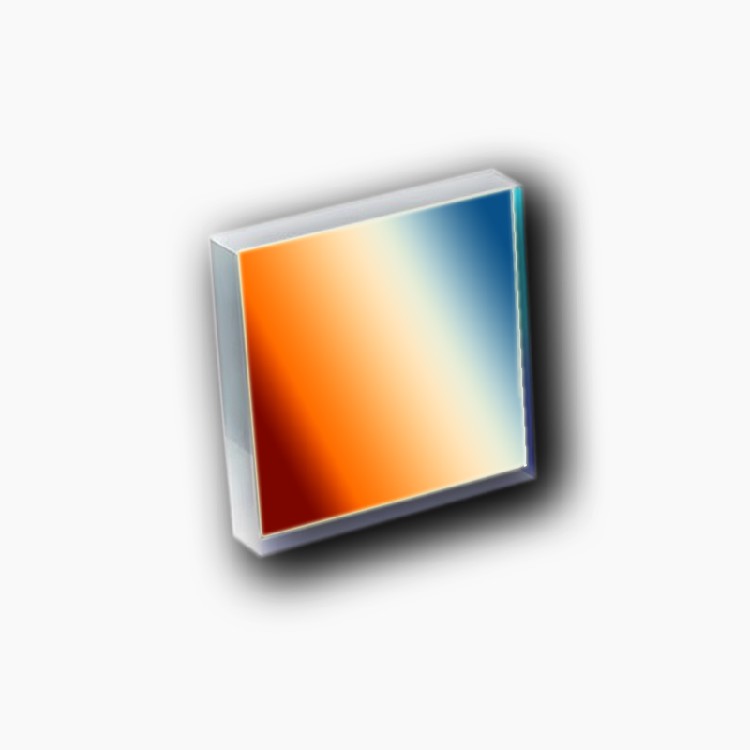
A Reflection Grating is a core optical diffraction component. Periodic microstructures are fabricated on a high-reflectivity surface. By leveraging the reflection, diffraction and interference effects of light, it disperses (separates) polychromatic light into spectra according to wavelength.
Compared with transmission gratings, reflection gratings deliver higher energy utilization efficiency and cover a broader spectral range (especially ultraviolet and infrared bands). They serve as critical components for modern spectrometers, lasers and astronomical equipment.
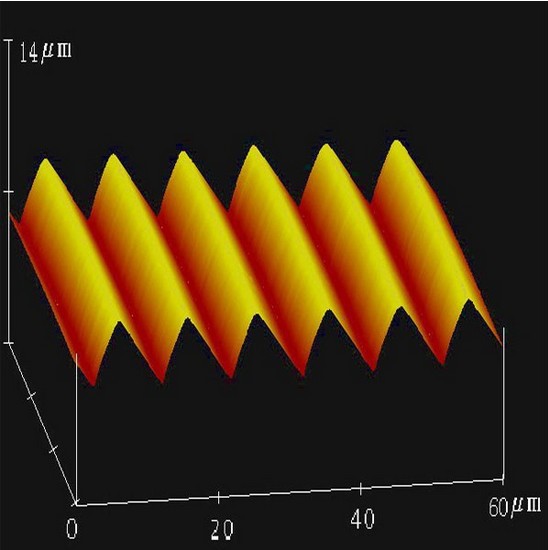
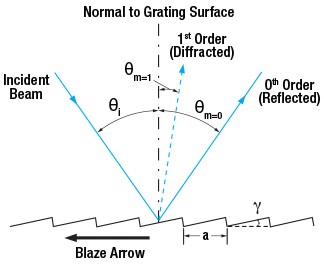
Plane Ruled Diffraction Gratings are most efficient when used near the design wavelength in the Littrow configuration, that is aligned so that the diffraction angle of the dominant diffraction order is coincident with the input beam, effectively behaving as a retroreflector at a specific wavelength. For blazed gratings, maximum efficiency occurs for wavelengths that the Littrow condition at the angle normal to the blazed grating facets. As ruled blaze gratings are asymmetric, correct orientation is indicated with an arrow marking on the size of the substrate. The arrow is on the side of the substrate perpendicular to the ruled grooves, and points toward the steeper edge of the triangular groove profile. Equivalently, the arrow points away from the grating normal toward the facet normal. The arrow should point toward the incident (and diffracted) beam.
Core Performance Parameters
Groove Density
Unit: grooves per millimeter (gr/mm). Common specifications include 300, 600, 1200, 1800 and 2400 gr/mm. This parameter directly determines spectral resolution and dispersion capability.
Diffraction Efficiency
Defined as the ratio of reflected light energy to incident light energy at a specific wavelength and diffraction order; it is the core metric for evaluating grating performance. Conventional holographic gratings achieve diffraction efficiency above 80%, while Volume Phase Holographic (VPH) gratings can reach up to 95%.
Stray Light Level
Reflection holographic gratings feature extremely low stray light (typically less than 10⁻⁵), as they are free from ghost lines and periodic errors caused by mechanical ruling. They are the preferred choice for weak-signal detection such as Raman spectroscopy and fluorescence measurement.
Wavelength Coverage
Determined by substrate material and reflective coating layers. They can cover the full spectrum: ultraviolet (200 nm), visible light (400–700 nm), near-infrared (1100 nm), mid-infrared (5 μm), and more.
Diffraction Order
The 1st diffraction order (m=1) is normally selected to balance diffraction efficiency and resolution. Optical design is required to suppress interference from higher orders (2nd order and above).
Recommended products