EASTLIFT
Product description
Export Standards for Aerial Work Platforms (AWPs) to Africa
The core requirements for exporting Aerial Work Platforms (AWPs) to Africa are: adherence to international safety standards, compliance with the destination country's Certificate of Conformity (COC) for customs clearance, compliance with engine emission regulations, adaptation for right-hand drive and/or high-temperature environments, and the provision of a complete set of technical documentation. These requirements apply universally to all AWP types—including spider lifts, scissor lifts, articulated boom lifts, and truck-mounted platforms. Below, we present a directly actionable checklist organized into the following categories: Mandatory Standards → Certification → Technical Specifications → Customs Clearance Documents → Common Country-Specific Variations. I. International Mandatory Standards (Minimum Baseline Applicable to All African Countries)
1. Safety Design (Mechanical + Electrical)
ISO 16368: Mobile Elevating Work Platforms (MEWPs)—Design, Safety, and Testing (Globally applicable; covers spider lifts, scissor lifts, and articulated boom lifts)
EN 280: EU Safety Standard for Aerial Work Platforms (Widely recognized in Africa; can substitute for certain local standards)
GB/T 24471: Chinese National Standard (GB); serves as a foundational standard for export purposes
Electrical Safety: IEC 60204-1 (Electrical Control Systems); IP65 rating (Dustproof and water-resistant—essential for Africa's high-temperature and high-humidity environments)
Structural Safety: Overload protection (Safety factor ≥ 5); Anti-tipping mechanisms; Emergency stop (Response time ≤ 0.5s); Outrigger interlocks
2. Emissions and Power Systems (Diesel / Electric)
Diesel-Powered Vehicles/Power Units: African markets predominantly accept China Stage III / Stage IV (equivalent to Euro III / Euro IV) emission standards; certain countries (e.g., South Africa) require China Stage V standards
Electric Spider Lifts / Scissor Lifts: No emission restrictions; lithium-ion batteries are preferred (capable of withstanding high temperatures of 45°C+)
Explosion-Proof Requirements (Oil & Gas / Mining Sectors): ATEX Zone 2 or IECEx certification (commonly required in Nigeria, South Africa, and Algeria)
II. Country-Specific Mandatory Certifications in Africa (Essential for Customs Clearance; None Can Be Omitted)
1. Universal Core Certifications (Required by 90% of African Countries)
COC (Certificate of Conformity): Issued by a third-party inspection body (e.g., SGS, BV, Intertek); involves pre-shipment inspection plus a review of standard compliance
2. Specialized Certifications for Key Countries
Table
Country | Certification Name | Core Requirements
Nigeria | SONCAP | Product registration + COC for every shipment; compliance with NIS or ISO/EN standards
Kenya | PVOC | Registration + COC for every shipment; involves physical inspection + documentation review
Tanzania / Uganda | PVOC | Same requirements as Kenya; Uganda additionally requires PVOG certification
South Africa | SABS | Mandatory SABS certification; requirements are equivalent to EN 280 + ISO 16368
Ethiopia / Cameroon | COC Pre-shipment Inspection: PECAE Program (for Cameroon)
3. Optional Value-Added Certifications (to Enhance Competitiveness)
CE: EU Certification (Highly recognized by African clients; can substitute for certain local testing requirements)
ISO 9001: Quality Management System (Essential for tender submissions)
ISO 14001: Environmental Management (Preferred by clients in Europe and North America)
III. Technical Specifications Tailored for the African Market (Adapted for High Temperatures, Road Conditions, and Regulations)
1. Chassis & Mobility (Vehicle-Mounted Units)
Driving Position: Predominantly Right-Hand Drive (RHD) (Most African countries follow right-hand traffic rules)
Chassis Brands: Isuzu, Mercedes-Benz, Volvo (High installed base in Africa; spare parts are readily available)
Wheelbase / Track Width: Narrow body design (≤ 2.5m) to suit narrow rural roads; Ground clearance ≥ 250mm (for off-road conditions)
2. Operational Performance (Spider Lifts / Scissor Lifts / Articulated Boom Lifts)
High-Temperature Adaptation: Hydraulic system designed for high-temperature resistance (-20°C to +50°C); features an enlarged radiator and utilizes #46 anti-wear, high-temperature-resistant hydraulic oil
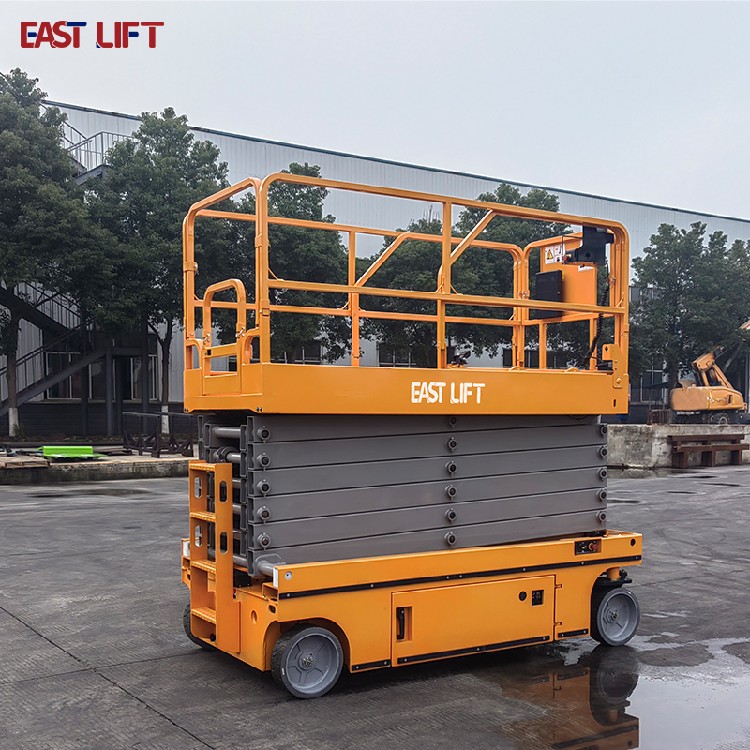
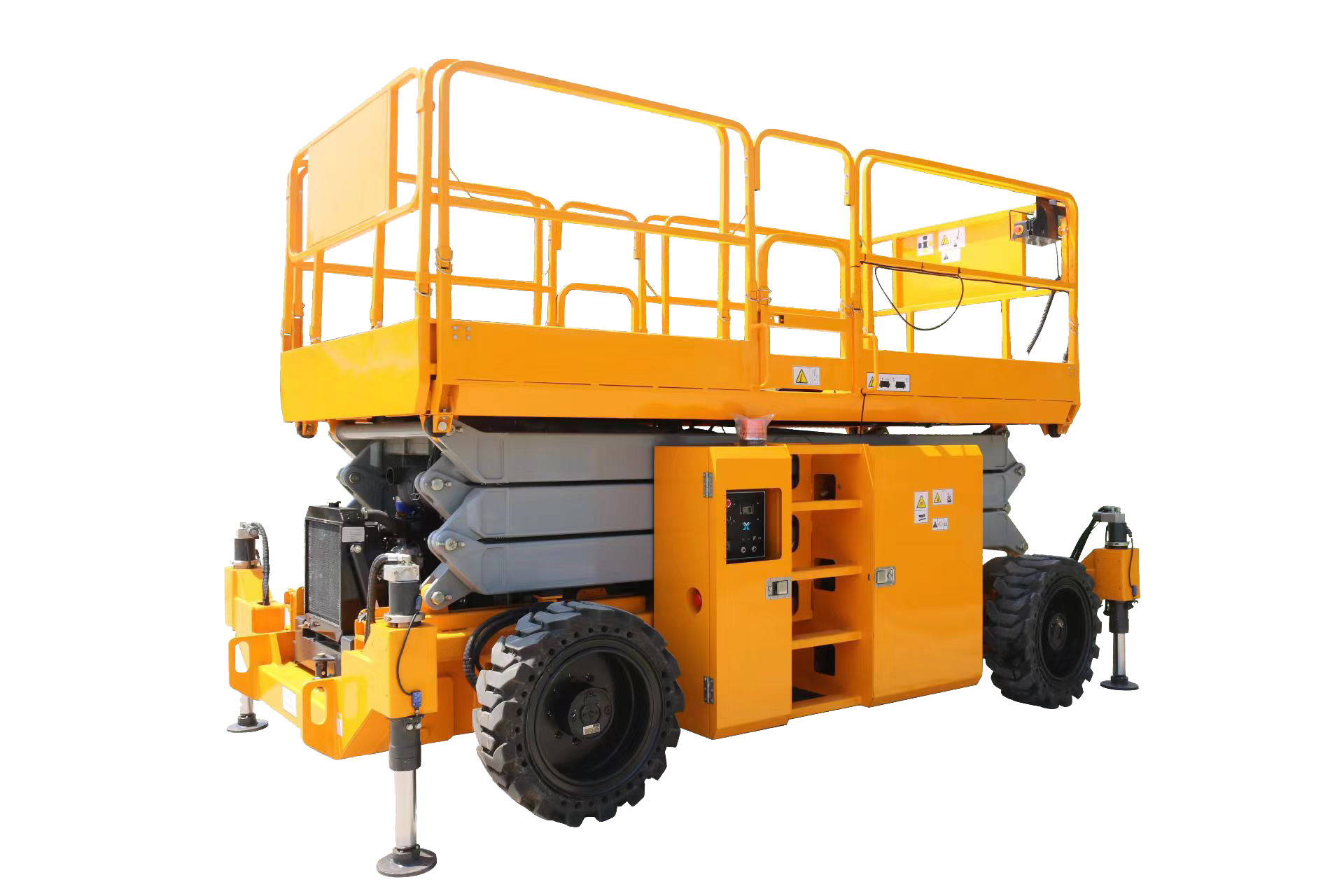
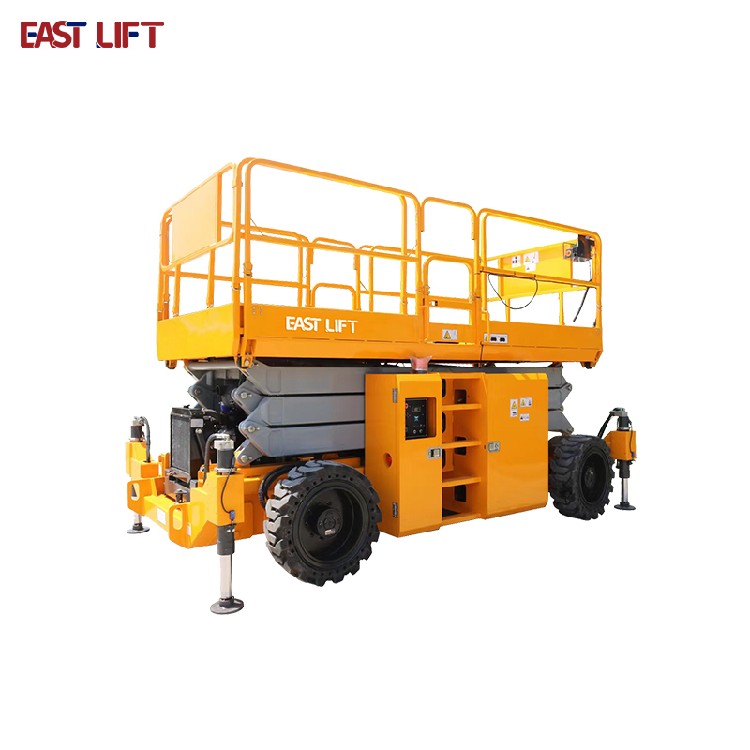
Tracks / Tires: Spider lifts are equipped with rubber tracks (protects flooring; suitable for both indoor and outdoor use); Scissor lifts and articulated boom lifts are equipped with off-road tires (suitable for sandy or muddy terrain)
Voltage: Electrical system operates on 24V DC (African infrastructure often suffers from unstable voltage; 24V offers greater stability)
Insulated Models (For Power Utility Applications): Insulation ratings available for 10kV, 35kV, 110kV, and 220kV; compliant with IEC 61057 standards
3. Operation & Labeling
Language: English control panel + English User Manual + Local Language (French/Arabic) safety warning labels
Markings: CE / ISO / SABS / SONCAP Clear markings; the nameplate includes the model number, serial number, rated load, and date of manufacture.
IV. Essential Documents for Customs Clearance (All documents are mandatory; failure to provide any will result in cargo detention and fines)
Basic Trade Documents: Contract, Commercial Invoice, Packing List, Bill of Lading (B/L), Certificate of Origin (CO)
Certification Documents: COC (including Test Report), SONCAP/PVOC/SABS (specific to the destination country), CE/ISO Certificates
Technical Documents: English User Manual, Maintenance Manual, Parts Catalog, Electrical Schematics, Hydraulic Schematics