Analysis of the Entire Process of Foreign Trade Gift Box Packaging Design, Printing Technology and Production
Product description
rnational trade market, gift boxes serve as the external business card of products. They not only fulfill basic functions such as product protection and storage but also directly influence overseas customers' brand perception and consumption experience. Compared to domestic packaging, export-oriented gift boxes have higher requirements in terms of design adaptability, printing precision, material environmental friendliness, and process stability. They must align with the aesthetic standards, environmental regulations, and export transportation needs of different countries. This article provides a comprehensive introduction to the key points of designing export gift boxes, printing technologies, color specifications, material selection, core processes, and standardized production procedures.
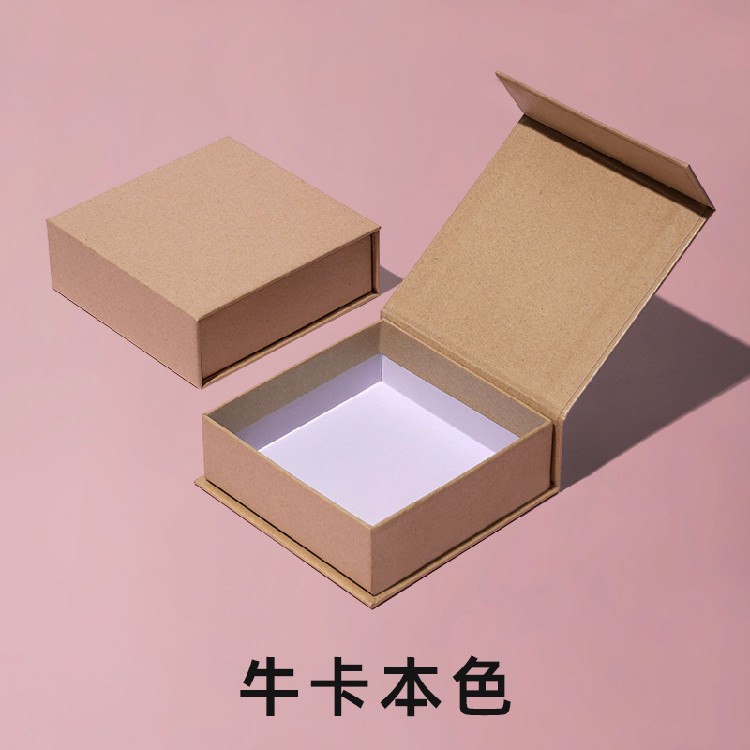
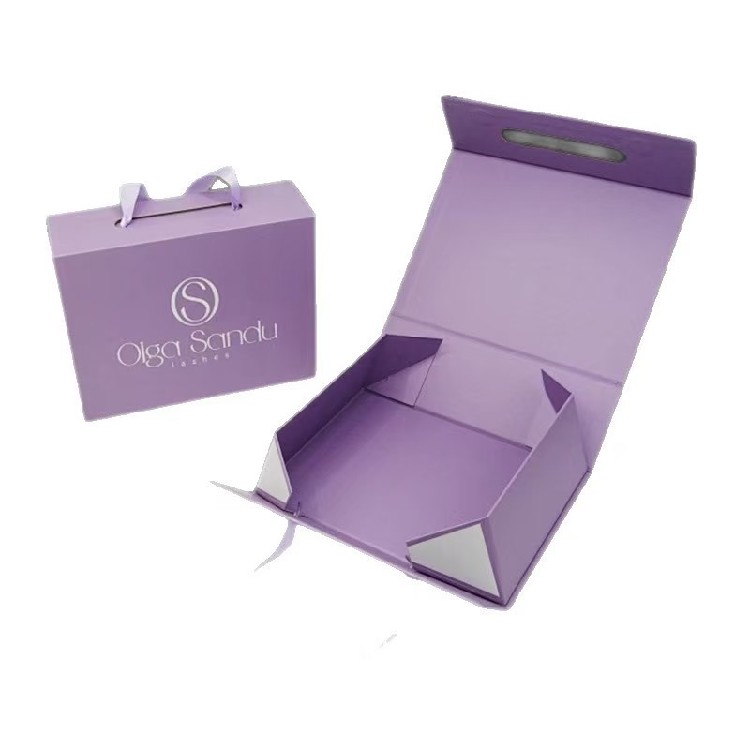
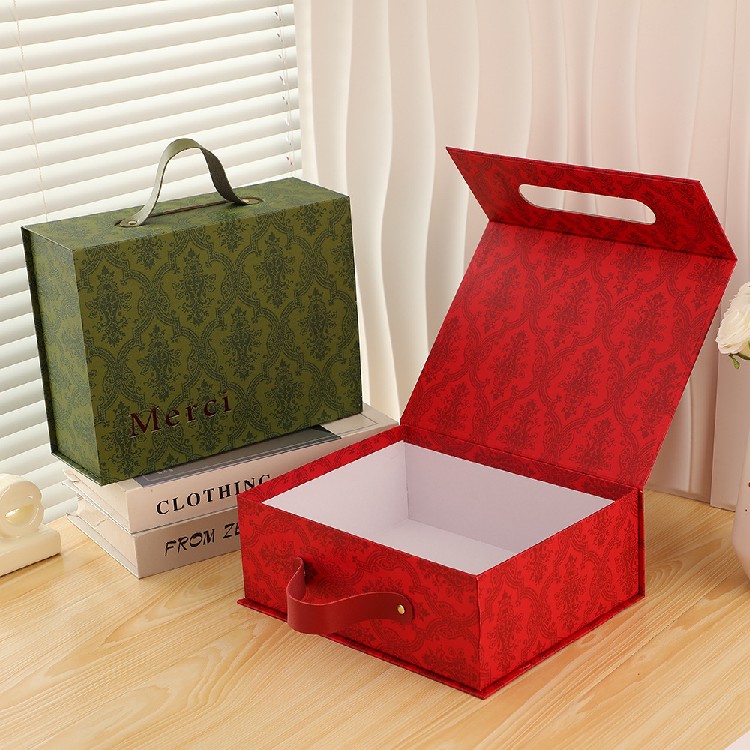
In the design phase of export gift boxes, the core principles are internationalization, adaptability, and branding. Firstly, it is essential to combine the cultural customs and aesthetic preferences of the target export markets to avoid design taboos. For example, European and American markets favor minimalist and sophisticated layouts, while Middle Eastern markets prefer luxurious and richly colored styles. Southeast Asian markets generally accept fresh and lively designs. Simultaneously, design must balance practicality and compliance. Box structures should be customized according to product size and weight, with common types including top-and-bottom lid boxes, flip-top boxes, drawer boxes, and folding gift boxes, suitable for various export products such as jewelry, cosmetics, electronic gifts, and home essentials. Additionally, design visuals need to reserve bleed areas and adhere to printing standards. They should also include multi-language information, product parameters, environmental labels, and traceability barcodes to meet customs and supermarket sales regulations across different countries.custom gift box
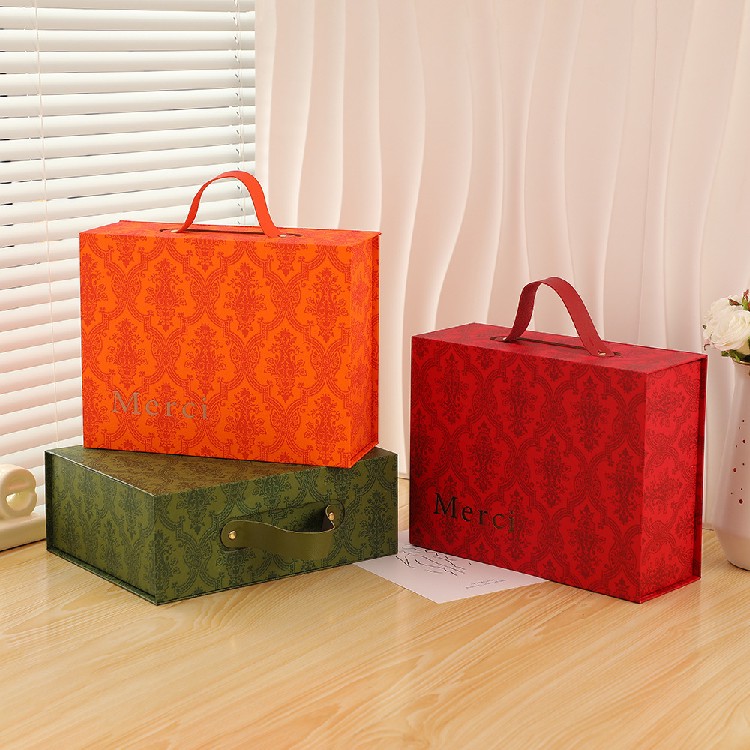
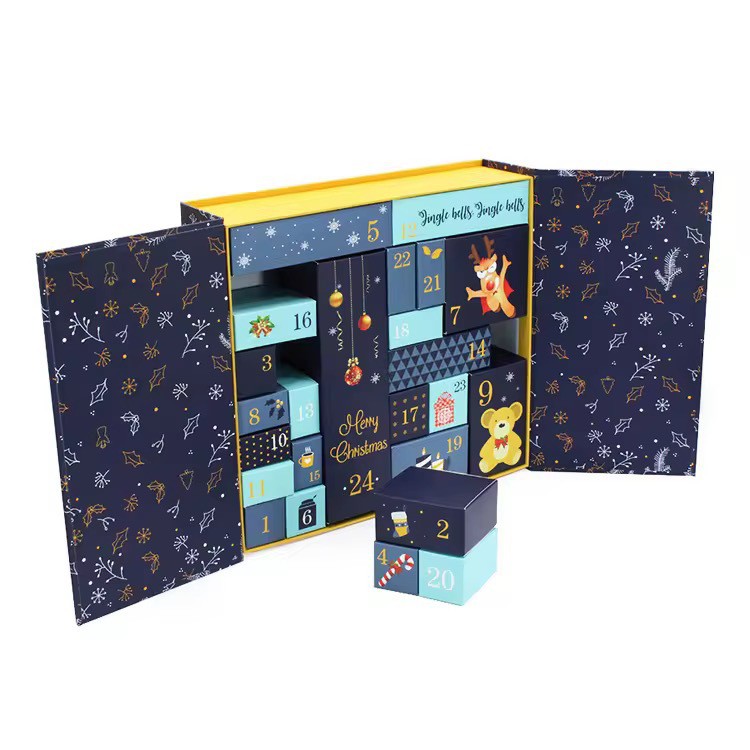
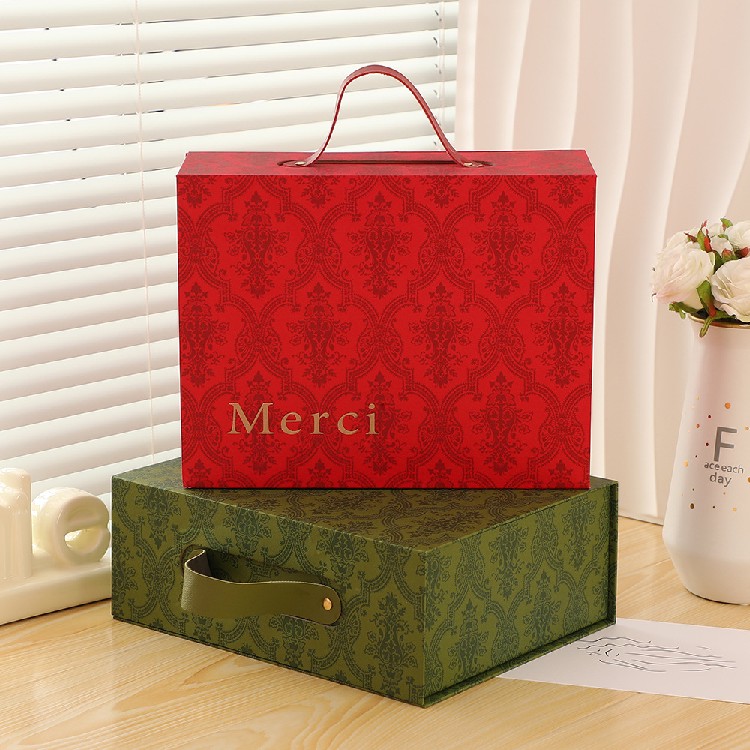
Color is the core of visual presentation for export gift boxes and directly determines their shelf competitiveness. Color coordination for export packaging follows an international aesthetic system, using CMYK four-color overprinting as the base coloring mode to ensure consistent global printing colors and avoid color differences. Premium export gift boxes often adopt low-saturation, high-quality palettes such as Morandi tones, black gold, white gold, and Morandi earthy colors to highlight a light luxury and sophisticated feel. Holiday-themed export gift boxes will use classic contrasting colors like red gold, green gold, and pink-white according to overseas holidays such as Christmas, Thanksgiving, and Valentine's Day. Strict control of color difference errors is maintained, with batch production color differences kept within 5% to ensure uniform color throughout the batch, meeting overseas brand quality control standards.luxury packaging box
Material selection directly impacts the texture, transportation safety, and export compliance of gift boxes and is a key consideration for foreign trade clients. Paper materials are the mainstream choice for export gift boxes. White cardboard offers high stiffness and excellent print results, making it suitable for small to medium-sized refined gift boxes. Coated paper, with its smooth surface and exceptional color reproduction, is commonly used for high-definition pattern printing boxes. Specialty papers such as pearlized paper, artistic textured paper, and tactile paper offer unique textures and are ideal for premium luxury export gift boxes. For heavy products or long-distance sea freight, hardboard and corrugated composite materials are selected to enhance pressure resistance and shock absorption. All materials must comply with EU ROHS and REACH environmental standards, being free from formaldehyde, odors, and recyclable/degradable to mitigate export environmental compliance risks. Some premium export gift boxes may also incorporate inner linings made of PU leather, silk, or velvet to elevate the box's (prestige).printed paper box
Printing technology determines the picture precision and quality texture of gift boxes. Export gift boxes primarily employ high-precision, high-reproduction printing processes. Offset printing is commonly used for regular bulk orders due to its uniform and clear colors, cost-effectiveness, and suitability for large-area graphics and text. Screen printing is chosen for premium custom orders, offering thick, three-dimensional ink layers and higher color saturation. Hot stamping (foil stamping) in gold and silver is a popular technique for best-selling export gift boxes, applying metallic foil to the box surface via heat and pressure to create a luxurious metallic sheen. Additionally, digital print-on-demand technology caters to small-batch, personalized export orders, enabling quick customization of patterns, logos, and text to meet the needs of niche overseas brands.eco friendly packaging box
Post-processing techniques enhance the wear resistance, water resistance, and texture of export gift boxes, distinguishing them from ordinary packaging. Lamination includes glossy and matte finishes; glossy lamination brightens colors and provides waterproofing and scratch resistance, while matte lamination offers a premium texture and fingerprint resistance, suitable for different style boxes. UV varnishing creates raised, glossy highlights on specific patterns, logos, or text, adding visual depth. Other widely used techniques for premium export gift boxes include embossing, debossing, die-cutting, sandblasting, and spot uv, which give flat surfaces a three-dimensional tactile feel, significantly increasing product added value and helping products stand out in overseas markets.
Export gift boxes follow a standardized production process that maintains quality throughout and meets the stringent requirements of export orders. The first step is design finalization and sampling, where layout, color, and process designs are completed based on client needs, physical samples are produced, and confirmed to be error-free before final approval. The second step involves raw material procurement and quality inspection, sourcing paper and auxiliary materials that meet export environmental standards and testing for thickness, stiffness, and environmental indicators. The third step is printing plate making, creating printing plates from finalized files and calibrating machine color parameters through trial prints and color correction. The fourth step is bulk printing, completing the mass printing of graphics and colors. The fifth step is post-print processing, sequentially undergoing lamination, UV varnishing, hot stamping, and embossing/debossing. The sixth step is die-cutting and forming, precisely cutting and creasing using specialized equipment to ensure uniform and neat box shapes. The seventh step is manual assembly and liner fitting, folding, bonding, and securing the inner liner. Finally, finished product inspection, dust removal, disinfection, and packing occur, checking for appearance, dimensions, and process defects. Qualified products are then moisture-proof packaged to suit sea or air transport exports.
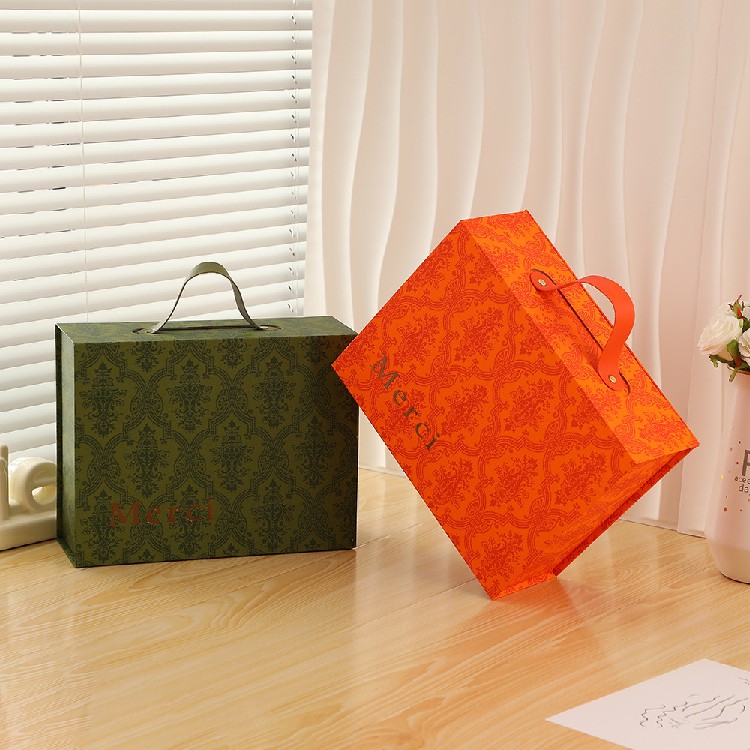
In summary, every aspect of export gift boxes—from design, color, and materials to processes and production—is centered around international quality, compliance, aesthetics, and practicality. Refined design and standardized production processes not only enhance the brand image of export products but also help enterprises mitigate export risks and strengthen their core competitiveness in international markets, serving as a crucial boost for products going global.
Recommended products