EASTLIFT
Product description
Impacts of Power Configurations on Overall Performance of Scissor Lifts
Scissor lifts are mainly categorized into three power types: DC battery electric, internal combustion diesel/gasoline, and hybrid power. The power system directly determines six core performance metrics: load capacity, endurance, gradeability, site adaptability, lifting speed, and maintenance cost. Detailed impacts by dimension are analyzed as follows:
I. Power Type Determines Site Applicability and Emission Restrictions
1. Full-electric DC Battery Type (Built-in Lead-acid / Lithium Batteries)
Advantages in Performance
- Zero exhaust emissions and low noise; applicable to indoor scenarios such as shopping malls, factories, basements, and fine finishing construction sites.
- Smooth power output with no jitter during lifting and traveling, delivering high operation precision.
- No exhaust fumes or oil stains, avoiding contamination of floors and walls, ideal for clean construction work.
Performance Drawbacks
- Low torque resulting in weak gradeability; standard electric scissor lifts feature a maximum gradeability of 15%~25%, and cannot operate on steep slopes or muddy construction sites.
- Endurance limited by battery capacity; continuous full-load operation lasts only 4 to 8 hours. Frequent recharging is required for heavy-duty outdoor long-hour work.
- Battery capacity declines under low temperatures, cutting winter endurance by around 30%.
2. Internal Combustion Power Type (Mainly Diesel, Minor Gasoline Models)
Advantages in Performance
- High output torque and strong gradeability with a maximum gradeability of 30%~45%, suitable for muddy roads, ramps and outdoor civil construction sites.
- Unlimited continuous operation; refueling enables immediate work, perfect for field and long-term outdoor projects.
- Sufficient power reserve for heavy-load lifting and traveling on large models, with faster full-load lifting speed.
Performance Drawbacks
- Exhaust emissions and loud noise prohibit operation in enclosed indoor spaces.
- Poor cold start performance, hard to start in low-temperature regions during winter.
- Heavy heat generation from hydraulics and the engine; prolonged continuous lifting may trigger speed reduction due to overheating.
3. Hybrid Power Type
Enables switching between indoor and outdoor operation: electric mode offers silent, emission-free indoor work, while engine mode delivers strong climbing performance and long endurance outdoors. However, the complete machine weighs more, the structure is complicated, leading to higher failure rates and procurement costs.
II. Motor / Engine Power Directly Affects Lifting, Traveling and Heavy-load Performance
1. Electric Models – Travel Motor + Lifting Hydraulic Motor Power
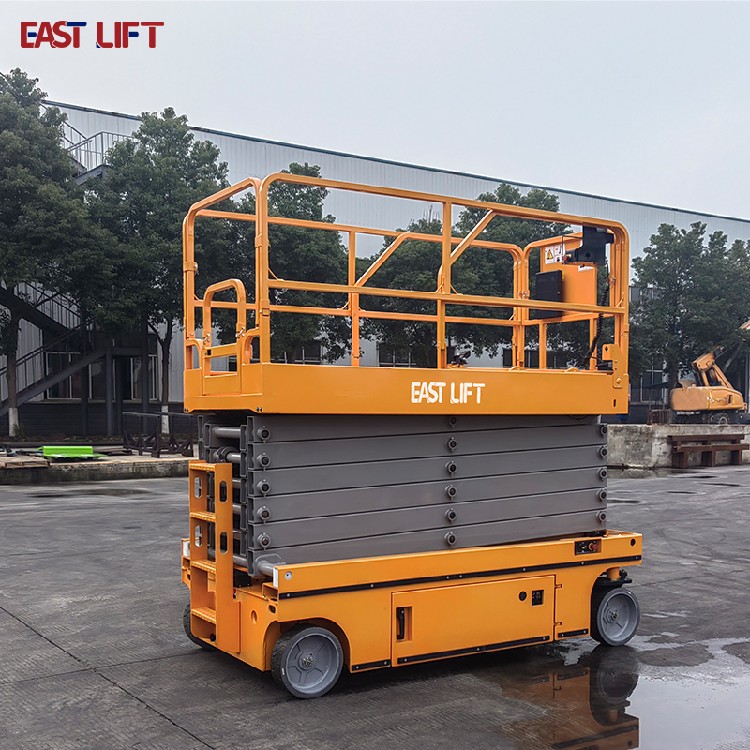
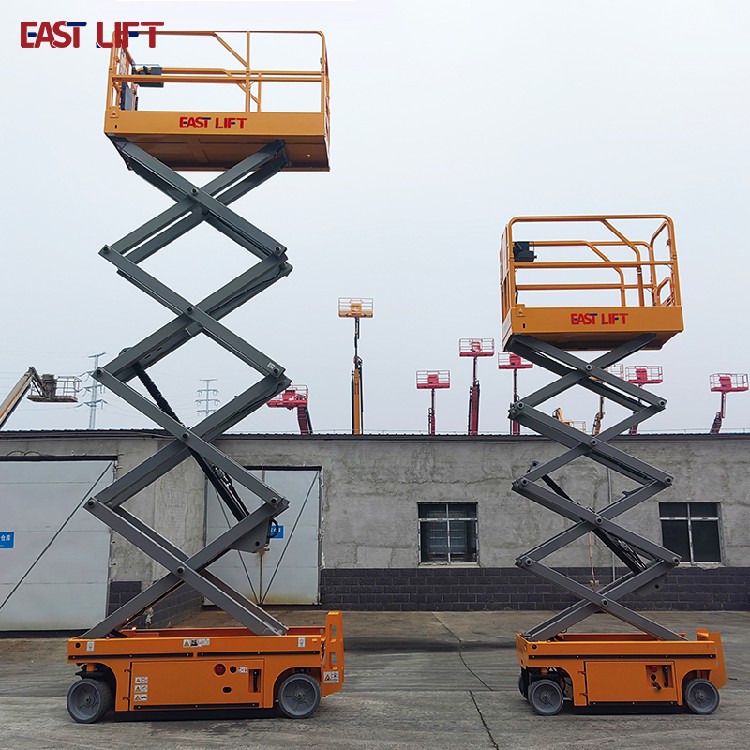
- Low-power motors (2~3kW): Used on light compact scissor lifts (6m, 8m). They travel lightly under no load but slow down noticeably during full-load lifting, and tend to suffer insufficient power and wheel slip on slopes; standard rated load capacity is 230kg for passenger use.
- High-power drive motors (4~6kW): Equipped on medium and large 10m, 12m scissor lifts with four-wheel drive (4WD). They deliver off-road capability, maintain constant speed during full-load lifting, prevent sliding on steep slopes, and support load capacities of 320~500kg.
- Hydraulic pump motor power dictates lifting response speed. Insufficient power causes choppy, slow lifting, doubling lifting time under full loads.
2. Internal Combustion Models – Engine Horsepower
- Low-horsepower diesel engines (18~25 HP): For flat-ground standard scissor lifts, only meeting basic traveling and lifting demands with weak climbing performance under full loads.
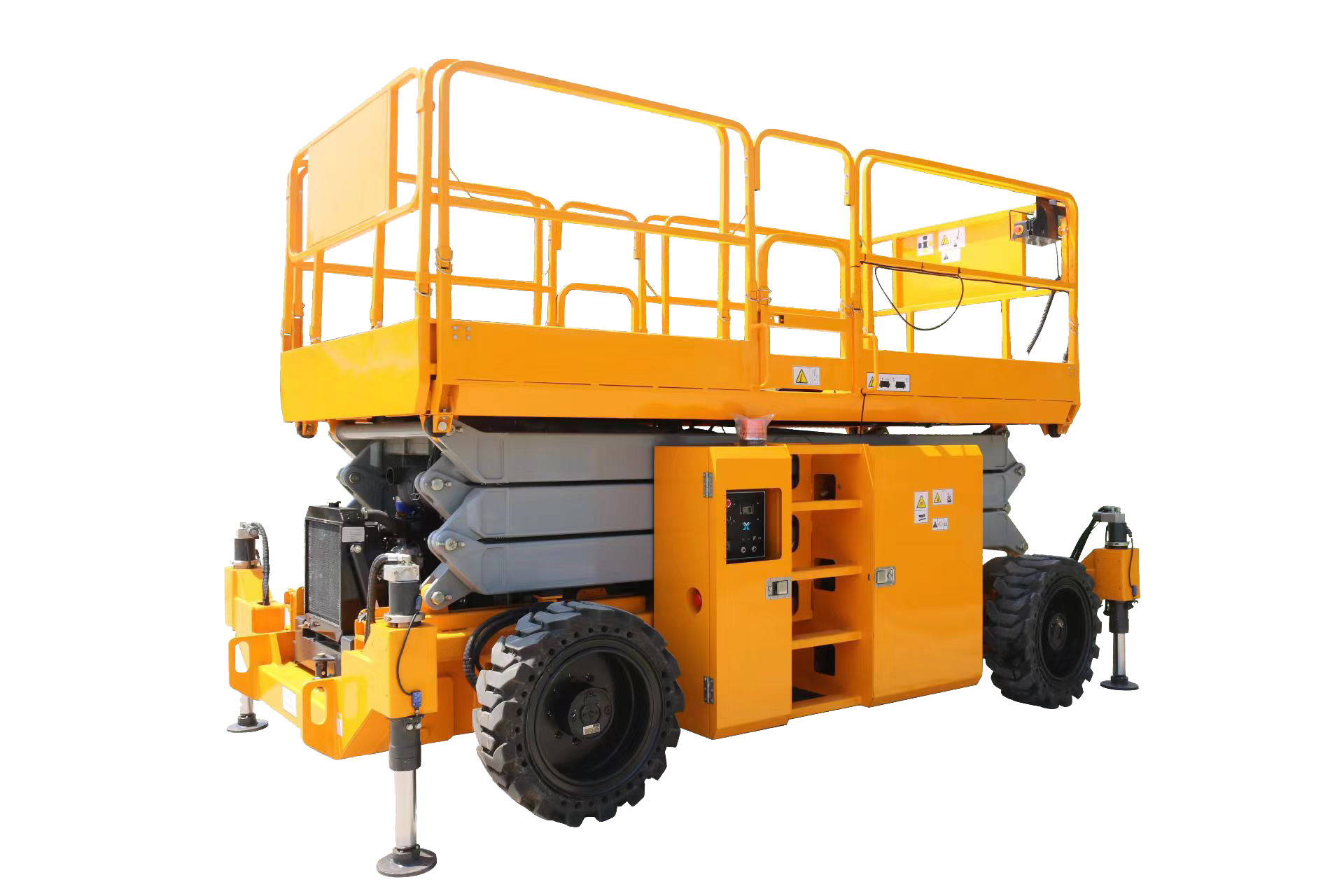
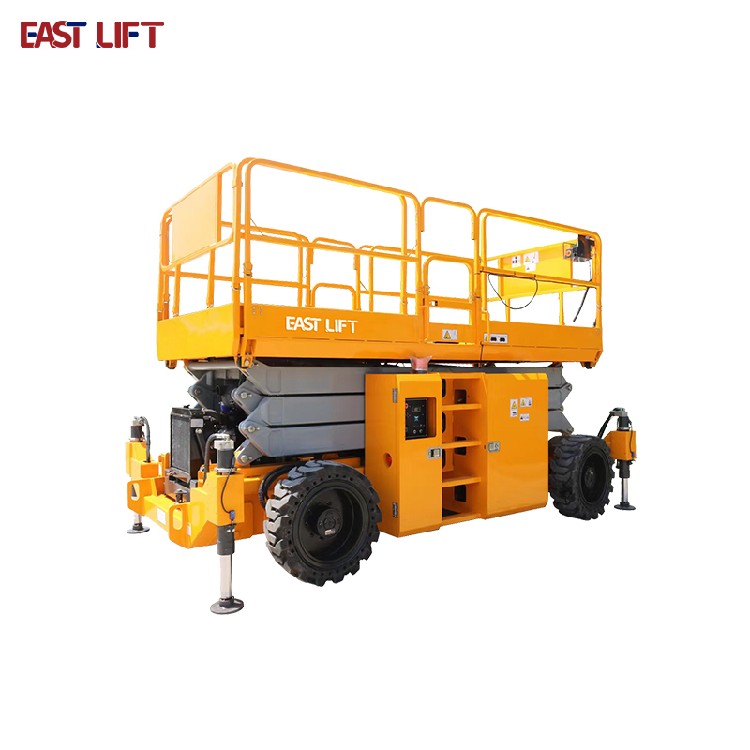
- High-horsepower engines (30 HP and above): Fitted on heavy-duty off-road scissor lifts with four-wheel drive and four-wheel steering. They offer excellent passability on rough, stony ground, stable heavy-load lifting, and support full-load operation with extended platforms.
III. Battery / Fuel Tank Capacity Decides Endurance and Continuous Operation Duration
For Electric Models
- Small-capacity lead-acid batteries (below 200Ah): For short-distance indoor inspections; power depletes in 3~4 hours with frequent lifting operations.
- Large-capacity lithium batteries (300Ah~500Ah): Extend endurance to 6~10 hours; fast charging reduces downtime. Higher battery voltage (24V/48V) generates stronger instantaneous power and greater lifting burst force.
For Internal Combustion Models
Fuel tank volume determines the maximum non-refueling operation time per day. Models with large fuel tanks are ideal for remote construction sites, minimizing trips for refueling and improving overall construction efficiency.
IV. Drive Mode Matched with Power (Two-wheel Drive / Four-wheel Drive)
Matching power output to four-wheel drive is the critical dividing line for off-road performance:
- Two-wheel drive electric: Only front-wheel drive, adequate for flat indoor surfaces but prone to power shortage and wheel slip on gentle slopes.
- Four-wheel drive electric / four-wheel drive diesel: Distributes independent power to all four wheels with higher overall torque, delivering off-road capability to traverse gravel and uneven ground. Equipped with differential locks for enhanced site adaptability.
- Four-wheel drive units must be paired with high-power power systems. Using low-power motors to drive four wheels will cause overheating and automatic overload shutdown protection.
V. Impacts of Power Sources on Self-weight, Load Capacity and Platform Stability
- High self-weight of batteries: Lithium and lead-acid batteries are mounted on the chassis, lowering the machine’s center of gravity and improving lateral stability at maximum lifting height, allowing a larger allowable tilt angle at the same working height.
- Rear-mounted engines on internal combustion models: Counterweight concentrates at the rear, making the front light and rear heavy under no load, resulting in greater platform shaking on uneven ground at height.
- Extra weight from power systems cuts down available load margin: For lifts of identical working heights, hybrid and high-power four-wheel-drive units weigh more, leading to a slight reduction in rated load capacity.
VI. Power Configuration Influences Energy Consumption, Maintenance and Service Life
Electric Models
- Low energy consumption; charging costs are far lower than fuel expenses. No regular replacement of engine oil or filters required, simplifying daily maintenance.
- Batteries are consumable components requiring replacement every 3 to 5 years; low temperatures and over-discharge drastically shorten battery service life.
- Motors contain few wearing parts and feature long service life.
Internal Combustion Models
- High fuel consumption leading to high long-term operating costs. Regular engine maintenance including oil and filter replacement is mandatory.
- Engines accumulate carbon deposits easily on dusty construction sites. Frequent heavy-load operation shortens engine lifespan, and high-temperature conditions activate power limiting protection.
VII. Additional Power Configurations Bring Differences in Hydraulic Assist and Charging Performance
- Electric scissor lifts with variable-frequency motors: Output power on demand, enabling stepless adjustment of lifting speed, saving energy under no load and sustaining stable power under full loads. Fixed-frequency motors operate at constant power, wasting electricity when unloaded and lacking power under heavy loads.
- External fast-charging support: Large-capacity battery units equipped with fast chargers cut downtime and boost effective daily working hours; models without fast charging only support slow overnight charging.
- Turbocharged engines: Fitted on high-power off-road diesel scissor lifts to avoid power attenuation at high altitudes, whereas naturally aspirated engines suffer obvious loss of lifting and traveling power on plateaus.