EASTLIFT
Product description
Disadvantages of Diesel Rough Terrain Scissor Lifts (RT Scissor Lifts)
I. Higher Operating Costs & Greater Long-Term Expenses
Fuel Consumption
The machine consumes diesel continuously during all-day operations, resulting in substantial fuel expenses for long-term outdoor construction compared to electric models with zero electricity costs. Fuel consumption rises further in low-temperature winter conditions.
Engine Maintenance Expenses
Regular replacements of engine oil, oil filters, diesel filters, air filters and antifreeze are required, along with fuel line cleaning. Electric scissor lifts only require maintenance for batteries and hydraulic systems, with no consumable parts for engines.
Numerous Wear Parts to Replace
Engine components including exhaust pipes, mufflers, starter motors, diesel pumps, glow plugs and radiators are regular wear items. The procurement cost of replacement parts is higher than that of fully electric units.
II. Loud Noise & Exhaust Emissions; Prohibited for Indoor/Enclosed Workspaces
Exhaust Emissions
Diesel combustion generates carbon monoxide, particulate matter and waste exhaust. Such lifts are completely banned inside factories, basements, tunnels and other enclosed spaces due to risks of operator poisoning in poorly ventilated areas. Electric lifts produce no exhaust and are suitable for indoor use.
High Operating Noise
The engine generates loud noise during idling, driving and lifting. Environmental regulations restrict their use for night construction near residential areas, hospitals and schools, as well as indoor renovation projects. Electric lifts operate silently and support night-time indoor work.
Strict Environmental Compliance Restrictions
Urban central zones, ecological scenic areas and green construction sites often mandate Stage IV / Stage V / Stage VI emission standard units. Older Stage II and Stage III machines are barred from most construction sites, adding extra costs for equipment upgrades.
III. Bulky & Heavy Body, Poor Maneuverability in Confined Spaces
Extremely Heavy Overall Weight
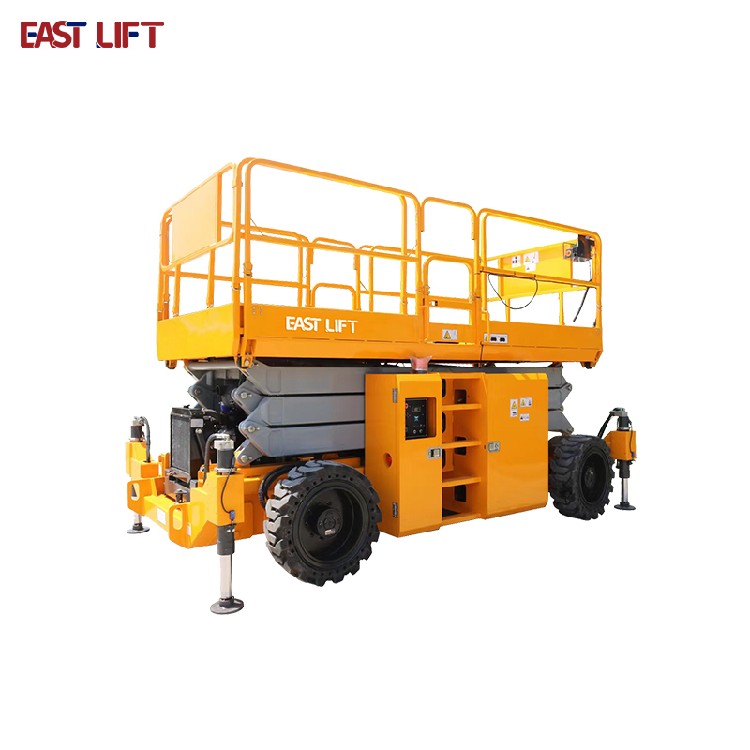
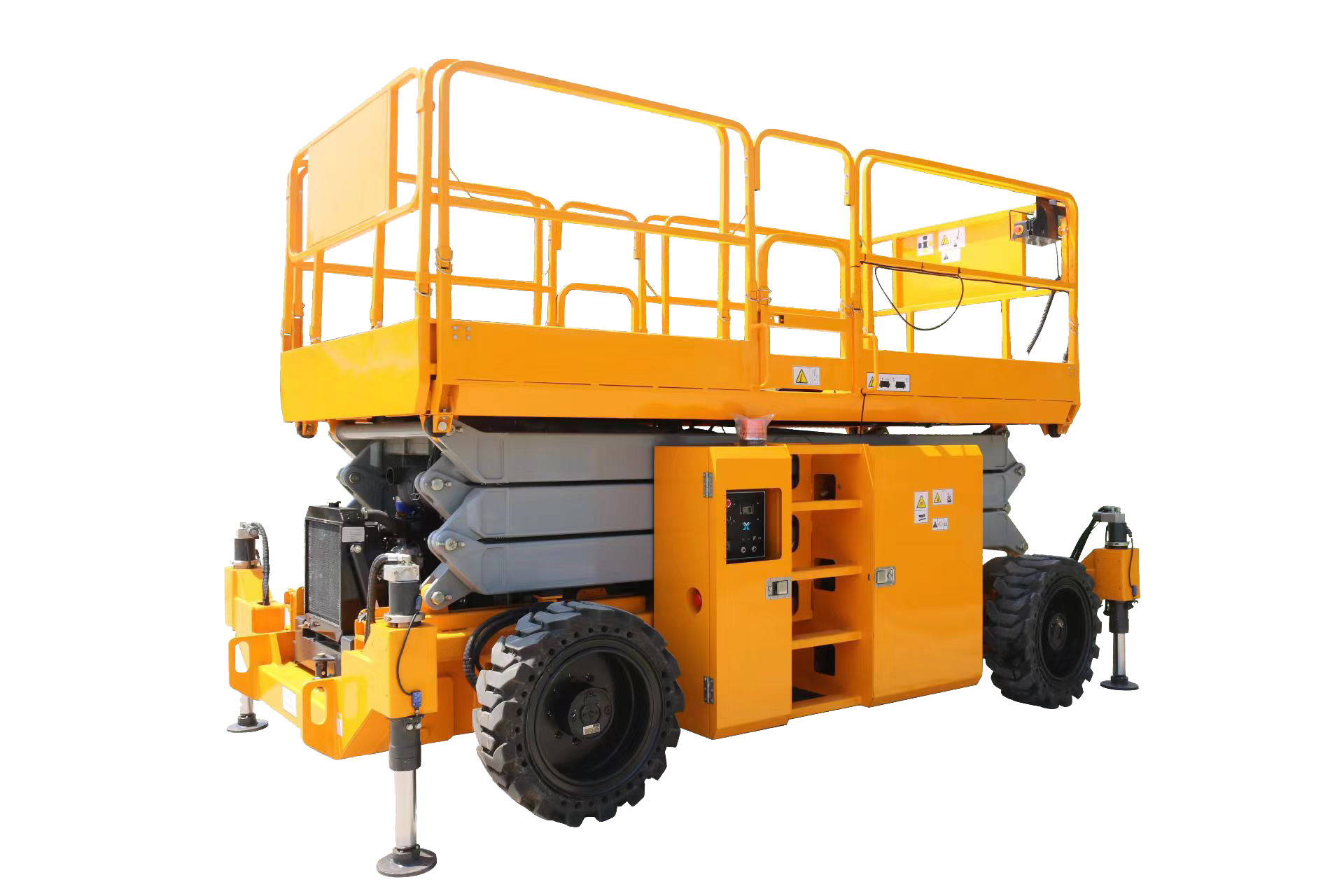
At identical working heights, RT scissor lifts weigh 30% to 60% more than electric scissor lifts, demanding higher load capacity for transport trailers. They cannot be deployed on tight construction lots, rooftop slabs or lightweight floor slabs due to safety hazards from insufficient load-bearing capacity.
Large Turning Radius
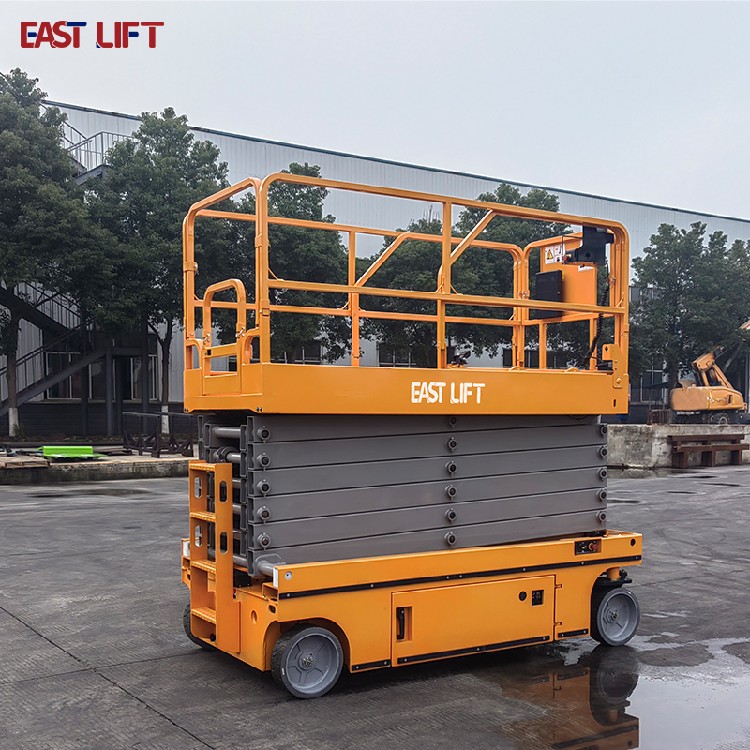
The complex 4WD off-road chassis results in a wide body with a large turning radius, making it difficult to navigate narrow passages, indoor compartments and tight roadways. Compact electric scissor lifts offer superior flexibility.
Higher Transportation Costs
Greater weight and dimensions mean fewer units can be loaded per trailer, leading to higher freight fees for short-distance relocation and cross-regional transport versus electric scissor lifts.
IV. Limitations in Operating Environments; Risks in Extreme Cold & Heat
Difficult Startup in Frigid Weather
While diesel units outperform lithium battery lifts in low-temperature endurance, preheating is mandatory below minus ten degrees Celsius. Diesel fuel is prone to waxing, requiring low-cetane winter diesel and optional fuel line heaters for complicated pre-operation preparation. Electric lifts need no preheating.
Heat Dissipation Issues in Hot Summers
Prolonged operation under direct sunlight can cause engine overheating, requiring periodic shutdowns for cooling. Hydraulic oil temperature also rises concurrently, causing a slight drop in working efficiency.
Elevated Fire Hazards
Diesel fuel tanks and high-temperature exhaust pipes create flammable vapor risks. Their use is subject to stringent safety controls at petrochemical plants, chemical factories and any work zones with flammable and explosive materials.
V. Higher Usage Barriers & Supporting Requirements
Reliance on Diesel Refueling
For remote sites without refueling stations, auxiliary fuel drums must be carried on-site, increasing workloads for transportation and fire safety management. Electric lifts only require charging with simpler supporting infrastructure.
Complicated Long-Term Storage
For prolonged idle periods, the diesel tank must be drained, the engine serviced and anti-rust treatments applied. Stagnant diesel inside tanks deteriorates easily and clogs fuel lines. Electric lifts only need periodic battery top-ups during storage.
Steeper Learning Curve for Operation & Maintenance
Operators must master additional engine-related tasks including startup/shutdown, preheating, air bleeding and troubleshooting stalls. Electric lifts feature simple operation and can be maintained by personnel with no prior technical experience.
VI. Other Drawbacks
High Initial Purchase Price
For models with matching working heights, rough terrain diesel scissor lifts carry a far higher upfront purchase cost than indoor electric scissor lifts.
Accelerated Wear from Dust
In dusty, muddy outdoor conditions, dust rapidly clogs air filters and heat sinks, doubling the frequency of filter cleaning and routine maintenance.
Unsuitable for Dust-Free & Finishing Works
Exhaust fumes and dripping oil may contaminate walls, ceilings, paint finishes and glass facades. Electric scissor lifts are the preferred option for high-end interior decoration, dust-free workshops and exhibition hall renovations.