The difference between wheeled mast vehicles and tracked mast vehicles.
Product description
In mast-type aerial work platforms, wheeled and tracked models are the two main types, with the core difference lying in the chassis design and applicable scenarios. Choosing the right one can double the efficiency of aerial work, while choosing the wrong one not only wastes effort but also easily damages the equipment.
I. Chassis and Applicable Ground Surfaces
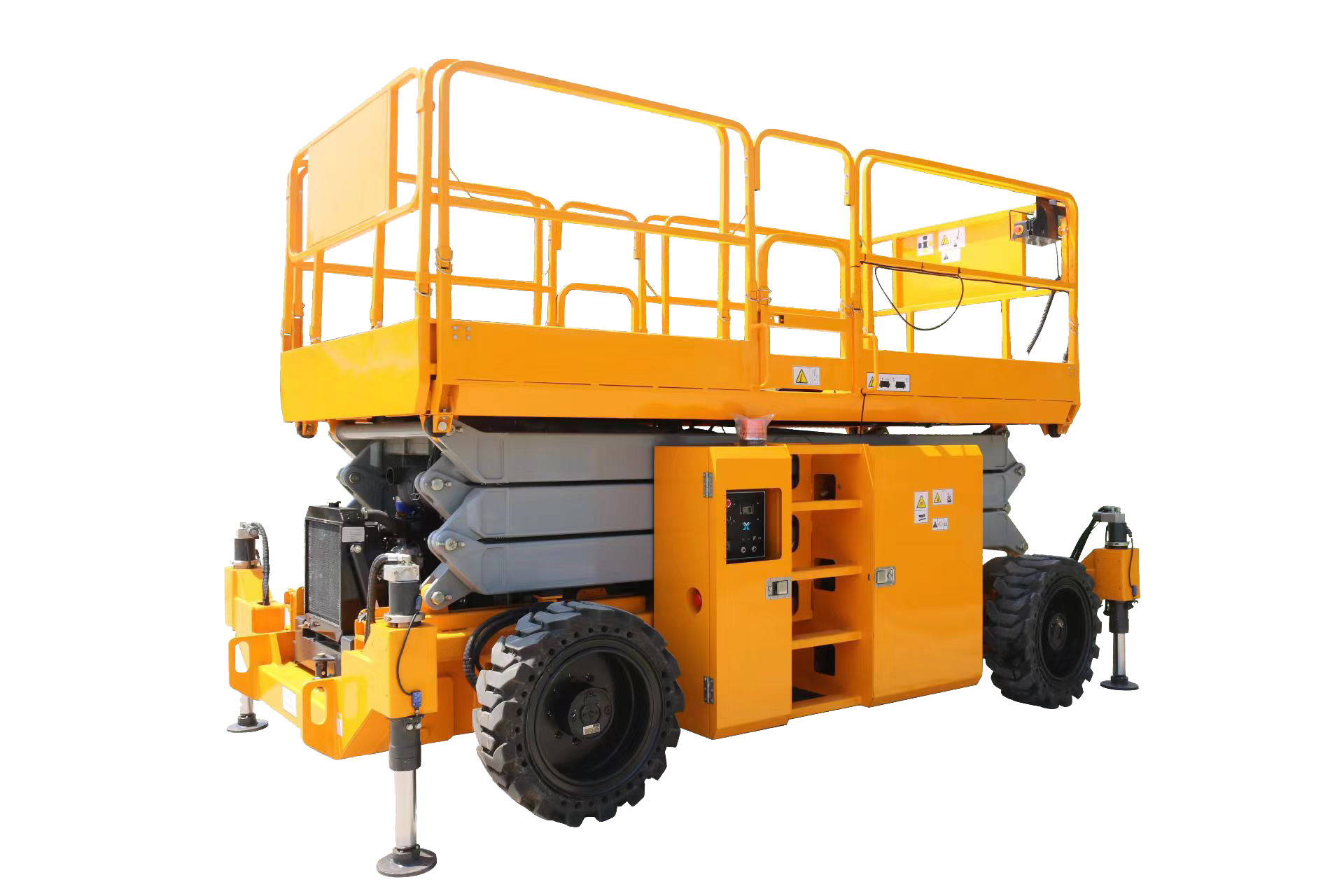
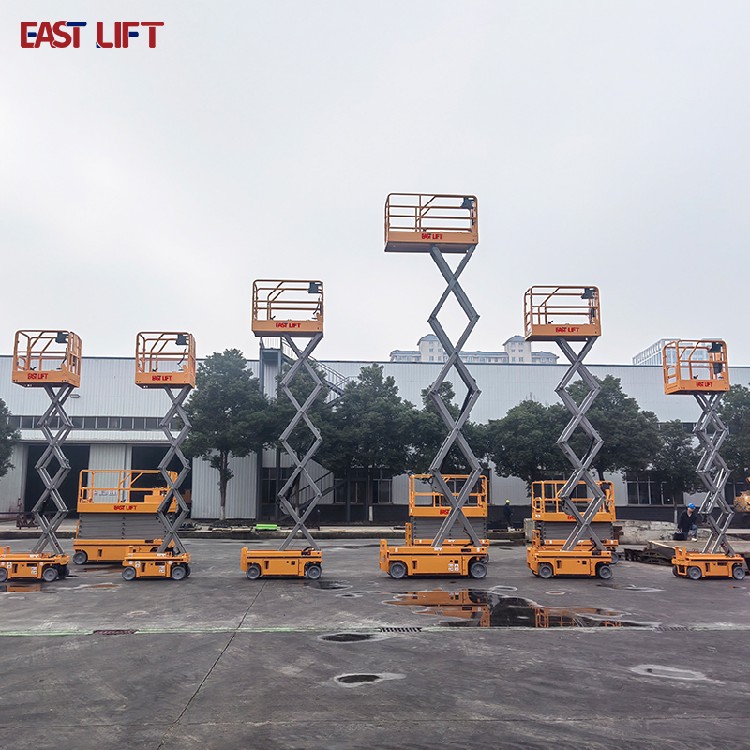
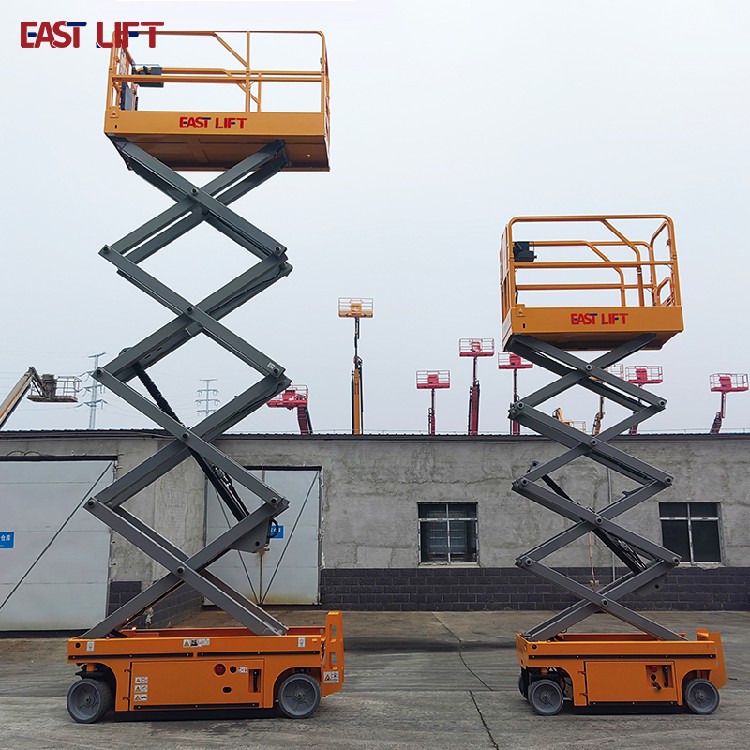
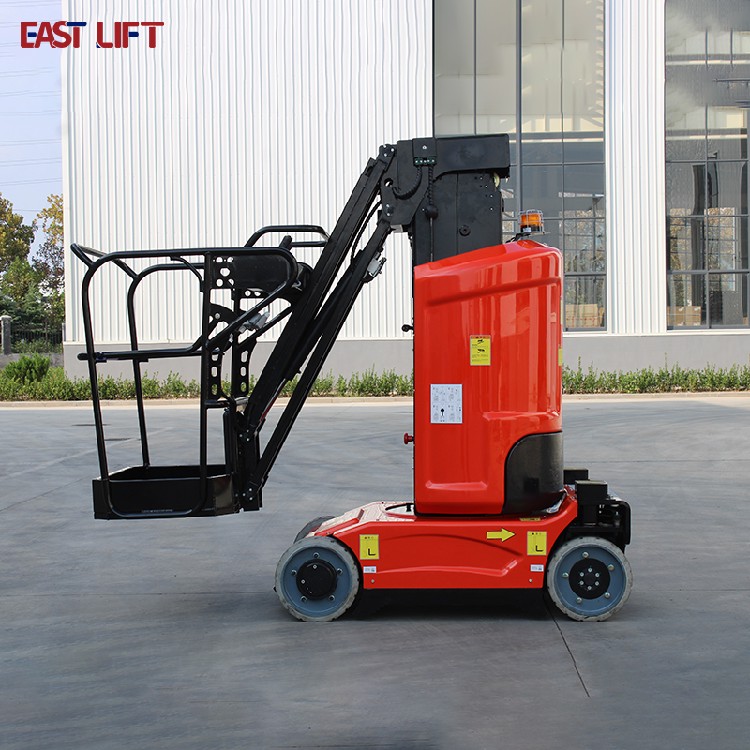
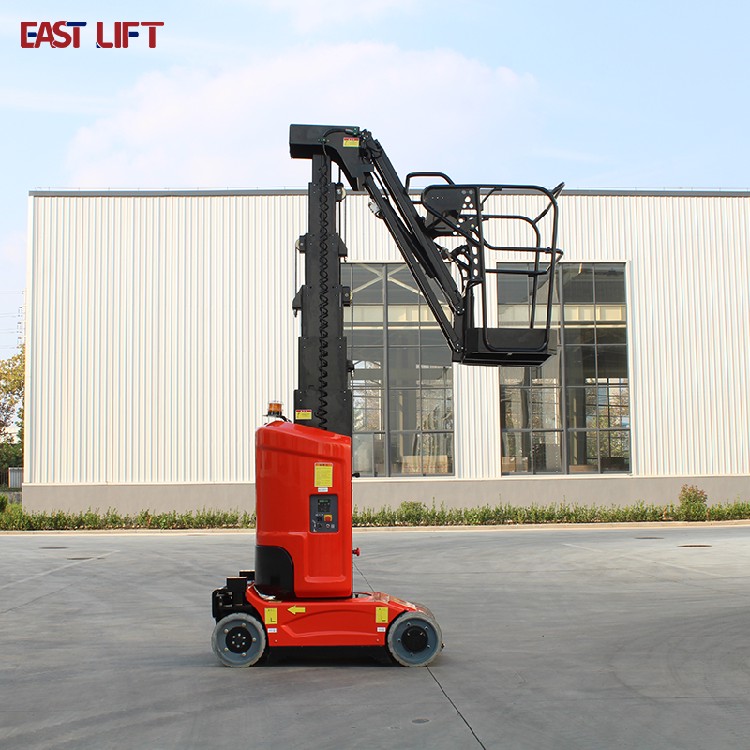
Wheeled mast platforms use solid rubber or pneumatic tires and are equipped with brakes, specifically designed for flat, hardened surfaces. They are ideal for places like warehouses, workshops, shopping mall lobbies, office building corridors, and concrete open spaces. However, they are highly demanding of the ground surface; they are completely immobile on steps, potholes, or soft muddy or sandy ground.
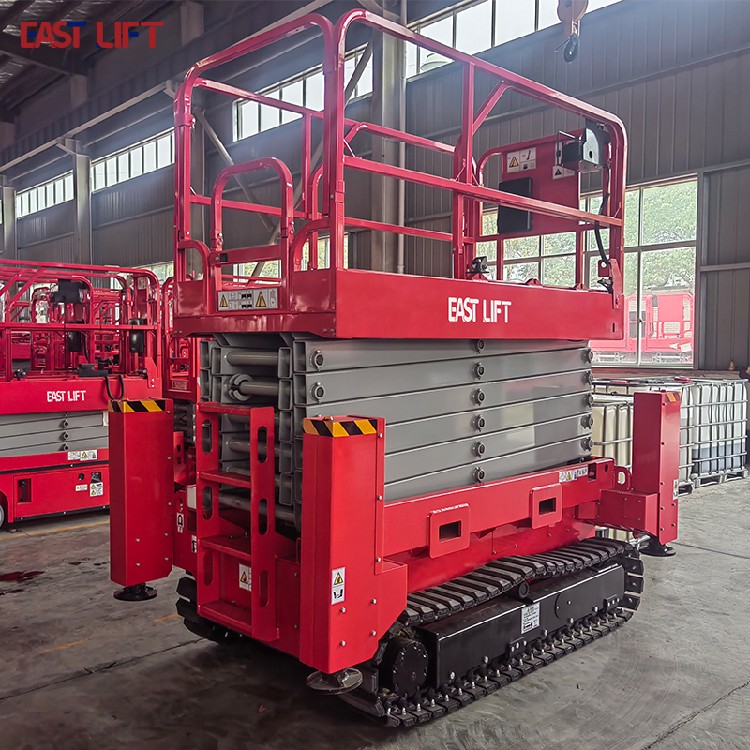
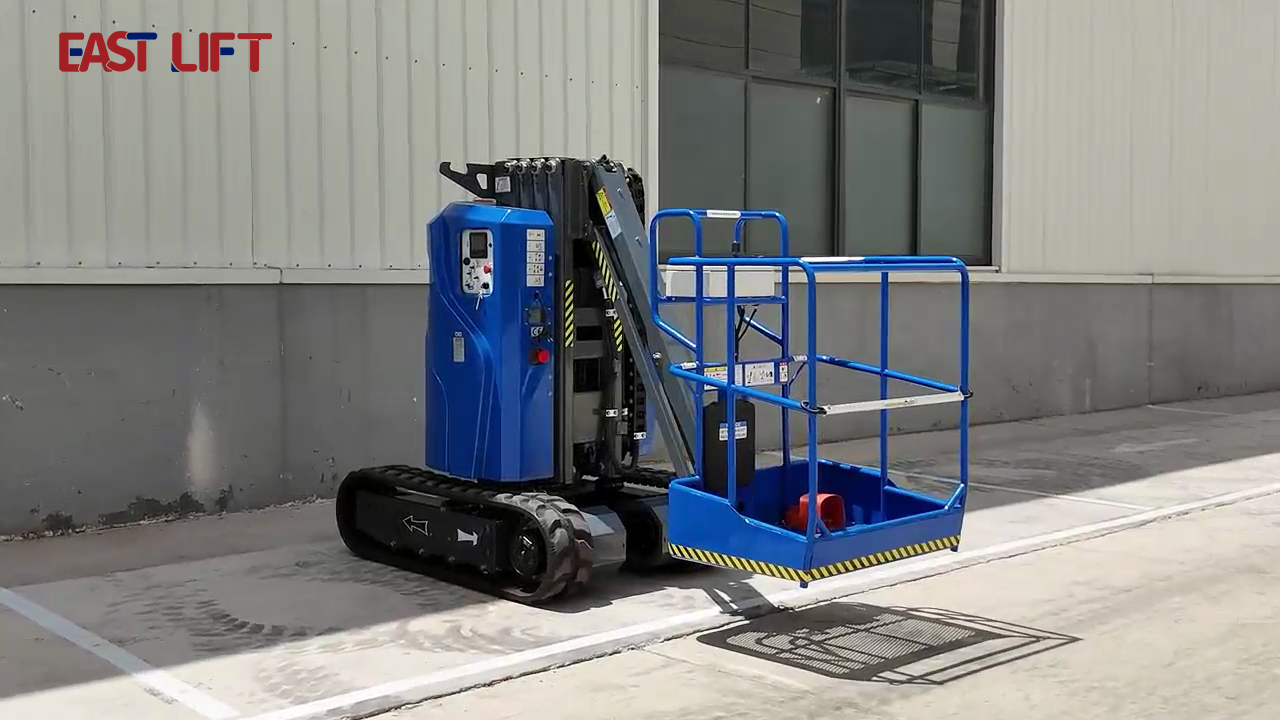
Tracked mast platforms use a tracked chassis with gear-like treads, providing strong grip and excelling in various complex terrains. They can easily traverse muddy ground, sandy ground, grassy areas, or gravel roads, and can climb slopes of 15°-25°. They can also easily overcome small steps and shallow ditches. However, they are not advantageous on flat, hardened surfaces and are prone to track wear.
II. Mobility and Operating Scenarios
The biggest advantage of wheeled mast platforms is their lightness and flexibility. Most models can be easily pushed manually, and they have a small turning radius, allowing them to freely enter and exit narrow elevator shafts and corridors. They are mostly electric-powered, with low noise and no pollution, making them particularly suitable for indoor work, such as shopping mall renovations, warehouse inventory management, and office building lighting maintenance. However, their climbing ability is poor, and they are not recommended for slopes exceeding 5°, as they are prone to slipping.
Tracked mast platforms are relatively heavier and require a power system for movement. Their turning flexibility is not as good as wheeled platforms, but their passability is superior. They come in both electric and diesel-powered types. Diesel models have more power and longer battery life, making them suitable for remote outdoor construction sites. For scenarios requiring work on complex terrain, such as pruning trees in gardens, maintaining mining equipment, and outdoor construction, choosing a tracked platform is definitely the right choice. In addition, its load capacity is stronger than wheeled models, allowing it to carry more tools and materials, meeting the needs of outdoor heavy-duty applications.
III. Cost and Maintenance: Cost-effectiveness and Durability
Wheeled mast lifts have a lower purchase cost and are more cost-effective, and their maintenance is very simple. Regular checks of the wheel brakes and battery level (for electric models) are sufficient, requiring no significant maintenance costs.
Tracked mast lifts are much more expensive than wheeled models, and their maintenance costs are also higher. Tracks are wear-prone parts, especially when driven on hard surfaces for extended periods, accelerating wear and tear. Replacing the tracks is a significant expense.
IV. Key Points for Extending Equipment Lifespan
1. Avoid dragging wheeled mast lifts on concrete surfaces for extended periods, as this can easily damage the wheels. Move them gently and carefully.
2. After operating tracked mast lifts on hard surfaces, promptly clean any debris and dirt from the tracks to prevent wear and tear on the chassis and tracks.
3. Regardless of whether it's a wheeled or tracked mast lift, always check for mast deformation, secure guardrails, and the functionality of the emergency descent button before operation. Safety is always paramount.
Conclusion
There is no absolute good or bad between wheeled and tracked mast lifts; it's about suitability. The core principle is to choose a wheeled model for indoor use and a tracked model for complex outdoor terrain. Combining this with the specific work scenario and budget will allow you to accurately select the most suitable aerial work platform.