What are the Differences Between Aerial Work Platforms?
All aerial work platforms may look like platforms that can lift people up, but in reality, types like scissor lifts, articulated boom lifts, telescopic boom lifts, and spider lifts differ greatly. Choosing the right one will double your operational efficiency, while choosing the wrong one will not only waste money but also delay the construction period.
I. Differences in Lifting Methods
This is the fundamental difference, which directly affects the applicable work sites.
1.Scissor lifts: Vertical up-and-down lifting only
They lift and lower by extending and retracting the scissor arms, just like opening and closing a pair of scissors. They can only move vertically and cannot extend or turn like an arm. Their advantages are stable lifting, high load capacity, and suitability for multi-person simultaneous operation. However, their disadvantage is that they can only be used in open and unobstructed areas.
2.Boom lifts: Extended long-distance reach
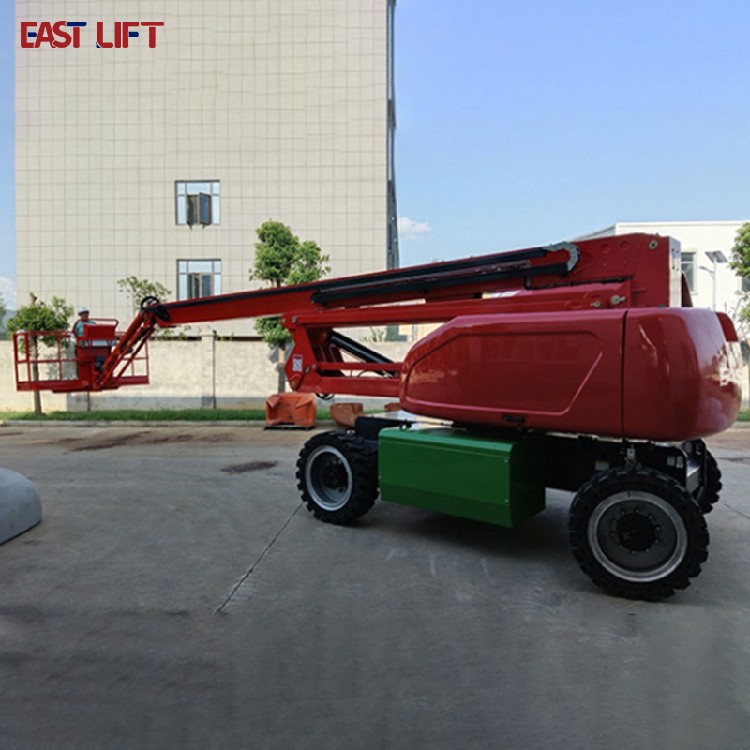
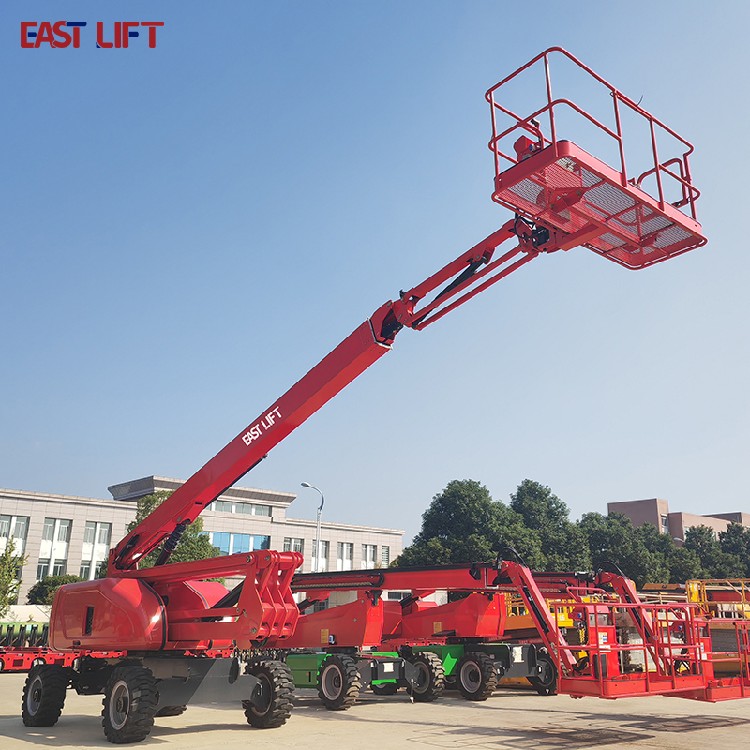
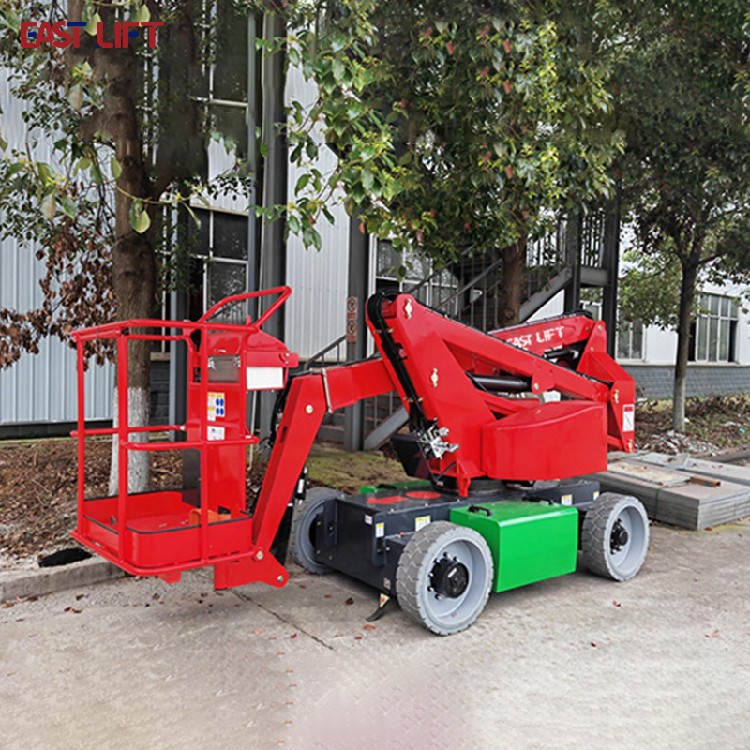
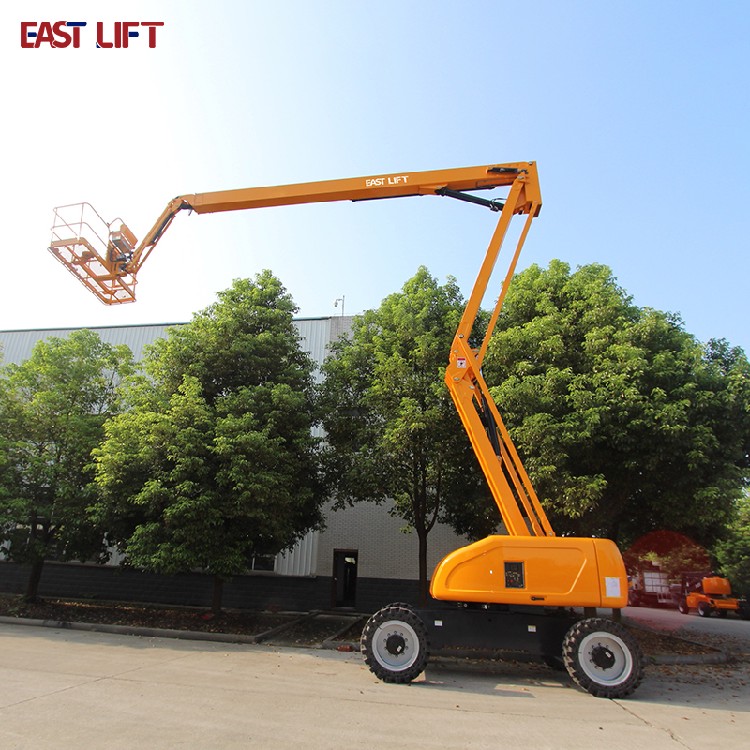
Boom lifts are divided into articulated boom lifts and telescopic boom lifts, which also have differences. First, articulated boom lifts have bendable arm frames, just like human arms. They can cross obstacles such as fences and walls, and easily send operators to the designated working height. As for telescopic boom lifts, their arm frames are straight and can extend forward like a push-pull rod, focusing on ultra-high altitude and long-distance reach. Generally, the maximum working height of telescopic boom lifts can exceed 50 meters.
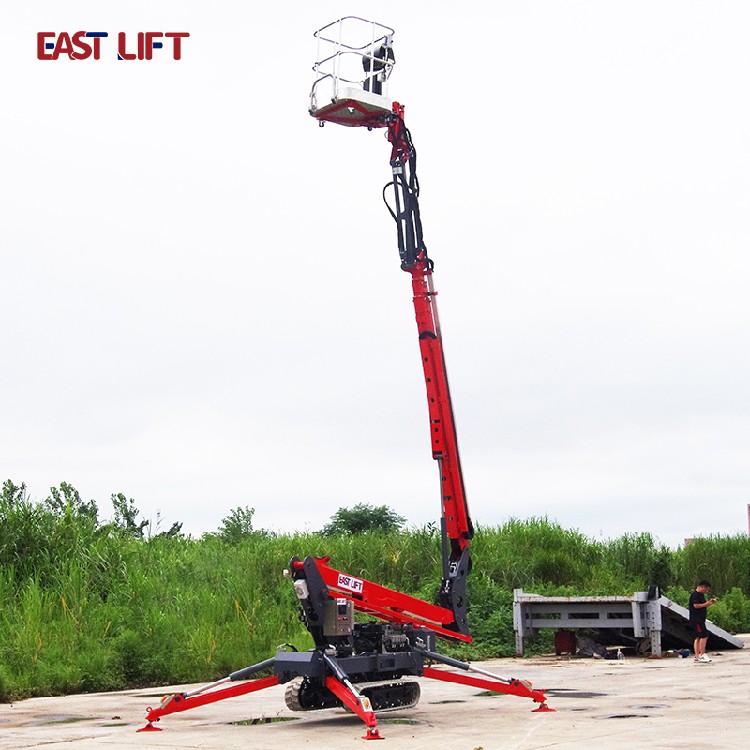
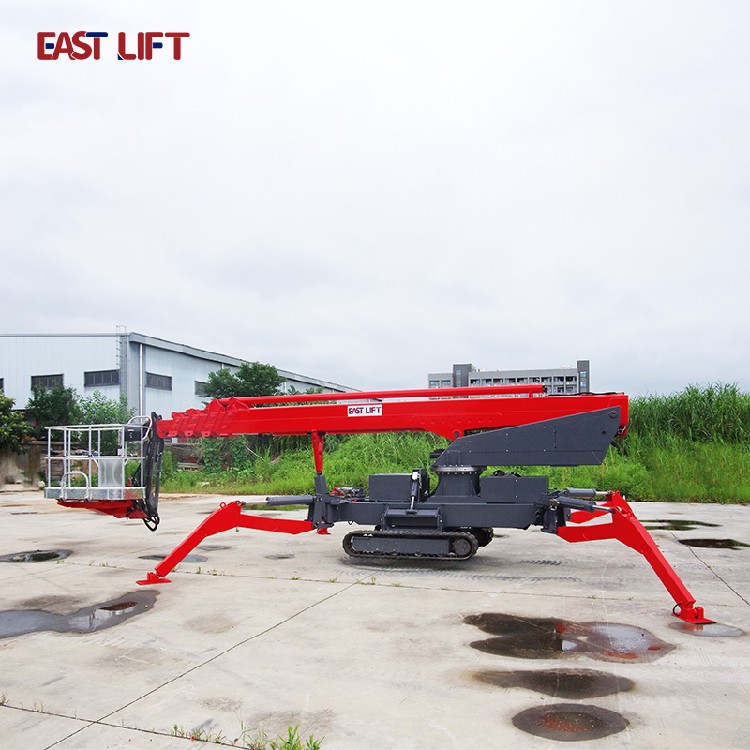
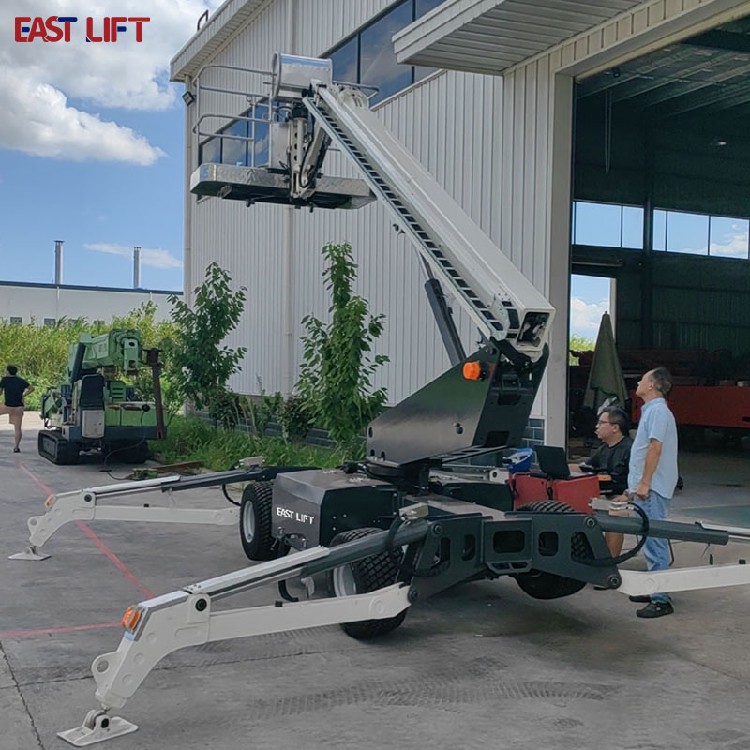
3.Spider lifts: Flexible extension and retraction
Featuring a compact body, spider lifts are equipped with retractable outriggers. When lifting, the outriggers can be extended to support the ground for stability. They can be driven into elevators and narrow spaces.
II. Differences in Applicable Work Sites
Scissor lifts are generally suitable for flat, open indoor sites. They are commonly used in scenarios such as shopping mall decoration and factory equipment maintenance.
Articulated boom lifts are suitable for complex, obstructed sites and can be used both indoors and outdoors. You can see them in scenarios like exterior wall painting and street lamp maintenance.Telescopic boom lifts are applicable to open, ultra-high altitude outdoor construction sites. They are often used in curtain wall installation, high-rise exterior wall construction, and bridge inspection.Spider lifts are suitable for narrow sites with low load-bearing requirements. They work well in old community renovation and indoor ceiling installation.III. Differences in Power ModesPower types directly affect the operation cost and environmental protection requirements, which can be divided into three categories:1.Electric type: Quiet and eco-friendly, suitable for indoor workPowered by batteries, they produce no noise or exhaust emissions, and can be used after being fully charged. They are particularly suitable for places with strict noise and environmental requirements. The disadvantage is limited battery life, requiring frequent recharging for long-term outdoor work.2.Fuel-powered type: Powerful and long-lasting, suitable for outdoor workRunning on diesel or gasoline, they have sufficient power and long endurance, and can operate on muddy and bumpy construction sites without worrying about power shortage. The downside is high noise eand haust emissions, making them unsuitable for indoor use.3.Hybrid type: Dual-purpose, cost-effectiveThey can be used both in electric mode and fuel mode, achieving the best of both worlds with high cost performance. They can be used indoors and outdoors.IV. Differences in Price and Maintenance CostScissor lifts are the cheapest, with simple structures and easily available spare parts. Their maintenance cost is also the lowest, making them the most cost-effective option whether for purchase or rental.Boom lifts are moderately to highly priced. Their hydraulic systems and arm frame structures are complex, requiring professional personnel for maintenance, so the cost is much higher than that of scissorlifts.Spider lifts are the most expensive, and they are relatively niche equipment. Their spare parts are special, so the maintenance cost is also high. They are suitable for scenarios with narrow site requirements.