

EASTLIFT
Product description
Spider Lift Transportation
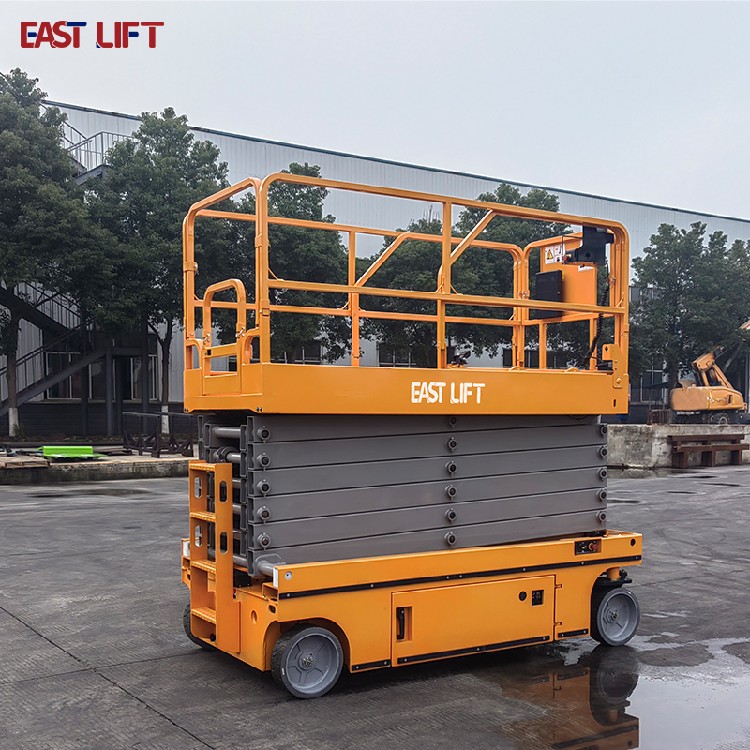
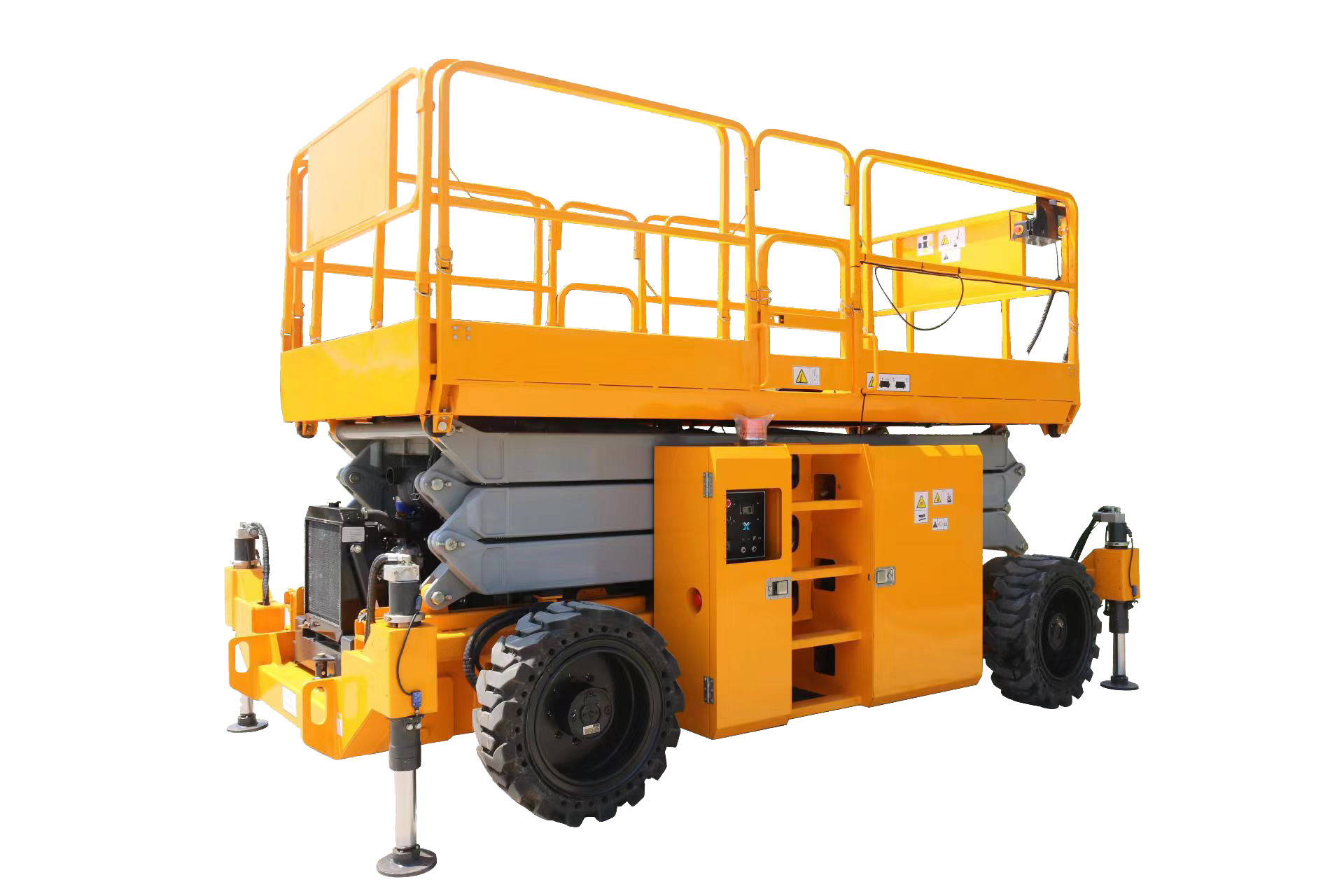
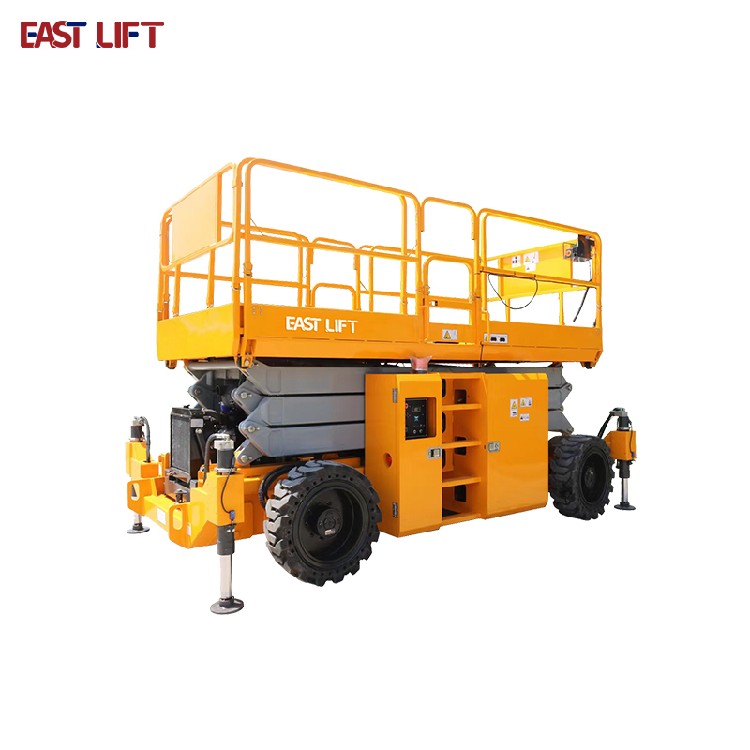
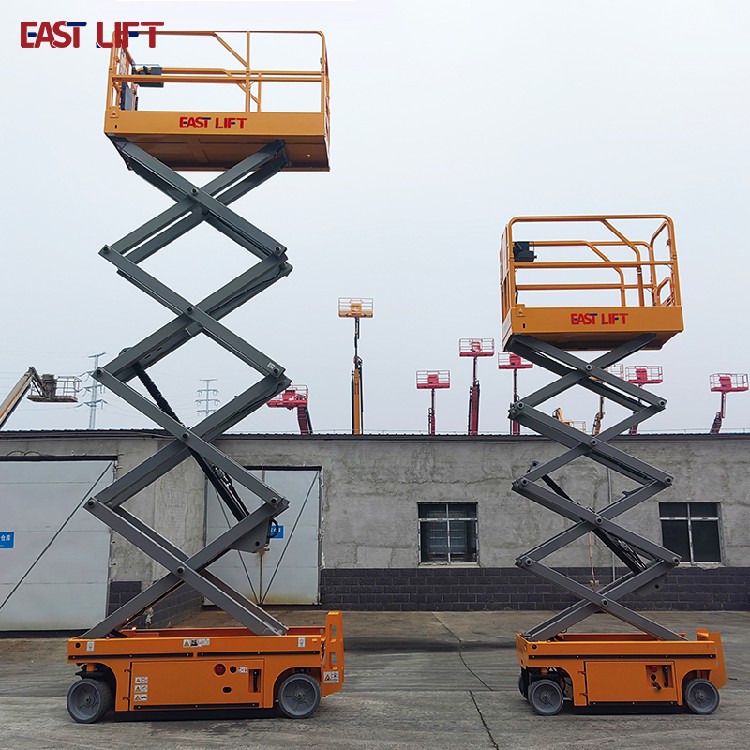
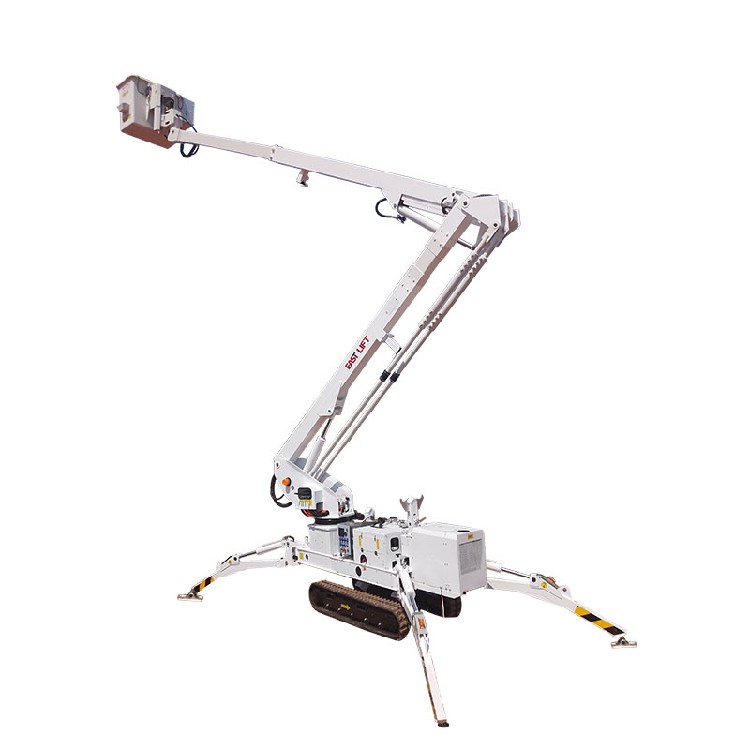
Spider lifts (spider-type aerial work platforms) are special engineering equipment due to their unique body structure (multiple legs, large boom, high center of gravity), large overall size/weight, and numerous vulnerable parts. The core requirements for transportation are preventing shaking, avoiding collisions, maintaining balance, and ensuring secure fastening. Proper handling during transportation directly affects the equipment's integrity and transportation safety. The following are a complete set of practical guidelines for the export and domestic inter-regional transportation of construction machinery/aerial work equipment, covering the core requirements of land transport (the mainstream method) and sea export, and suitable for your construction equipment/engineering machinery foreign trade business scenarios.
I. Core Preparations Before Transportation: Inspection + Packaging, Preventing Damage from the Source
The core vulnerable parts of a spider lift are the outrigger pads, boom hydraulic components, control panel, tires/tracks, battery pack, and hydraulic oil lines. A comprehensive inspection and protection must be completed before transportation. This is crucial for avoiding cargo damage claims at the destination port in foreign trade transportation:
Equipment Status Inspection
Drain the residual pressure from the hydraulic system, retract all booms and outriggers, return the control levers to their original positions and lock them, turn off the main power switch, and disconnect the battery cables (to prevent accidental activation during transportation);
Check for oil leaks in hydraulic oil lines and connectors, ensure normal tire/track pressure, and check that screws and buckles are tightened. Immediately tighten any loose parts;
Record the equipment's appearance and the condition of key components (photos/videos). For foreign trade transportation, a equipment status confirmation form must be included with the shipment for easy acceptance at the destination port. Special Protection for Vulnerable Parts
Hydraulic connectors and oil pipe openings: Cover with plastic protective caps and wrap with waterproof tape to prevent water and dust ingress during transportation;
Control panel and display screen: Apply anti-static protective film, wrap with foam board, and cover with a waterproof and dustproof cover, securing lightly with tape (to avoid leaving adhesive residue);
Outrigger pads and tires/tracks: Wrap with wear-resistant Oxford cloth, and place thick foam pads under the outrigger pads to prevent friction, bumps, and deformation during transportation;
Exposed metal parts (such as boom connection points): Apply anti-rust oil; for export by sea, additional salt spray protection is required to suit the high-salt spray environments of coastal ports in the Middle East, Southeast Asia, and Egypt;
Machine cleaning: Clean the machine body of mud and oil stains to prevent stains from corroding the paint during transportation and to facilitate customs inspection.
Dimensions/Weight Confirmation
Measure the overall length × width × height and net/gross weight of the spider lift in advance to confirm the loading limits of the transport vehicle (such as the carrying capacity and dimensions of the flatbed truck), avoiding exceeding width/height/weight limits (for domestic highways, an "Oversize Vehicle Permit" is required for oversized loads; for export by sea, confirm the loading specifications of the container/bulk carrier). II. Main Transportation Methods: Domestic Land Transportation (Core) + International Sea Freight, Operational Key Points Detailed
(I) Domestic Inter-regional Transportation: Flatbed trucks (low-bed semi-trailers) are the preferred choice, suitable for short-distance/long-distance transport.
For spider crane transportation, low-bed semi-trailers are preferred (low ground clearance of the trailer bed, facilitating loading and ensuring greater stability). The use of ordinary stake trucks is prohibited (prone to collisions, difficult to secure). The core operations revolve around stable loading, secure fastening, and ensuring the center of gravity is centered:
Loading Process
The flatbed trailer bed must be cleaned in advance and covered with thick rubber mats/anti-slip steel plates to prevent equipment from sliding during transportation;
Loading should be done using a hydraulic loading ramp/ramp board, with a ramp angle ≤15° (spider cranes have a high center of gravity, and a larger angle can cause tipping). A dedicated person should direct the loading process, maintaining a low and constant speed, avoiding sudden braking and sharp turns;
Equipment positioning: The spider crane should be positioned in the exact center of the trailer bed, leaving a gap of ≥30cm on all sides (front, back, left, and right) to ensure the center of gravity is centered and prevent uneven loading during transportation.
Securing Process (Most crucial, all steps are essential)
The principle of **"four-point securing + auxiliary anti-sway"** is adopted, using professional tie-down straps (polyester high-strength straps, with a rated tensile strength ≥ twice the weight of the equipment), tensioners, and anti-slip wedges. The use of iron wire is prohibited (prone to breakage, insecure fastening):
Wheel/track securing: Anti-slip wedges (triangular wooden blocks) should be placed on both sides of the front and rear wheels/tracks. The wedges should be fixed to the trailer bed with screws to prevent the wheels from rolling;
Four-point securing of the body: One end of the tie-down strap should be fixed to the dedicated lifting lugs/fixing points on the spider crane (do not tie to the boom, hydraulic components, or outriggers to avoid damage), and the other end should be fixed to the pre-embedded tie-down rings on the trailer bed. The straps should be tightened with tensioners, and foam boards should be placed at the contact points between the straps and the body to prevent damage to the paint/components;
Auxiliary securing of the boom/outriggers: If the boom is long, it should be lightly tied to the body with soft ropes (not tightly fastened) to prevent slight swaying and collisions with the trailer bed during transportation; after the outriggers are retracted, they should be locked with buckles to prevent accidental extension. In-transit Control Measures:
Vehicle speed: High-speed driving ≤ 60 km/h, ordinary roads ≤ 40 km/h; avoid sudden acceleration, sudden braking, and sharp turns; avoid potholes and bumpy roads;
Dedicated personnel escort: For long-distance transportation, professional equipment personnel must accompany the vehicle. Stop and check every 2 hours to ensure that the securing straps are not loose, the wedges are not displaced, and there is no damage or oil leakage to the components. Any problems found must be rectified immediately;
Rain and sun protection: The cargo compartment should be covered with waterproof and sun-proof tarpaulin to prevent rainwater from entering the hydraulic system and battery pack, and to prevent paint aging due to sun exposure. For international shipments passing through high-salt-fog coastal areas, an additional anti-salt-fog tarpaulin should be used. (II) Foreign Trade Export Transportation: Suitable for container ships / bulk carriers / roll-on/roll-off ships, considering both maritime protection and customs inspection.
Your business covers the Middle East, Southeast Asia, Turkey, Egypt, and other regions. Spider lift export transportation requires selecting the transportation method based on the destination port requirements and equipment dimensions, focusing on moisture and salt spray protection during sea transport, container loading and securing, and efficient customs inspection. The following are the key operational points for three mainstream methods:
Container Transportation (small/medium-sized spider lifts, overall dimensions ≤ container internal dimensions): Prioritize 40HQ high cube containers / open-top containers (open-top containers facilitate lifting and are suitable for slightly taller spider lifts), and avoid using standard 20-foot containers (too small, prone to collisions):
Container Pre-treatment: Clean out debris from the container interior, check for damage or leaks, lay thick rubber mats + moisture-proof film on the container floor, and attach anti-collision foam boards around the sides. Ensure moisture, salt spray, and shock protection throughout the sea voyage;
Loading and Securing: Use a container crane/forklift for loading assistance, position the equipment in the center of the container, and secure it according to the "four-point securing" principle used in domestic land transport. Secure the straps to the container corner fittings, and fill any gaps in the container with foam boards/air bags to prevent the equipment from shaking and colliding with the container during transportation;
Accessories with the Shipment: Package the spider lift's spare parts (foot pads, oil pipes, filters) separately in waterproof boxes, secure them next to the equipment, and include the equipment manual, parts list, customs declaration documents, and equipment status confirmation form with the shipment to facilitate customs clearance and acceptance at the destination port;
Customs Declaration and Inspection: Secure the equipment firmly in advance and provide adequate protection to ensure that the securing straps can be quickly removed during customs inspection (without complete disassembly), improving inspection efficiency. Bulk Carrier Transportation (Large spider cranes, oversized/overheight/overweight, cannot be loaded into containers)
Equipment securing: The spider crane is secured to the dedicated equipment deck of the bulk carrier using "steel cable securing + welded anti-slip blocks" (steel cable rated tensile strength ≥ 3 times the equipment weight). Rubber pads are placed at the contact points between the steel cables and the vehicle body to prevent damage;
Marine protection: The entire machine is coated with marine-grade anti-rust oil, wrapped with anti-salt spray and waterproof tarpaulin, and the hydraulic system and battery pack are vacuum-sealed. This is suitable for the marine transportation environment of high-salt fog ports such as those in the Middle East and Egypt;
Lashing inspection: The lashing must pass the ship company's inspection, and a "Cargo Lashing Qualification Certificate" must be issued to prevent equipment displacement and damage due to insecure securing during sea transportation.
Ro-Ro Ship Transportation (Suitable for spider cranes with tires, which can drive on and off the ship independently): The operation is the same as domestic land transportation. The key points are low speed and constant speed when boarding and disembarking. After boarding, the equipment should be secured in the designated parking space according to the ship company's requirements, with anti-sway and anti-collision protection. This is suitable for the advantages of Ro-Ro ship transportation in ports such as those in Southeast Asia.
III. Unloading Stage: Gentle unloading + Re-inspection to avoid damage in the final step
Unloading is the final stage of transportation. The boom and outrigger structures of the spider crane are fragile, and violent unloading and rapid reversing are prohibited. Key points:
Clean the unloading site in advance to ensure that the ground is flat and firm (bearing capacity ≥ 2 times the equipment weight) to prevent ground collapse;
Use a hydraulic loading ramp/slope for unloading, with a slope angle ≤ 15°. A dedicated person should direct the operation, and the equipment should move at a low and constant speed. Sudden braking and sharp turns are prohibited;
Immediately remove all protective and securing devices after unloading, and conduct a comprehensive re-inspection of the equipment: check whether the hydraulic system is leaking oil, whether the control panel is working properly, whether the outriggers/booms can extend and retract normally, and whether the tires/tracks are intact. Any damage should be immediately photographed, recorded, and addressed;
Unloading at the foreign trade destination port: Arrange professional equipment personnel to be present to cooperate with the freight forwarder and consignee to jointly inspect the equipment and sign the "Cargo Acceptance Certificate" to avoid cargo damage disputes. IV. Transportation Arrangements: Choose Professional Freight Forwarders/Trucking Companies to Mitigate Risks
Spider lifts are specialized engineering equipment, and using ordinary freight companies is prohibited. You need to work with trucking companies/freight forwarders that have qualifications for transporting engineering machinery/high-altitude work equipment and experience in international sea freight. Key selection criteria:
Domestic Land Transportation: The trucking company must have an "Oversized Transportation Business License," be equipped with low-bed semi-trailers and professional securing tools (straps, tensioners, anti-slip wedges), and have experience in transporting engineering machinery;
International Sea Freight: The freight forwarder must be familiar with the customs clearance rules and equipment import requirements of destination ports in the Middle East, Southeast Asia, Turkey, Egypt, etc., and be able to provide door-to-door transportation (domestic pickup → port loading → destination port customs clearance → delivery to the door), avoiding delays in customs clearance at the destination port;
Insurance: Purchase cargo transportation insurance (all risks) for the entire transportation process, with coverage equivalent to the value of the equipment + transportation costs, to avoid cargo damage caused by traffic accidents, maritime accidents, natural disasters, etc. during transportation. International trade transportation must include warehouse-to-warehouse clauses, covering the entire journey from the domestic warehouse to the destination port warehouse.
V. Special Scenario Adaptations: Supplementary Transportation for Tracked Spider Lifts/Mini Spider Lifts
Tracked Spider Lifts: Focus on protecting the tracks (prone to deformation and stone jamming). Before transportation, clean the mud and stones from the tracks, wrap the tracks with wear-resistant Oxford cloth, and lay anti-slip steel plates in the cargo compartment during loading to prevent track slippage;
Mini Spider Lifts (small and lightweight): Can be packed into custom-made iron frame boxes (wooden boxes). Foam boards should be placed inside the iron frame box, and the equipment should be fixed inside the iron frame box. Then, the iron frame box is loaded into a container to improve transportation safety, suitable for express delivery/air freight (for small quantities of samples);
Electric Spider Lifts with Batteries: International trade transportation must comply with UN38.3 battery transportation standards. The batteries should be individually insulated and waterproofed, and a "Battery Test Report" should be included with the shipment to avoid customs detention (ports in the Middle East, Egypt, etc., have strict requirements for lithium battery imports).