EASTLIFT
Product description
Maximum Climbing Gradient of 4WD Diesel Rough-Terrain Scissor Lifts (Industry Standards)
I. Gradient Conversion Explanation
The industry uses gradient percentage (%) instead of direct angles for marking:
Gradient % = (Vertical Rise ÷ Horizontal Distance) × 100%
- 30% gradient ≈ 16.7°
- 35% gradient ≈ 19.3°
- 40% gradient ≈ 21.8°~24° (Zoomlion officially marks 40% gradient equivalent to 24°)
- 45% gradient ≈ 24.2° (High-end imported models)
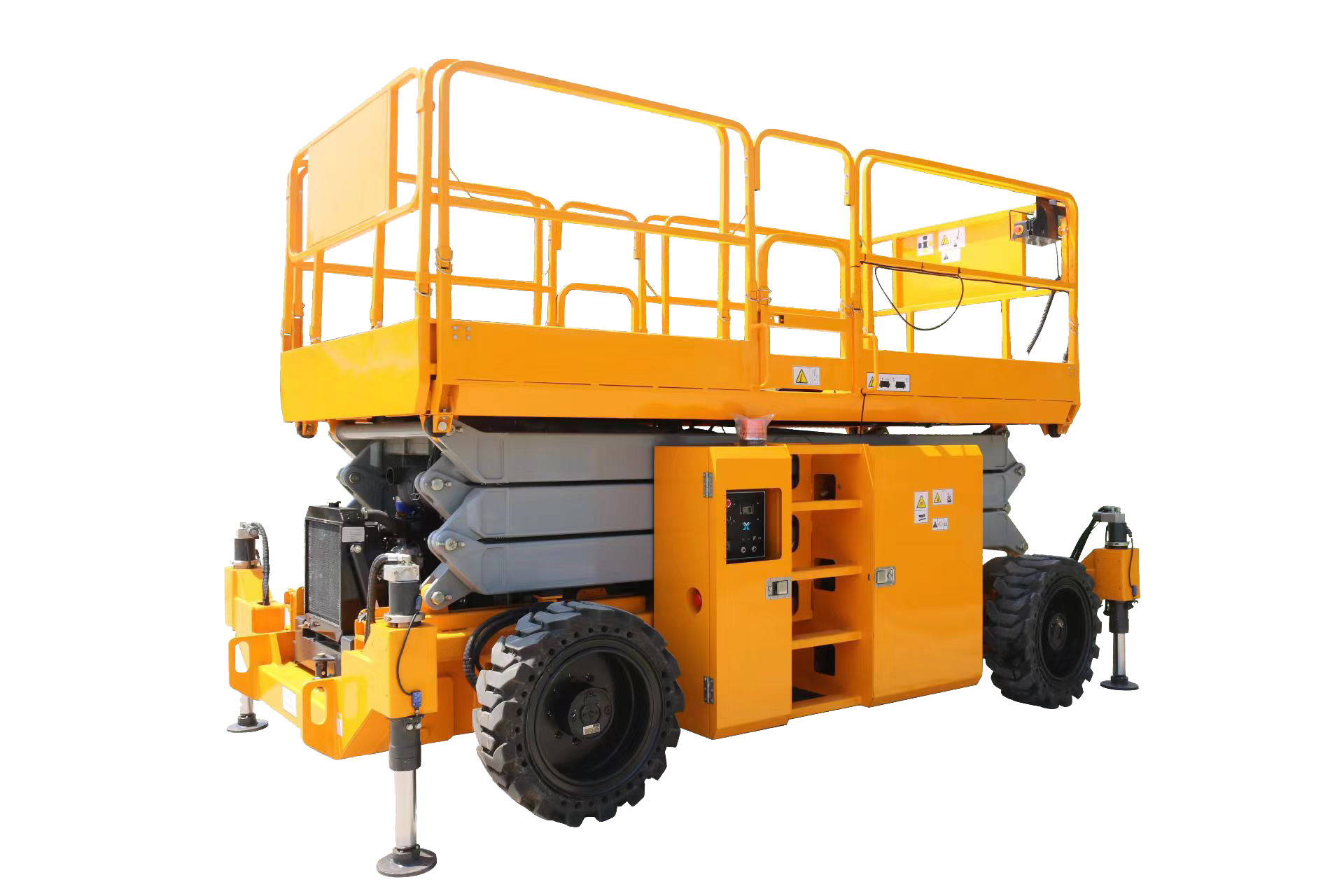
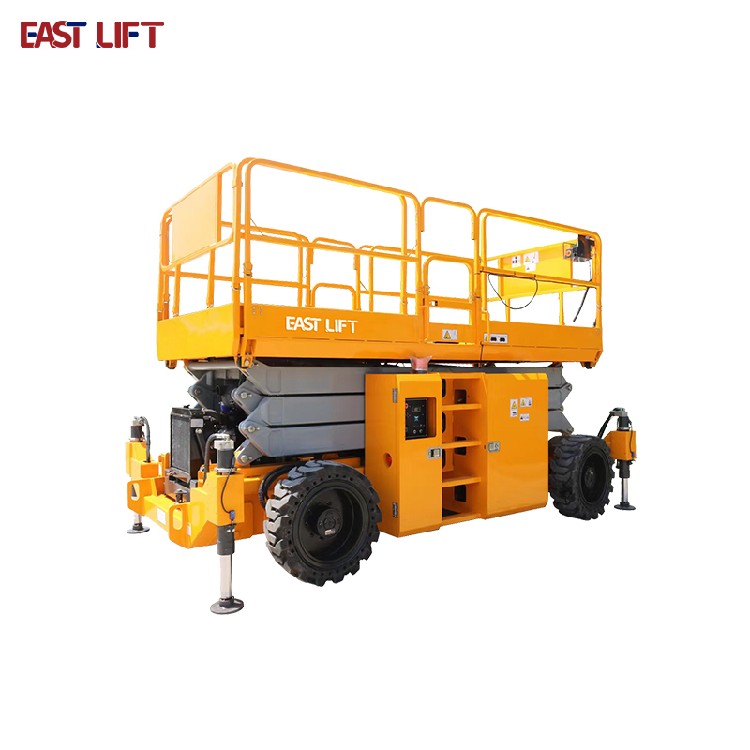
II. Mainstream Domestic 4WD Diesel Rough-Terrain Scissor Lifts (Dingli / Sino-Global / XCMG / Zoomlion / Flatt / EASTLIFT)
All standard 4WD diesel rough-terrain models feature a maximum climbing gradient of 40% (approx. 24°).
This specification applies to full 10–18m outdoor rough-terrain scissor lift series equipped with oscillating axles and deep-tread off-road tires, valid for fully loaded machines with the platform stowed.
III. Imported Brands (JLG, Genie)
- Standard JLG rough-terrain scissor lifts: 35% gradient (≈19.3°)
- High-capacity heavy-duty Genie rough-terrain models: Up to 45% gradient (≈24.2°)
IV. Economy / Basic 2WD Diesel Rough-Terrain Models
Low-spec 2WD lightweight chassis machines: 30% gradient (≈16.7°), with poor traversability on muddy construction sites and steep slopes.
V. Two Critical Safety Limits (Easily Confused)
- Travel climbing (machine stowed): The 30%–45% gradients mentioned above are only permitted when the platform is fully lowered for driving.
- Allowable ground tilt during aerial operation: Maximum longitudinal slope of 2°~3° and lateral slope of 1.5°~7°. Steep slopes are strictly forbidden during lifting operations; the machine’s tilt sensor will automatically lock all lifting functions.
Contact Now