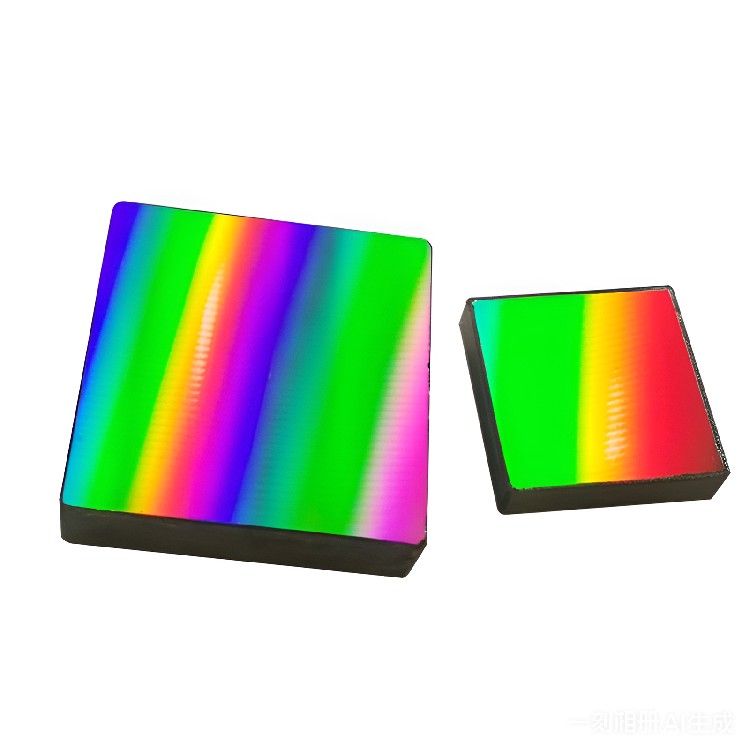
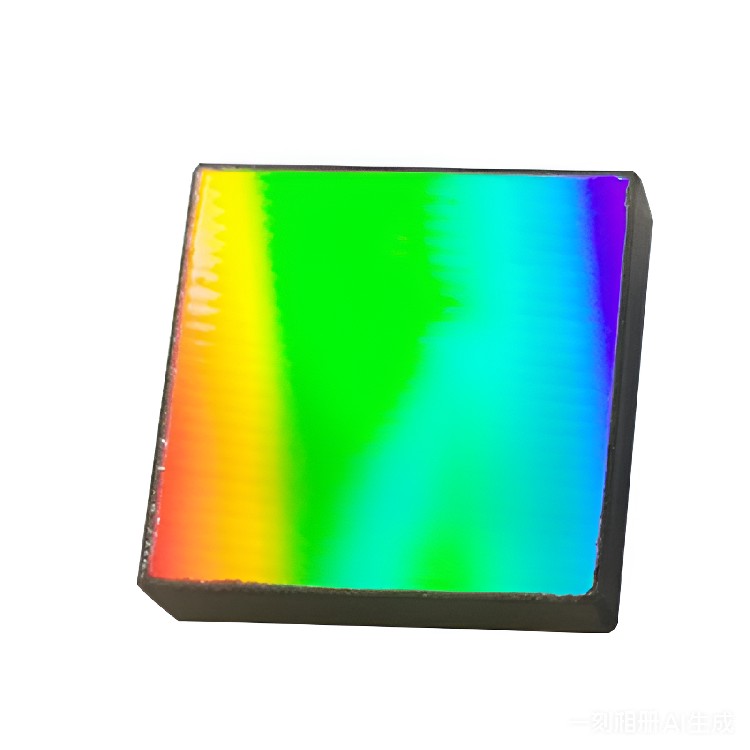
Ruled Diffraction Gratings, 600 g/mm, 1600 nm
Product description
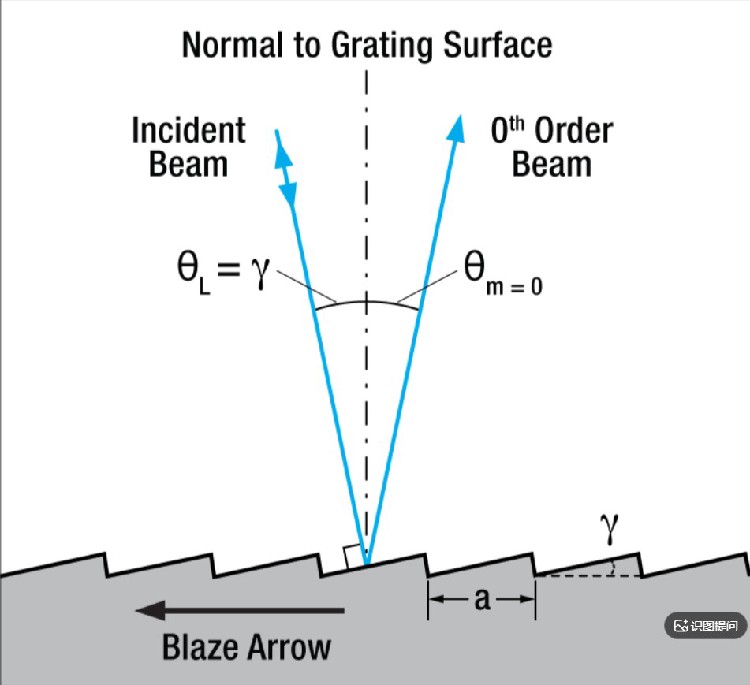
For a plane ruled diffraction grating, the groove spacing and blaze angle determine the distribution of energy. The blaze direction for most gratings is specified for first-order Littrow use. In Littrow use, light is diffracted from the grating back toward the source. Gratings used in the Littrow configuration have the advantage of maximum efficiency, or blaze, at specific wavelengths.
600 grooves per mm
1600 nm nominal blaze wavelength
28.7° nominal blaze angle
High Grating Efficiency of 60 to 80% at Blaze Wavelength
Low Ghosting: <0.5% of Primary Reflection
Aluminum Reflective Coating
Size:12.7 x 12.7 mm 、25 x 25 mm、50 x 50 mm、68 x 68 mm
Reflection Gratings
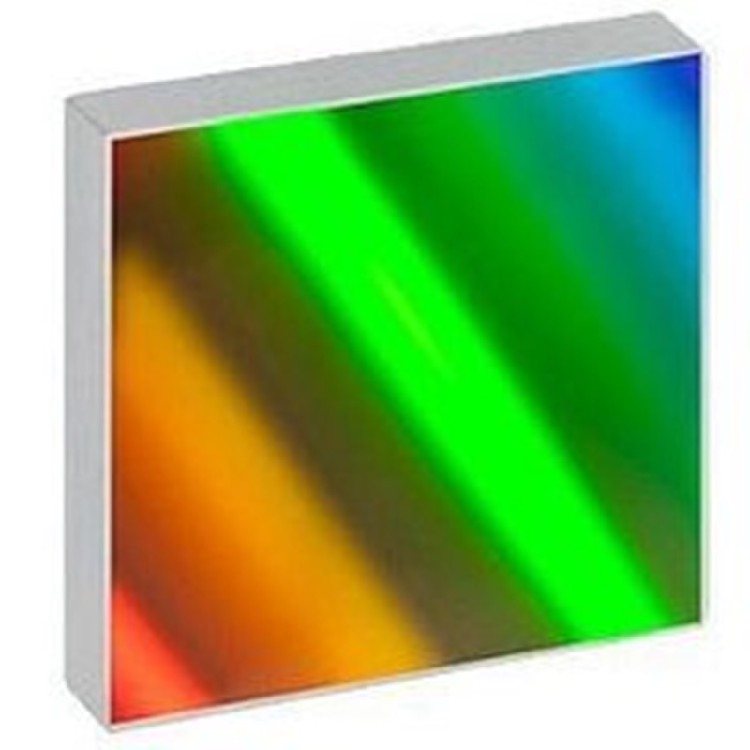
Reflection gratings are precision diffractive optical elements operating in reflective mode. Relying on periodic micro-nano groove structures on their surfaces, they realize polychromatic light dispersion, wavelength filtering and beam steering via light diffraction and reflection. Capable of dispersion without a transmission light path, they feature compact structures and flexible optical layout, serving as fundamental core dispersive components widely adopted in spectrometers, laser systems and high-precision optoelectronic equipment.
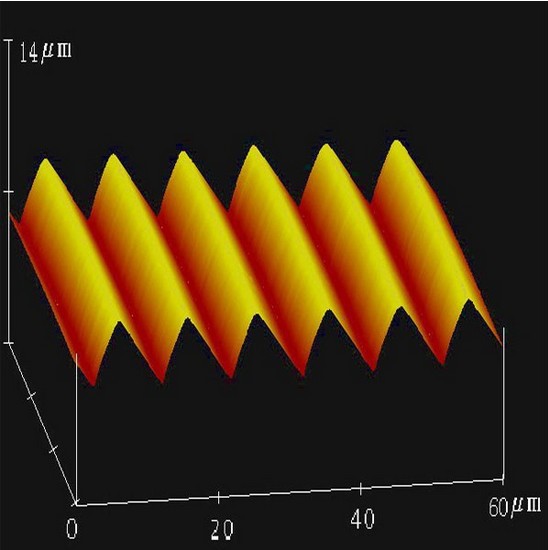
In general, for ruled diffraction gratings the groove spacing determines the diffraction angles, and the groove depth and blaze angle determines how diffracted energy is distributed between diffraction orders.
Plane Ruled Diffraction Gratings are most efficient when used near the design wavelength in the Littrow configuration, that is aligned so that the diffraction angle of the dominant diffraction order is coincident with the input beam, effectively behaving as a retroreflector at a specific wavelength. For blazed gratings, maximum efficiency occurs for wavelengths that the Littrow condition at the angle normal to the blazed grating facets. As ruled blaze gratings are asymmetric, correct orientation is indicated with an arrow marking on the size of the substrate. The arrow is on the side of the substrate perpendicular to the ruled grooves, and points toward the steepePlease contact us if you require gratings of other specifications and models.r edge of the triangular groove profile. Equivalently, the arrow points away from the grating normal toward the facet normal. The arrow should point toward the incident (and diffracted) beam.
Please contact us if you require gratings of other specifications and models.
Recommended products