
Why has the electric version become the first choice among aerial work platforms?
Product description
Why has the electric version become the first choice among aerial work platforms?
With the in-depth advancement of the dual-carbon goal, the surge in indoor aerial work scenarios, and the dual tightening of safety production and environmental protection requirements, the aerial work platform industry is ushering in a profound series of electrification revolutions. The fuel-powered equipment that once occupied half of the aerial work market is now being gradually replaced by zero-emission and low-noise electric versions, and electric aerial work platforms have also changed from optional to mandatory.
I. The Outbreak of Electrification: The Core Transformation of the Industry
From the perspective of application scenarios, the popularization of electric aerial work platforms has shown a trend of full-domain penetration; for indoor scenarios such as shopping malls, office buildings, and hospitals, due to strict requirements on noise and exhaust gas, the electric version has become the only compliant choice; for industrial scenarios such as factory workshops and clean rooms, zero-emission and dust-free electric equipment can avoid affecting the production environment; even for outdoor scenarios such as construction sites and municipal maintenance, the advantages of low use cost and convenient maintenance of the electric version are gradually replacing the dominant position of the fuel-powered version.
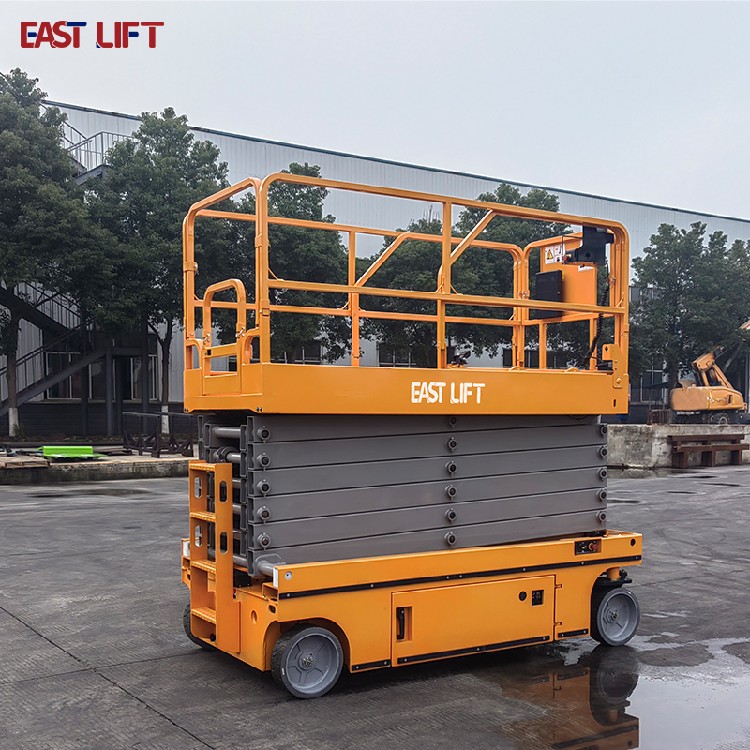
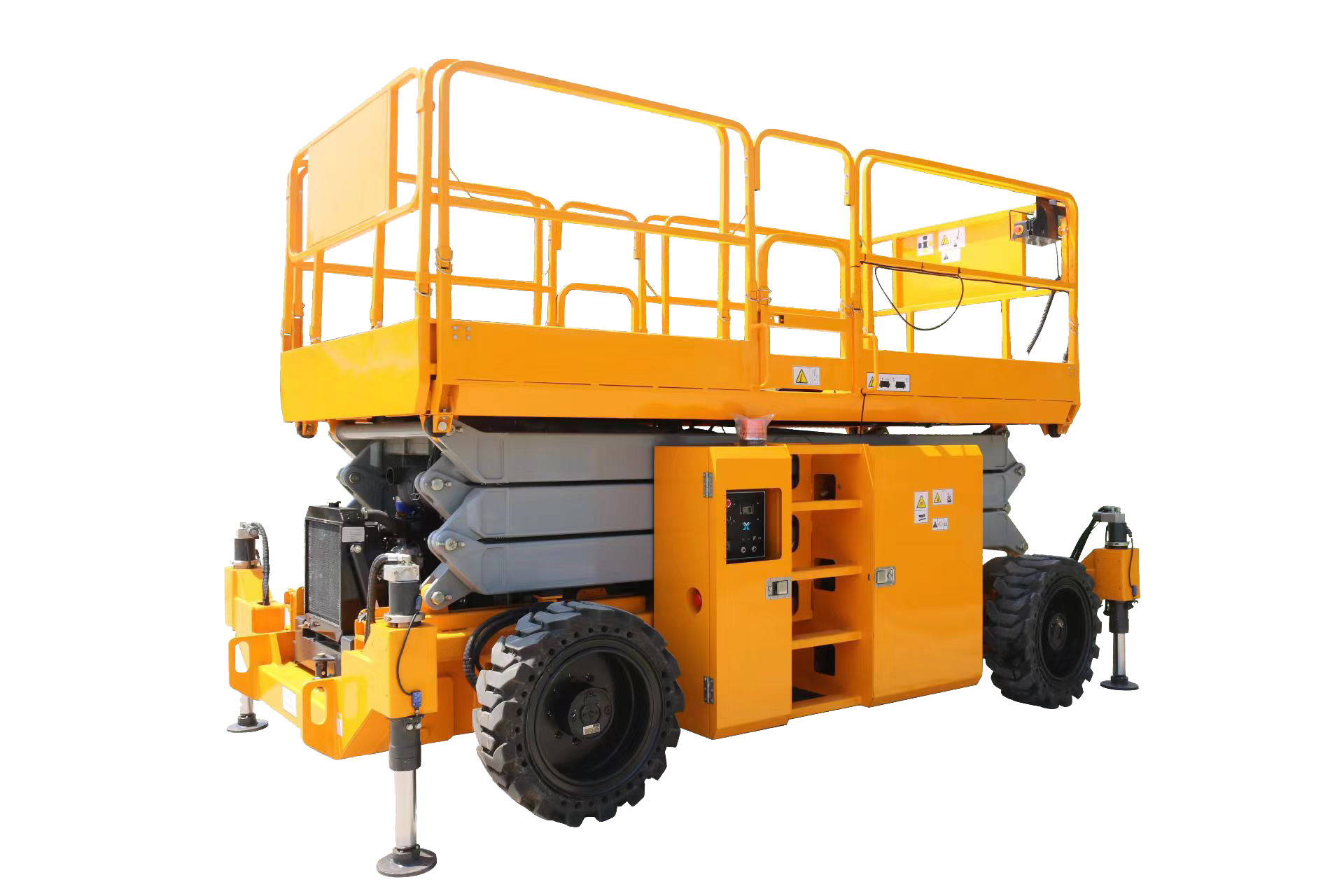
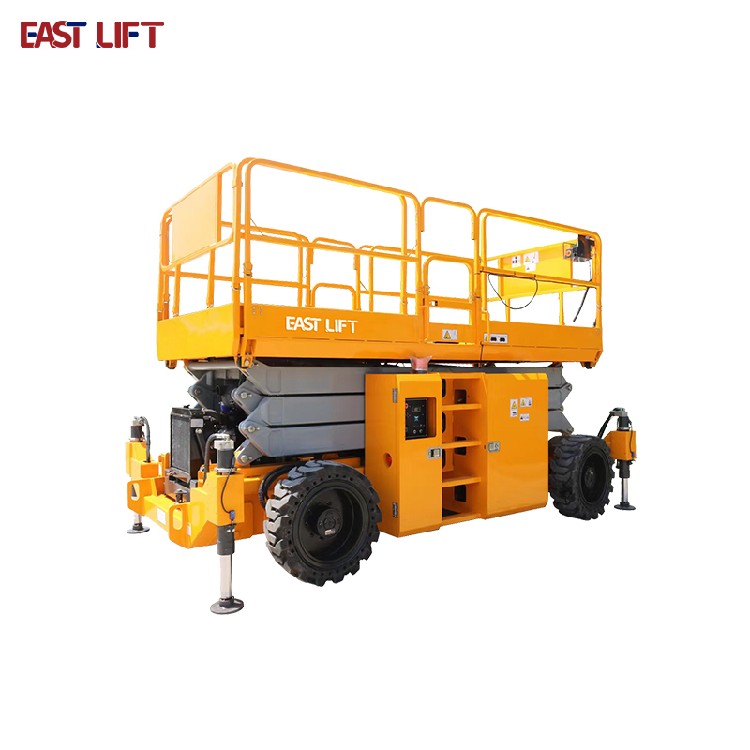
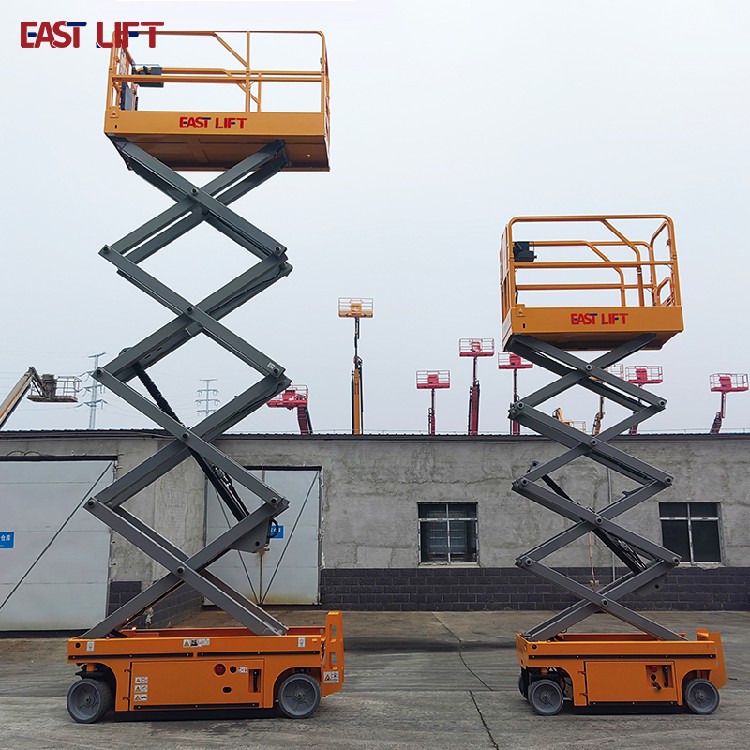
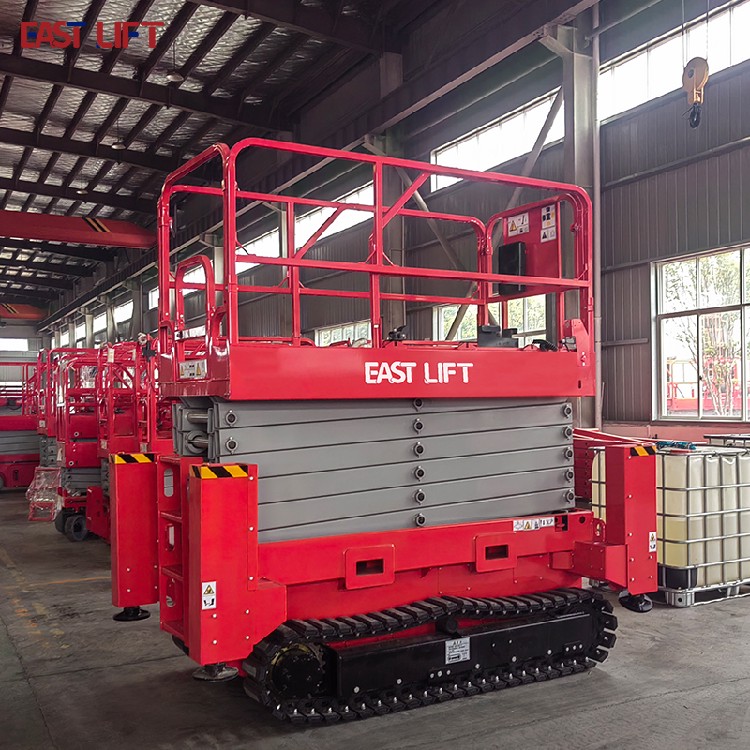
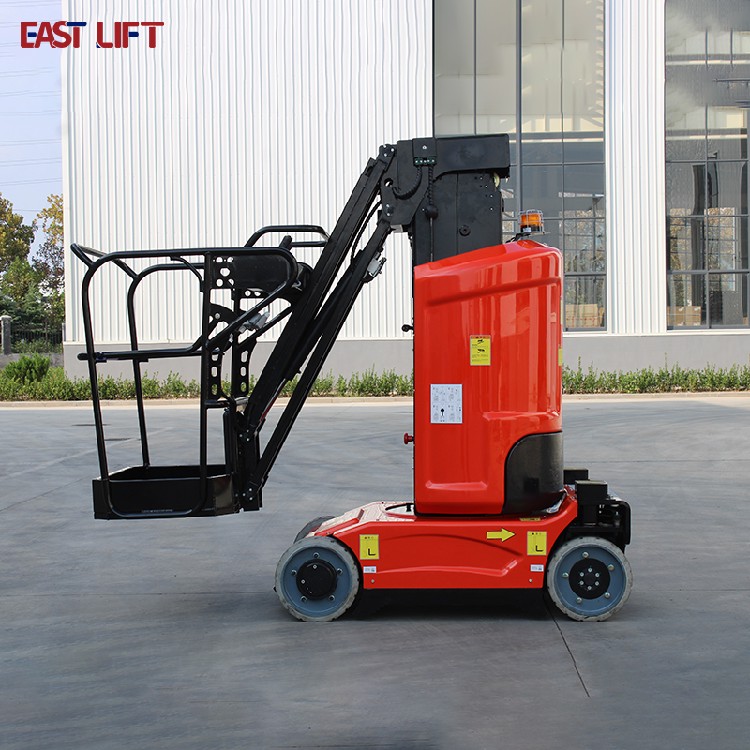
At present, electric aerial work platforms have formed a complete product matrix, ranging from mini scissor-type and mast-type to medium and large scissor-type and small boom-type, covering a working height of 4-20 meters, which can adapt to different scenarios and needs, completely breaking the inherent perception that electric versions can only be used indoors.
II. Electric vs. Fuel: No Hesitation in Choice
Many enterprises are still struggling with choosing between electric and fuel-powered models. In fact, by comparing the core differences between the two, the answer is already clear.
1. Environmental Compliance
Gas-powered aerial work platforms emit exhaust gas and generate noise. They not only fail to meet the requirements under the "dual-carbon" goal, but also cannot enter indoor scenes such as shopping malls and hospitals that have strict environmental protection restrictions, and may even face penalties for illegal use. In contrast, electric models are zero-emission and low-noise, fully complying with national environmental protection policies and the requirements of these high-standard scenarios, without the need to worry about compliance risks and with a wider scope of application.
2. Low Operation and Maintenance Costs
Electric aerial work platforms are easy to operate and require no professional experience in fuel-powered equipment operation. Novices can master them quickly after simple training. At the same time, the electric aerial work platform has a simple structure and a low failure rate. Its maintenance does not require a professional team, which can greatly reduce maintenance costs and equipment downtime.
3. Electric Stability: Suitable for Multiple Scenarios
The electric equipment is driven by an electric motor, making lifting and movement smoother, which can effectively protect the safety of operators and operating tools; there is no exhaust emission, so operators will not be affected in terms of health even when working in confined spaces; the body is designed to be more compact, allowing it to flexibly enter spaces such as elevators and narrow passages, and adapt to more refined operation scenarios.
III. Future Trends of Electric Aerial Work Platforms
1. Intelligent upgrading makes operation safer and more efficient
In the future, electric aerial work platforms will integrate more intelligent technologies to realize functions such as real-time monitoring of equipment status, automatic fault early warning, remote control, and automatic obstacle avoidance, reducing manual operation intervention and the incidence of safety accidents; at the same time, through data collection and analysis, it will provide accurate support for equipment maintenance and operation scheduling, and improve operation efficiency and management level.
2. Lightweight Development
With the increasing demand for refined indoor operations, lightweight and miniaturized electric aerial work platforms will become a market hotspot. By upgrading materials and optimizing structures, manufacturers will reduce the body size and equipment weight on the premise of ensuring the stability and load capacity of the equipment, enabling the equipment to enter narrow spaces such as elevators, stairwells and equipment gaps more flexibly, and further expand the application scenarios.
Conclusion
With the requirements and development under the dual-carbon goal, the electrification of aerial work platforms has become an irreversible industry trend. The tightening of environmental protection policies, the advantages in usage costs, and the upgrading of scenario demands are all driving the full replacement of fuel-powered equipment by electric models. For enterprises, deploying electric aerial work platforms as early as possible can not only avoid compliance risks and reduce operating costs, but also adapt to more operation scenarios, improve operation efficiency, and seize opportunities in the industry transformation.