EASTLIFT
Product description
Scissor Lifts: Comparison of Pros and Cons Between Lithium Battery Electric and Diesel Power
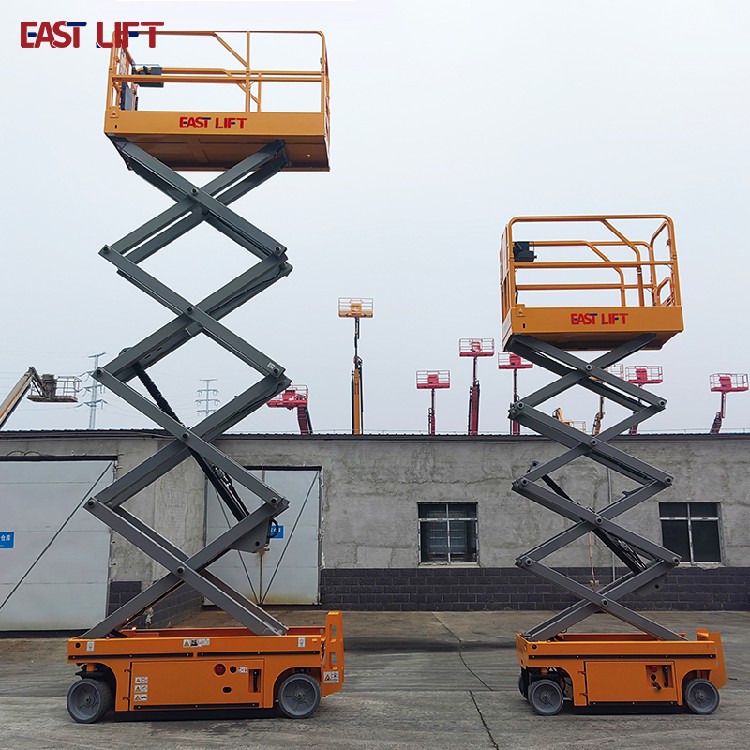
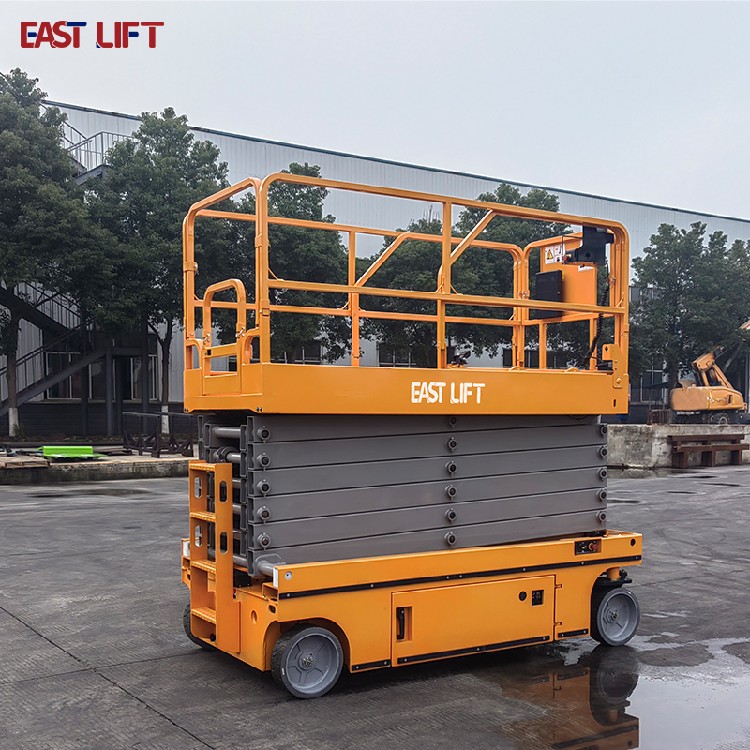
I. Battery-Powered Models (Lithium-ion / Lead-acid Electric Self-propelled Scissor Lifts)
Advantages
1.Zero emissions and no exhaust fumes
They are the only viable option for indoor malls, factories, basements, office buildings, dust-free workshops and fine renovation projects, producing no environmental pollution or oil stains.
2.Ultra-low noise
Electric motors run far quieter than diesel engines, making them suitable for night construction, maintenance during mall business hours, hospitals, schools and other noise-restricted areas.
3.Low operating costs
Only electricity is required for charging, which costs much less than diesel. There is no need for regular replacement of engine oil, filters, diesel filters or exhaust after-treatment components, resulting in simple maintenance.
4.Agile operation and lightweight body
Most models adopt front-wheel electric drive and steering with a small turning radius. Without heavy engines and fuel tanks, the whole machine features light weight, allowing access to elevators and indoor floors with limited load-bearing capacity.
5.No oil smoke or ground contamination risks
No diesel or engine oil leakage to stain floor tiles, epoxy floors or decorative finishes, making electric lifts the top choice for high-end renovation and exhibition events.
6.Safe for enclosed indoor spaces
Diesel lifts are prohibited in confined areas, while electric units pose no risk of suffocation or carbon monoxide poisoning.
Disadvantages
1.Limited endurance
Standard lithium batteries support continuous operation for 4 to 8 hours; runtime drops further under heavy full-load work. Long-duration outdoor operation is impossible without mains power supply.
2.Poor climbing and off-road performance
Standard electric scissor lifts are only fit for flat concrete ground and gentle slopes. Off-road-capable electric scissor lifts come with a sharp price hike and struggle on muddy or uneven construction sites.
3.Significant capacity degradation at low temperatures
Battery capacity shrinks drastically in sub-zero winter weather. Regular supplementary charging is required for long-term outdoor storage, and battery replacement is needed every 3 to 5 years at a high cost.
4.Fast power drain under prolonged heavy-load lifting
Continuous lifting and travelling at full load greatly shorten working hours.
5.Long charging hours
Fast charging takes 2 to 4 hours to fully recharge, while slow charging requires overnight. This is inconvenient for construction sites operating 24-hour non-stop shifts.
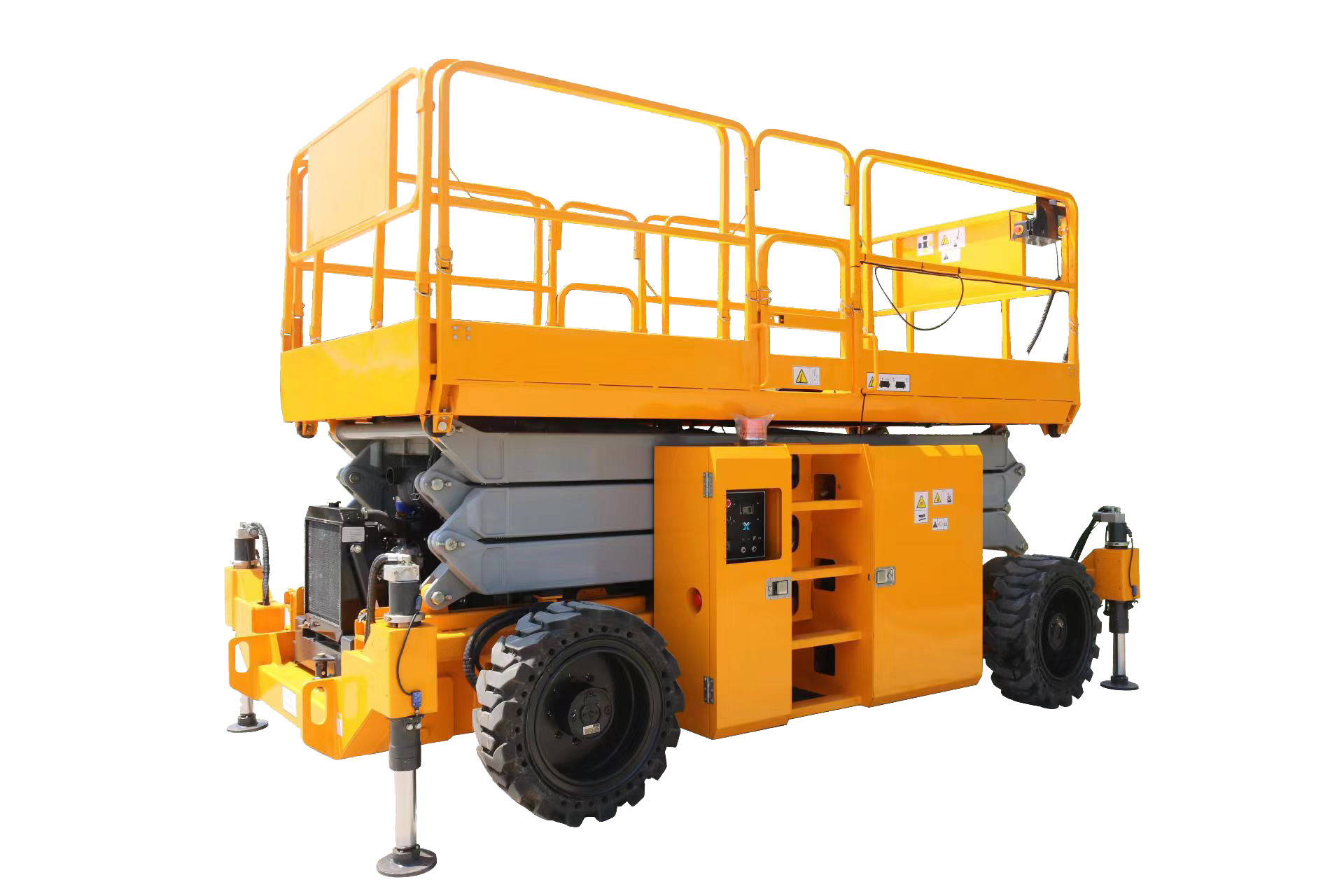
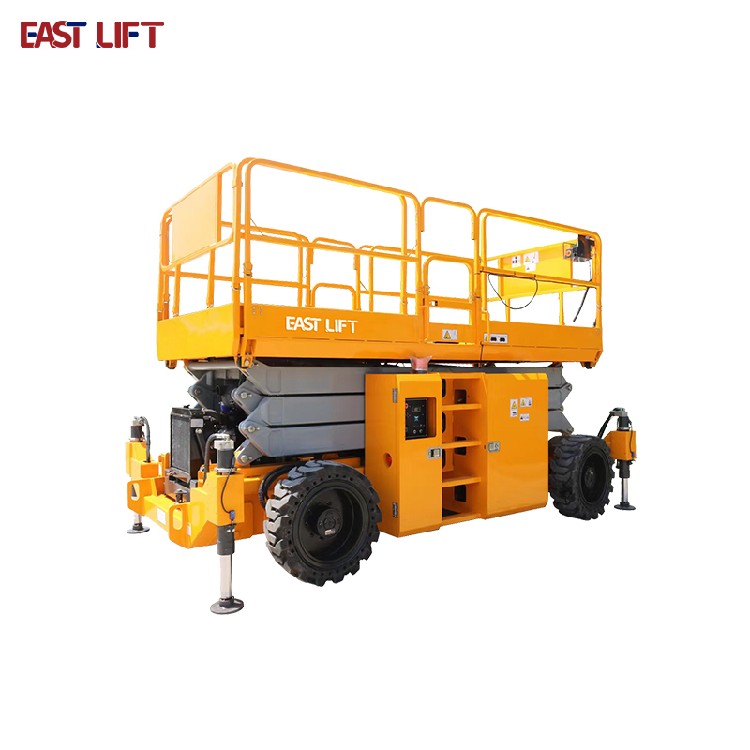
II. Diesel-Powered Models (Exclusive for Outdoor Rough-Terrain Scissor Lifts)
Advantages
1.Extended non-stop operation
A full tank of diesel enables 10–16 hours of continuous work, and refuelling takes just minutes. Ideal for field infrastructure and construction sites with round-the-clock shifts.
2.Superior off-road capability
Equipped with four-wheel drive, deep-tread off-road tyres and raised chassis, they can travel on muddy dirt roads, gravel yards, uneven ground and areas around foundation pits.
3.Ample power reserve and stable heavy-load performance
Strong climbing and load-carrying capacity during high-lift or full-material transport. Almost all heavy-duty large-capacity scissor lifts adopt diesel power.
4.Stable performance in cold weather
No battery capacity loss in frigid winters, delivering obvious advantages for outdoor construction in northern regions.
5.No charging infrastructure required
The machine can operate anywhere diesel is available, with no need for external power cables or charging piles.
Disadvantages
1.Exhaust fumes and carbon monoxide hazards
Strictly forbidden indoors, in basements and enclosed workshops due to poisoning risks. Many cities with strict environmental controls restrict their entry to urban construction zones.
2.High operating noise
Loud engine roars ban their use in residential districts, shopping malls and noise-sensitive night-time projects.
3.High fuel and maintenance expenses
Regular replacement of engine oil, three major filters and water-oil separators is mandatory. Fluctuating diesel prices push up long-term rental costs.
4.Risk of ground contamination from oil leaks
Ageing tubing and seals may leak diesel or engine oil, damaging floors, green spaces and paved surfaces.
5.Bulky body with large turning radius
Heavy overall weight prevents transportation via elevators or upstairs access, rendering them completely unsuitable for narrow indoor spaces.
6.Tightening environmental restrictions
Countries/regions ban diesel lifts meeting National Stage III emission standards at most construction sites. National Stage IV / V diesel units carry higher purchase prices.
III. Quick Selection Guide
1.Indoor sites, shopping malls, factories, fine renovation, night work, residential 2.property maintenance → Lithium battery electric scissor lifts
Outdoor civil construction, muddy ground, 24-hour continuous operation, high-lift heavy-load tasks, remote sites without mains power → Diesel rough-terrain scissor lifts
3.Hybrid alternative: Dual-power scissor lifts (diesel generator + lithium battery drive)
Suitable for sites lacking outdoor charging facilities that also require occasional work in semi-enclosed spaces.
Contact Now