EASTLIFT
Product description
Characteristics of Rental Market Demand for Different Types of Aerial Work Platforms
The mainstream models in China’s domestic rental market fall into six categories: scissor lifts, articulated boom lifts, telescopic boom lifts, spider lifts, vertical mast lifts, and truck-mounted aerial work vehicles. Each category differs significantly in terms of target customer groups, application scenarios, rental terms, rental rate fluctuations, peak and off-peak seasons, and price sensitivity. The overall market landscape features high rental volume for scissor lifts, premium rental rates for boom lifts, and substantial profit margins for niche special models with limited supply.
I. Scissor Lifts (65% market share, highest rental volume)
Core Demand Traits
Highly diversified customer groups with universal rigid demand across all industries
Key clients include decoration contractors, factory maintenance teams, logistics warehouses, real estate fine fit-out companies, exhibition booth builders, and small civil engineering firms. Manufacturers, shopping malls and e-commerce warehouses constitute stable long-term clients, while construction projects generate bulk short-term rental orders.
Clear segmentation of application scenarios with divergent demand for electric and rough-terrain variants
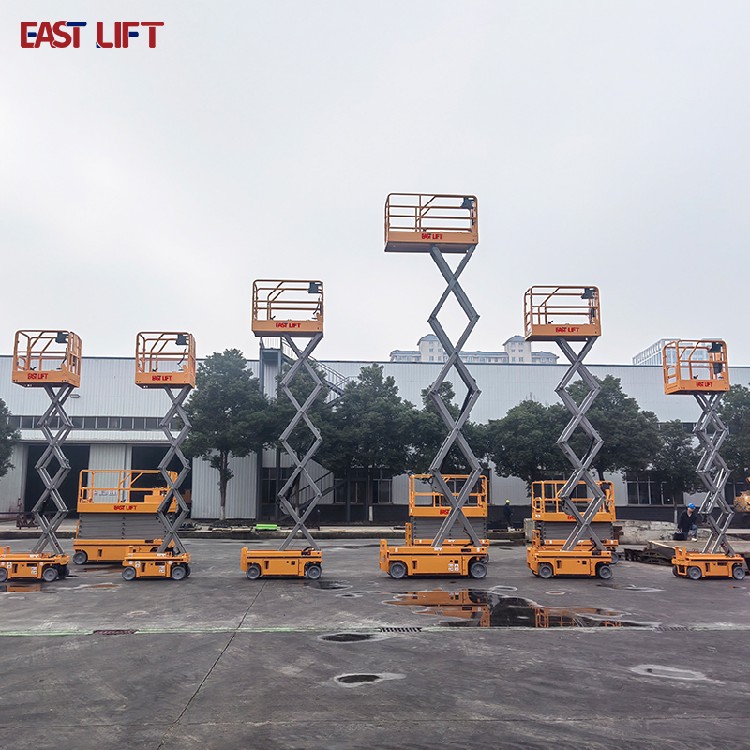
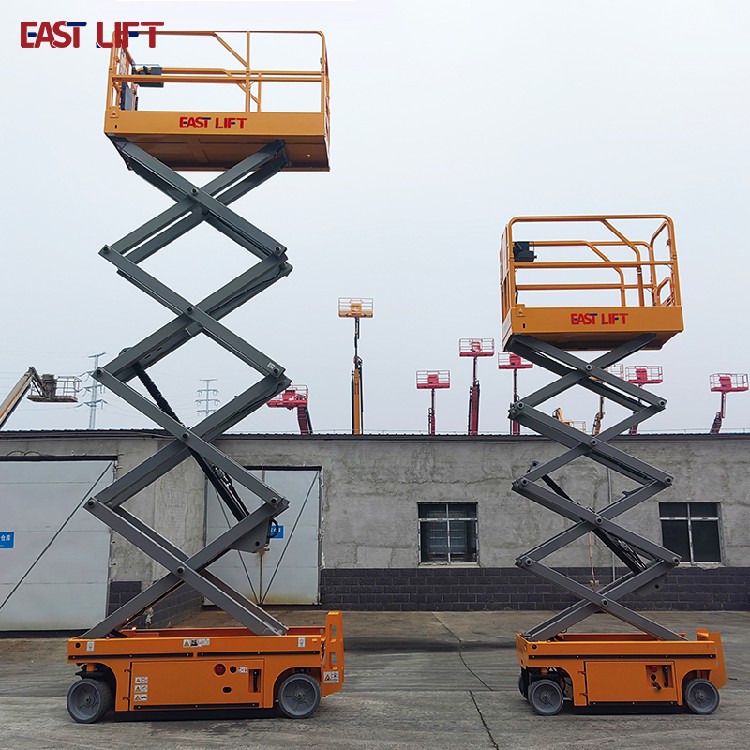
- Self-propelled electric scissor lifts (4–16m working height, flagship rental model): Designed for indoor flat-ground operations with mandatory requirements for low noise and zero emissions. Widely used in shopping malls, office buildings, warehouses and in-plant maintenance. Clients prioritize models with non-marking tires and nearly-new units due to strict environmental standards. Daily rentals dominate, with rental periods of 3–15 days common for exhibitions and interior renovation projects.
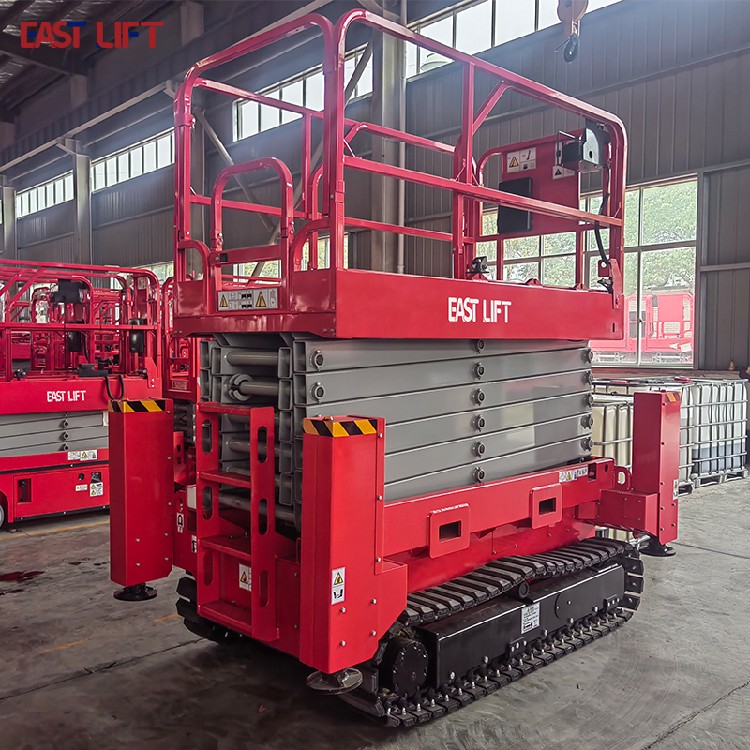
- Rough-terrain diesel scissor lifts (16–22m working height): Suited for steel structure workshops, outdoor civil engineering and unfinished construction sites with uneven, unpaved ground. Mostly rented on a monthly basis for construction projects.
Rental term structure and pricing features
Scissor lift customers exhibit the highest price sensitivity. Massive market stock has triggered widespread regional price wars, resulting in the lowest profit margins among all aerial work equipment. Scissor lifts are standard equipment for small and medium-sized rental companies, leading to severe homogeneous competition.
Rental periods vary by use case: daily rentals for exhibitions and events, weekly rentals for interior renovations, and monthly or annual rentals for factory retrofits and new plant construction. Factory clients with long-term maintenance needs boast extremely high repeat rental rates and often sign annual framework rental agreements.
Peak and off-peak seasonal patterns
Peak seasons: March–June and September–December, driven by renovation works, new factory construction and urban renewal initiatives.
Off-peak seasons: January–February (Chinese New Year holiday) and July–August (sweltering summer), when equipment utilization rates drop sharply.
Key customer pain points
Customers prioritize low rental costs and show high tolerance for older equipment. Only high-end indoor projects demand nearly-new machines. Bulk rental orders are prevalent, with single projects leasing 5 to 20 units simultaneously.
II. Articulated Boom Lifts (approximately 18% market share, essential for complex obstacle-surmounting operations)
Core Demand Traits
Client base concentrated on scenarios with obstructive work environments
Core customers: renovation contractors for exteriors of old residential compounds, municipal landscaping teams, shopping mall ceiling and curtain wall contractors, chemical plant maintenance crews, bridge ancillary repair teams, film and advertising shooting crews, and municipal maintenance teams working on narrow urban streets.
Core functional requirement: the ability to operate over obstacles. Equipped with multi-joint booms enabling 360° rotation, these machines eliminate frequent repositioning when working around walls, pipelines and trees.
Segmented demand by power type and working height
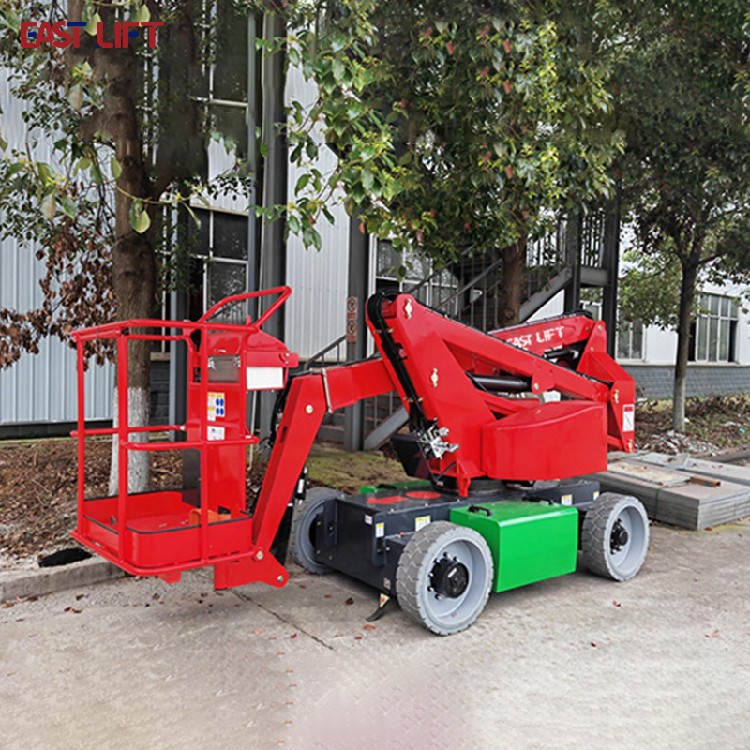
- Electric articulated boom lifts (12–24m working height): Deployed in indoor venues, large shopping malls and basement renovation projects. Their silent operation and zero exhaust emissions make them the top choice for high-end commercial projects. Their daily rental rates exceed those of electric scissor lifts of equivalent height by over 50%.
- Rough-terrain diesel articulated boom lifts (24–47m working height): Used for outdoor facade works, municipal greenery trimming and outdoor pipeline maintenance within factory compounds, adaptable to uneven construction site ground.
Rental and profitability characteristics
Articulated boom lifts command clear rental premiums: daily rates are 10%–15% higher than telescopic boom lifts of the same height. Their market inventory is smaller than scissor lifts, supporting stable utilization rates and stronger profit margins.
Rental period breakdown: monthly rentals prevail for municipal renovation and residential exterior renewal projects; daily or weekly rentals apply to short-term shopping mall renovations and advertising shoots. Factories requiring annual equipment maintenance form repeat long-term rental clients.
Seasonal demand cycles
Peak demand occurs in spring and autumn for landscape pruning and building facade refurbishment. Electric articulated boom lift demand surges in winter thanks to indoor venue renovation projects, leading to milder seasonal fluctuations compared to scissor lifts.
III. Telescopic Boom Lifts (approximately 12% market share, dedicated to high-rise open-space operations)
Core Demand Traits
Customer base focused on large-scale engineering and ultra-high outdoor projects
Key clients: high-rise curtain wall contractors, wind power maintenance teams, steel structure workshop developers, airport and high-speed railway station construction teams, viaduct contractors, large photovoltaic station operators and contractors undertaking ceiling works for massive exhibition centers.
Core strengths: fast lifting speeds, wide horizontal outreach and superior load capacity. They deliver far higher work efficiency than articulated boom lifts in unobstructed open-air high-altitude environments. The primary drawback is their inability to navigate around nearby obstacles.
Bifurcated demand by working height
- 20–38m models: mainstream rental specifications for factory construction and high-rise residential exterior works.
- 40–58m ultra-high telescopic boom lifts: reserved for wind farm maintenance, super high-rise landmark construction and large venue projects. These units are scarce in the market and carry steep daily rental prices, mostly rented short-term for specific projects.
Rental models and market profitability
Virtually all telescopic boom lifts run on diesel power and are rarely used indoors. Their main customers are general engineering contractors and professional curtain wall firms, with typical rental durations ranging from 30 to 90 days per project.
While these machines generate high daily rental rates and profit margins, their upfront procurement costs are substantial. Few small and medium-sized rental companies maintain in-house stock, instead sourcing units via cross-rental channels during project cycles. Equipment shortages frequently emerge during peak construction seasons.
Seasonal demand cycles
Demand closely tracks infrastructure and real estate development cycles, with peak activity in spring and summer as construction projects break ground. In northern China, outdoor construction halts in winter, triggering a precipitous drop in telescopic boom lift rentals. Wind farm maintenance generates periodic surges in demand during fixed annual inspection windows.
IV. Spider Lifts (niche high-end special models delivering differentiated high profit margins)
Core Demand Traits
Exclusive segmented application scenarios irreplaceable by conventional boom lifts
Key use cases: interior renovation of luxury hotels, ancient architecture and cultural relic restoration, rooftop photovoltaic installation, construction on marble roof slabs (low ground load-bearing capacity requirements), high-rise indoor construction accessible only via passenger elevators, villa refurbishment and maintenance on narrow rooftop platforms.
Core competitive advantages: extremely light dead weight (only 60% of equivalent-height telescopic boom lifts), four independently adjustable outriggers, tracked undercarriages, and modular designs that allow disassembly for transportation via passenger elevators. They impose minimal requirements on ground load-bearing and access passage width.
Narrow customer base with extremely high willingness to pay
Target clients include high-end interior decoration companies, cultural heritage preservation institutions, photovoltaic maintenance enterprises and premium commercial real estate developers. These customers rarely compare rental prices, as standard aerial lifts cannot match spider lift functionality, enabling steep rental rate premiums.
Rental periods and market supply conditions
Daily or weekly short-term rentals dominate for renovation projects, while monthly rentals apply to long-term rooftop photovoltaic construction jobs. Domestic spider lift inventory remains limited; most rental firms own only a small fleet, resulting in frequent cross-regional equipment transfers to fulfill orders.
Seasonal fluctuations are muted: demand for indoor luxury renovation stays consistent year-round, with only outdoor ancient building restoration slightly affected by rainy seasons.
V. Vertical Mast Lifts (compact micro indoor aerial platforms)
Core Demand Traits
Optimized for extremely confined indoor workspaces
With working heights ranging from 4 to 10 meters and compact dimensions designed for single-operator use, these lifts serve warehouse rack maintenance, shopping mall signage replacement, office ceiling repairs and elevator shaft construction.
Primary customers: shopping malls, logistics warehouses and office property management companies
Nearly all vertical mast lifts feature electric drive and non-marking tires. Long-term maintenance rentals prevail, with most contracts structured on monthly or annual terms. Though their per-unit daily rental rates are low, they require modest upfront investment and maintain steady utilization rates, serving as supplementary equipment for rental companies to complete their product portfolios.
Demand volatility is minimal with consistent utilization all year round, lacking distinct peak or off-peak seasons.
VI. Truck-Mounted Aerial Work Vehicles (essential for municipal public works, dominated by government projects)
Core Demand Traits
Main customers: municipal authorities, street lighting bureaus, traffic management departments and state-owned power enterprises
Primary application scenarios: streetlight maintenance, traffic signal installation, road surveillance camera fitting, overhead power line repairs and high-altitude tree trimming for urban greenery. Designed for road travel and multi-site mobile operations, they are rarely selected for fixed in-factory work.
Rental models: short-term leasing for government projects and annual maintenance outsourcing contracts
Most contracts run on monthly or quarterly terms. Government clients hold stable annual budgets and deliver standardized payment cycles. Several municipal authorities across cities opt for long-term rentals to replace purchasing in-house fleets.
Seasonal demand cycles
Spring and summer mark peak municipal maintenance seasons, while demand declines in winter as road construction activities scale back.