EASTLIFT
Product description
Demand Structure of Aerial Work Platform (AWP) Rental Market
The demand structure of the aerial work platform (AWP) rental market is analyzed from five dimensions: downstream application scenarios, equipment types, regional distribution, customer groups and rental term structure. The statistics are based on China's market from 2025 to 2026.
1. Downstream Application Scenarios (Sources of Demand)
Overall characteristics: Construction works take the largest share; industrial maintenance grows rapidly; municipal projects and new energy sectors emerge as major growth drivers.
- Building Construction (Largest segment, approx. 55%)
- Residential & commercial real estate: Indoor and outdoor decoration, curtain wall and equipment installation. 6–12m scissor lifts are the mainstream models.
- Steel structure & prefabricated factory buildings: Steel beam erection and roof construction, mainly using 14–28m articulated/telescopic boom lifts.
- Large venues & exhibition centers: Operations in high-clearance and complex working environments, dominated by boom lifts over 20 meters.
- Features: Project-based business, concentrated construction periods, prevailing short-term rentals and price sensitivity.
- Industrial & Facility Maintenance (Second largest segment, 25%–30%, fastest-growing)
- Factory maintenance: Workshops for automobile, electronics, food and pharmaceutical industries, primarily using electric scissor lifts.
- Power & new energy: Wind turbine maintenance, photovoltaic power stations and power transmission projects, relying on telescopic boom lifts and spider lifts.
- Petrochemical industry: Equipment inspection, anti-corrosion treatment and pipeline work, adopting explosion-proof and electric models.
- Warehousing & logistics: High-level rack operations in e-commerce warehouses and cold chain facilities, using narrow aisle scissor lifts.
- Features: High repeat purchase rate, long rental terms, and high requirements for equipment reliability, operational safety and electrification.
- Municipal & Public Facilities (10%–15%)
- Maintenance of street lamps, traffic signals, bridges, tunnels and subways.
- Garden pruning, billboard installation and venue operation & maintenance.
- Features: Main clients are government departments and state-owned enterprises with stable budgets. 12–20m articulated boom lifts and truck-mounted aerial lifts are widely used.
- Others (approx. 5%)Including film & television shooting, exhibition setup, ship repairing, airport operation and data center maintenance.
2. Demand Structure by Equipment Type (Rental Volume & Revenue)
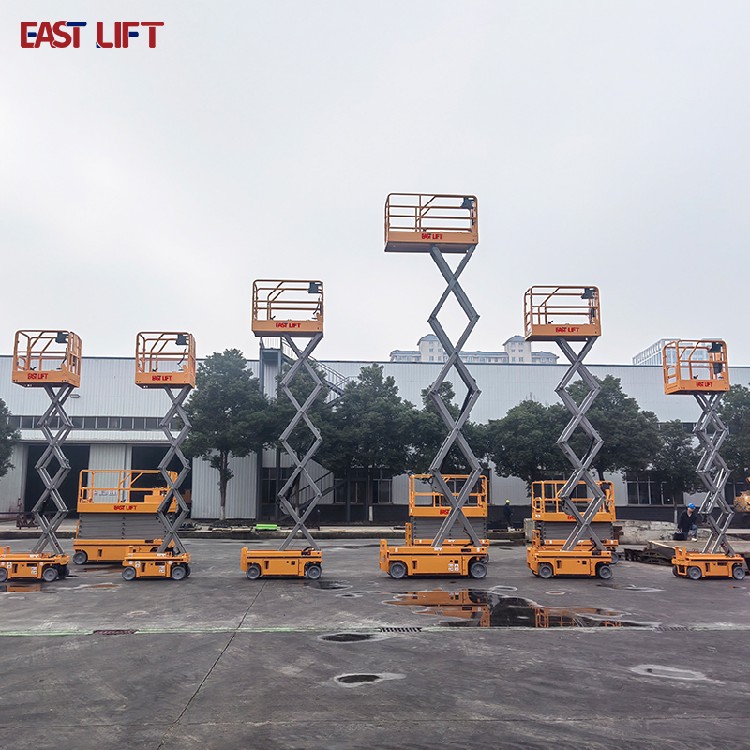
- Scissor Lifts (65%–72% of total rental volume, absolute mainstream)
- Working height: 80% of demands focus on 6–12m models, with a small proportion for 14–16m units.
- Power type: Electrification rate exceeds 90%, suitable for indoor and dust-free environments with strict environmental requirements.
- Main applications: Building decoration, factory & warehouse maintenance, supermarket operations.
- Market traits: Low rental rates, high turnover rate, standardized products and fierce market competition.
- Boom Lifts (Articulated + Telescopic, 25%–30% of total volume, high growth rate)
- Articulated boom lifts (15%–20%): 12–20m models for complex working conditions and obstacle-crossing operations, widely used for exterior wall and steel structure construction.
- Telescopic boom lifts (5%–10%): 24–46m models for ultra-high altitude work at large venues and wind power projects.
- Power type: Lithium-electric boom lifts see rapid penetration, with the electrification rate reaching around 37% in 2025.
- Market traits: High rental rates and profit margins, tight market supply and strong premium capability.
- Specialized Models (3%–5%)
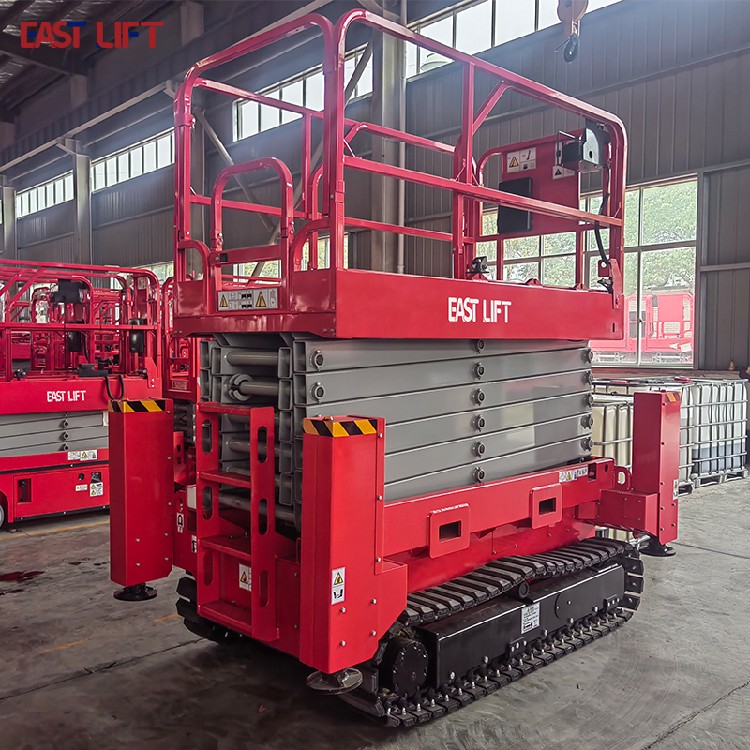
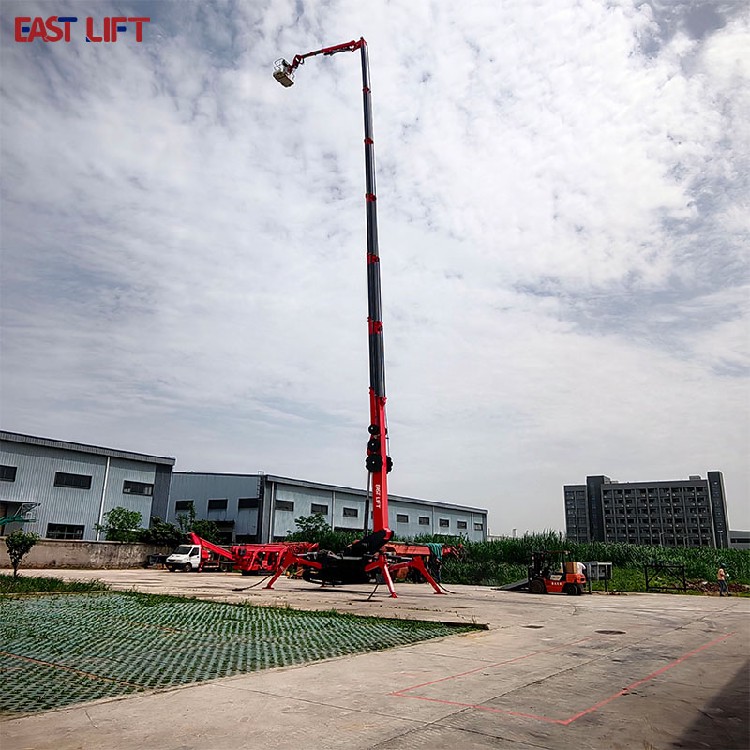
- Spider lifts & crawler-type lifts: For narrow spaces, special-shaped buildings and curtain wall construction.
- Truck-mounted aerial lifts: For street lamp and bridge maintenance (18–30m).
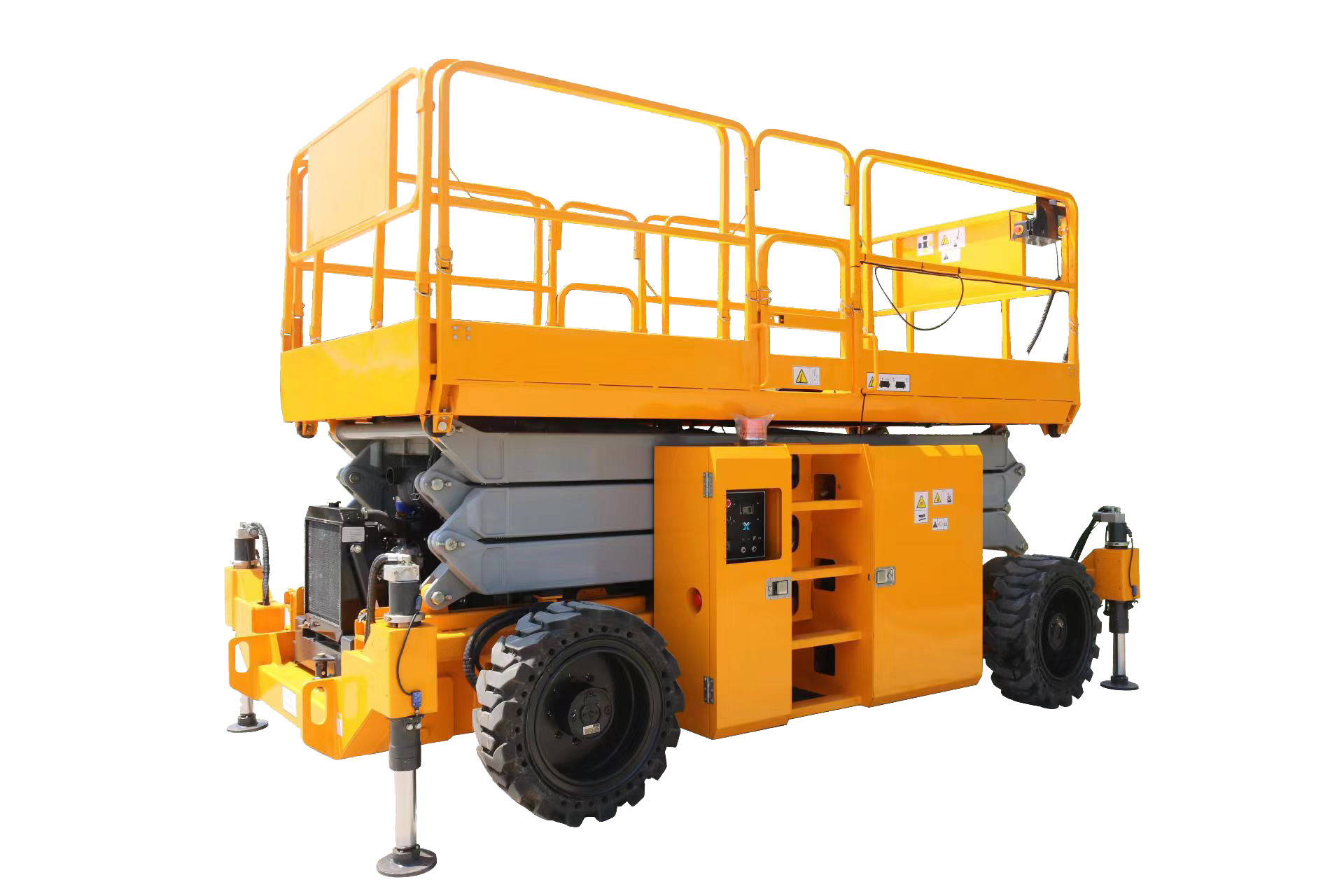
- Explosion-proof & rough-terrain scissor lifts: For petrochemical sites and muddy construction sites.
3. Regional Demand Distribution
- East China (Yangtze River Delta): Approx. 40%. The most saturated market with robust development in both industry and infrastructure, leading the industry in electrification.
- South China (Pearl River Delta): Approx. 20%. Driven by thriving manufacturing and urban renewal projects.
- Beijing-Tianjin-Hebei Region: Approx. 15%. Demand mainly comes from municipal works and transportation infrastructure.
- Central & Western China: Approx. 25%. Rapid market growth boosted by infrastructure, wind power and photovoltaic projects, accompanied by intense price competition.
- Brief summary: Markets in eastern China tend to be saturated, while central and western regions keep expanding. Urban renewal and new energy industries remain core growth engines.
4. Customer Group Structure
- General contractors (approx. 50%): Construction, installation and steel structure enterprises. Mainly short-term project-based rentals with high price sensitivity.
- Industrial enterprises (approx. 30%): Factories, energy enterprises and logistics companies. Long-term cooperation, high repeat purchase, and priority given to service quality and operational safety.
- Municipal authorities & state-owned enterprises (approx. 15%): Stable demand dominated by public bidding, with strict requirements on qualifications and compliance.
- Small & micro enterprises and individual operators (approx. 5%): Scattered short-term orders, mainly for small-height scissor lifts.
5. Rental Term & Pricing Structure
- Short-term rental (1–3 months, approx. 60%): Dominated by construction projects with volatile rental prices.
- Medium-term rental (3–12 months, approx. 30%): Mainly for factory and facility maintenance with stable pricing.
- Long-term rental (over 1 year, approx. 10%): Mainly for large factories and energy bases. Monthly and annual rental plans are adopted with relatively large discounts.
6. Key Industry Trends in 2026 Affecting Demand Structure
- Accelerated electrification: Over 70% of newly rented units are electric models, and electric equipment has become the standard for indoor operations.
- Rising proportion of boom lifts: The market share of scissor lifts declines gradually, while that of boom lifts (especially models over 20 meters) increases by 2–3 percentage points annually.
- Integrated services: The business model evolves from simple equipment rental to one-stop solutions integrating equipment, operators, maintenance and professional plans.
- Driven by safety compliance: Stricter work safety supervision promotes the replacement of traditional scaffolding and hanging baskets, continuously unleashing demand in industrial and municipal sectors.
Contact Now